 Central Steel
Central Steel
Central Steel
Central Steel
Central Steel
The production of seamless steel pipes mainly relies on two manufacturing processes: hot rolling (hot extrusion) and cold drawing/cold rolling. The choice of manufacturing process depends on the required dimensions, tolerances, and mechanical properties of the final product.
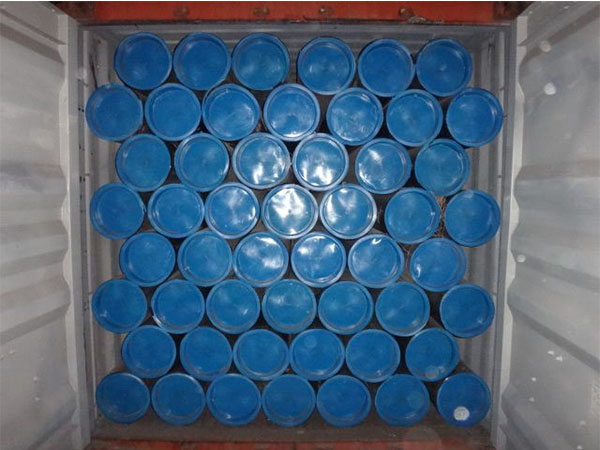
Manufacturing Methods for Large-Diameter Seamless Tubes
Hot-rolled Pipes vs. Cold-rolled Pipes
|
Feature |
Hot Rolled Seamless Pipes |
Cold Rolled / Drawn Seamless Pipes |
|
Production Temp |
Above recrystallization temperature |
Room temperature |
|
Dimensional Tolerance |
Standard tolerances (looser) |
Extremely tight tolerances (high precision) |
|
Surface Quality |
Features a dark, oxidized mill scale |
Smooth, bright, and scale-free |
|
Wall Thickness |
Typically thicker walls(≥4) |
Capable of extremely thin walls (< 2) |
|
Mechanical Profile |
Excellent ductility, lower residual stress |
Higher tensile strength, lower ductility (before annealing) |
According to the final standard specifications of the steel pipe, one or more of the following processes are typically applied:
Annealing: Heating the steel pipe to a specific temperature and then slowly cooling it in a furnace. This process aims to reduce hardness, eliminate internal stress, and improve plasticity, primarily used for preparing the tube blank before cold drawing.
Normalizing: Heating the steel pipe above the critical temperature and then allowing it to cool naturally in air. This refines the grain size, ensuring uniform mechanical properties throughout the batch of steel pipes.
Quenching: Heating the steel pipe to the austenitizing temperature and then rapidly cooling it in water or oil. This significantly increases the hardness and strength of the steel pipe but makes it brittle.
Tempering: Tempering must be performed immediately after quenching. The steel pipe is reheated to a lower, specific temperature and then slowly cooled. The purpose is to eliminate quenching stress, restore the steel pipe's toughness, and achieve an optimal balance of strength and toughness.
2. Changes in Microstructure and Properties After Heat Treatment
Stress Relief: Eliminates residual internal stresses from rolling or cold drawing, preventing deformation or cracking of the steel pipe during subsequent processing or use.
Grain Refinement: The coarse grains formed during high-temperature rolling are broken down, transforming into fine, uniform grains, thereby significantly improving the impact toughness of the steel pipe at low temperatures.
Phase Stabilization: For alloy steels and stainless steels, heat treatment allows alloying elements such as chromium, molybdenum, and nickel to be evenly distributed in the matrix, optimizing creep resistance and corrosion resistance.
Surface Treatment and Finishing
Seamless steel pipes must undergo thorough surface treatment before leaving the factory to remove surface defects and contaminants and provide corrosion protection.
1. Chemical Cleaning Methods
Before coating or galvanizing, the steel pipe surface must achieve structural cleanliness.
Pickling: Immersing the steel pipe in an acidic solution (usually hydrochloric acid or sulfuric acid for carbon steel, and a mixture of nitric acid and hydrofluoric acid for stainless steel). The acid chemically dissolves the iron oxide scale and rust on the steel pipe surface without excessively damaging the underlying steel substrate.
Degreasing: Using alkaline solutions or organic solvents, removing machine oil, lubricants, and grease that have adhered to the steel pipe during cold working or handling.
2. Mechanical Rust Removal Methods
Shot Blasting/Shot Blasting: Using compressed air or a shot blasting wheel, high-speed steel shot, steel grit, or abrasive particles are blasted onto the steel pipe surface. This mechanical impact not only thoroughly removes rust and old scale but also creates a certain roughness ("anchoring pattern") on the steel pipe surface, significantly enhancing the adhesion of subsequent anti-corrosion coatings.
3. Galvanizing Treatment and Quality Requirements
For carbon steel pipes exposed to highly corrosive environments (such as fire hoses and outdoor building structures), hot-dip galvanizing is typically required.
Reaction Principle: The pickled steel pipe is immersed in molten zinc at approximately 450°C. Iron and zinc react chemically, forming a series of firmly bonded iron-zinc alloy layers on the steel pipe surface.
Technical and Specification Requirements: Galvanizing must strictly comply with international standards (such as ASTM A53 or EN 10240). Manufacturers must rigorously test the zinc layer thickness (expressed in micrometers or g/m²), the uniformity of the zinc layer, and the surface must be free of any uncoated areas, blistering, or thick zinc nodules.
Read more : What is a seamless steel pipe?


 Language
 English
 Español
 بالعربية
 sales@central-steels.com
 0086-731-8865-5017