Among the most widely used structural steel standards for
sheet piles, ASTM A572 Grade 50 and ASTM A690 are the two core standards. In deep foundation support, soil facing, and marine revetment projects, selecting the correct steel grade for sheet piles is crucial for ensuring structural integrity and extending service life.
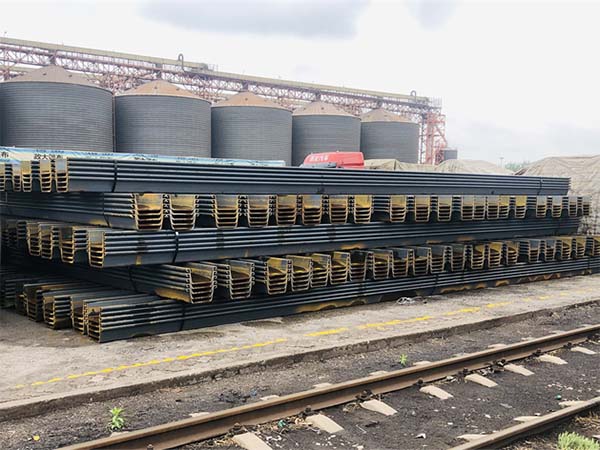
What is ASTM A572 Grade 50?
ASTM A572 is the standard specification for high-strength low-alloy niobium-vanadium structural steel (HSLA). Grade 50 (50 grade 7) is a very popular and versatile steel grade widely used in structural engineering, including bridges, buildings, and general construction sheet piles. Compared to standard carbon steels such as A36, it offers a higher strength-to-weight ratio, allowing for lighter cross-sections to withstand the same loads.
What is ASTM A690?
ASTM A690 is the standard specification for high-strength low-alloy steel H-piles and sheet piles used in marine environments. This steel grade is specially formulated to withstand the harsh environment of highly corrosive seawater, especially the highly destructive splash zone. Material Performance Comparison: ASTM A572 Gr. 50 vs. ASTM A690
To understand why these two steels behave differently, we need to look at their chemical and mechanical properties.
1. Chemical Composition and Corrosion Resistance
The most fundamental difference between these two steels lies in their alloying elements, particularly the content of copper (Cu), nickel (Ni), and chromium (Cr).
|
Chemical Element
|
ASTM A572 Gr. 50
|
ASTM A690
|
|
Carbon (C, max)
|
0.23%
|
0.22%
|
|
Manganese (Mn)
|
0.50–1.35%
|
0.60–0.90%
|
|
Copper (Cu, min)
|
0.20% (when specified)
|
0.50%
|
|
Nickel (Ni)
|
—
|
0.40–0.65%
|
|
Chromium (Cr)
|
—
|
0.40–0.65%
|
The most fundamental difference between these two steels lies in their alloying elements, particularly the content of copper (Cu), nickel (Ni), and chromium (Cr).
ASTM A572 Gr. 50 relies primarily on niobium and vanadium for strength. While copper can be added upon request to enhance atmospheric corrosion resistance, it is fundamentally not designed for prolonged immersion or marine environments.
ASTM A690 contains a high content of copper, nickel, and chromium alloys. This unique chemical composition allows the steel to form a tight, strong-adhesion protective oxide layer (passivation film) on its surface when subjected to alternating wet and dry cycles. Therefore, in marine splash zones, ASTM A690 exhibits approximately 2 to 3 times the corrosion resistance of standard carbon steel.
2. Mechanical Properties
In terms of pure strength, these two steel grades are very similar, ensuring that the load-bearing capacity of the structure can be maintained when switching to a corrosion-resistant steel.
|
Mechanical Property
|
ASTM A572 Gr. 50
|
ASTM A690
|
|
Yield Strength (min)
|
50 ksi (345 MPa)
|
50 ksi (345 MPa)
|
|
Tensile Strength (min)
|
65 ksi (450 MPa)
|
70 ksi (485 MPa)
|
|
Elongation in 8 in. (min)
|
18%
|
18%
|
As shown in the table above, both steels have a minimum yield strength of 50 Ksi (345 MPa), making them structurally interchangeable from a bending moment perspective. However, ASTM A690 has a slightly higher minimum tensile strength than ASTM A572 Gr. 50.
Cost-Benefit Analysis
ASTM A690 contains chromium and nickel, making it significantly more expensive than other steels. However, its superior resistance to seawater corrosion effectively reduces the total cost of ownership (TCO) of marine projects.
Reduced Coating Costs: Using A690 can sometimes reduce the thickness of required anti-corrosion coatings such as coal tar epoxy resin, or extend the maintenance cycle for recoating.
Savings in Sacrificial Steel (Corrosion Allowance): When designing A572 Gr. 50 in saltwater environments, an additional "corrosion allowance" (extra steel thickness) is typically required to ensure structural safety of the piles even after decades of rusting. Due to the extremely low corrosion rate of A690, thinner and lighter sheet pile sections can be used in the design, saving on raw materials and transportation costs.
Summary
The choice between ASTM A572 Gr. 50 and ASTM A690 depends on the project's application:
For inland civil engineering projects requiring high structural strength and optimized material costs, choose ASTM A572 Gr. 50. For marine, coastal, and saltwater environments requiring long-term resistance to splash zone corrosion, prioritize ASTM A690.
 Central Steel


 Language
 English
 Español
 بالعربية
 sales@central-steels.com
 0086-731-8865-5017