Large-diameter submerged arc welded steel pipes are commonly used in infrastructure, industrial piping, and marine engineering projects. Therefore, selecting the correct specifications is crucial. The two most frequently cross-referenced ASTM standards for
spiral welded steel pipes are ASTM A53 and
ASTM A252.
While both can be manufactured using the same spiral welding process, their engineering design, testing rigor, and regulatory certifications differ significantly. Incorrectly identifying them can lead to serious structural failures or unnecessary cost overruns.
This guide will detail the technical differences between ASTM A53 and A252 spiral welded pipes to help you make informed purchasing decisions.
1. Core Applications: Pressure and Fluid Transport vs. Structural Foundations
The most fundamental difference between these two standards lies in their intended applications.
What is ASTM A53?
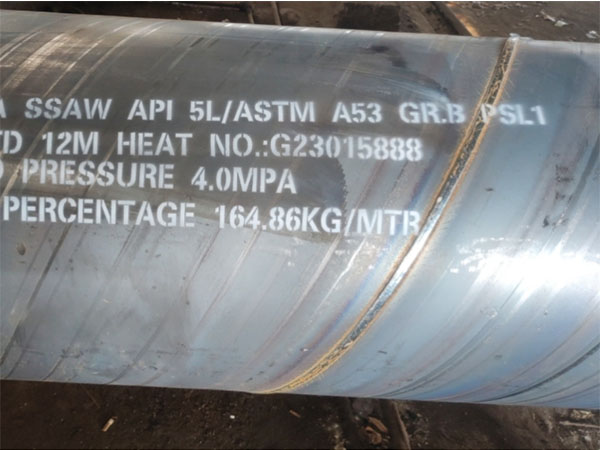
ASTM A53 is the standard specification for steel pipes, including black and hot-dip galvanized steel pipes, welded steel pipes, and seamless steel pipes. It is primarily used for pressure and mechanical applications, as well as general applications such as steam, water, gas, and air piping. When applied to helical tubes (Type E or Type F, applicable to helical forming, or generally consistent with Type S/E parameters), it is used to transport pressurized fluids.
What is ASTM A252?
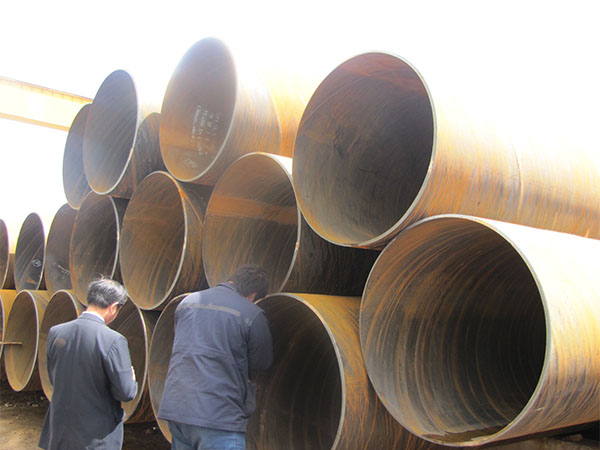
ASTM A252 is the standard specification for welded and seamless steel pipe piles. Strictly speaking, it is a structural standard. These steel tubes are used as permanent load-bearing components or as shells for cast-in-place concrete piles. You will find ASTM A252 helical tubes driven underground in bridges, buildings, docks, and deep foundation structural systems.
2. Chemical Composition: Strict Limits with Discretionary Carbon Content
Compliance with chemical composition directly affects the ease of field welding of the pipe and its resistance to corrosive environments.
ASTM A53 (Class B): Enforces strict upper limits on chemical composition to ensure predictable performance of the pipe under pressure and thermal stress. It sets precise limits on the content of carbon (≤ 0.30%), manganese (≤ 1.20%), phosphorus, sulfur, and microalloying elements such as copper, nickel, and chromium.
ASTM A252: This takes a completely different approach. It only sets strict limits on phosphorus content (≤ 0.050%). Why? Because excessive phosphorus can make steel brittle under impact (such as during piling). The content of other chemical components is largely determined by the manufacturer, provided that the final pipe must meet structural mechanical performance requirements.
3. Mechanical Properties and Material Grades
Both standards provide different grades or "classes" based on yield strength (the point at which the steel undergoes permanent deformation) and tensile strength (the point at which the steel fractures).
|
Specification & Grade
|
Minimum Yield Strength
|
Minimum Tensile Strength
|
Primary Focus
|
|
ASTM A53 Grade A
|
30,000 psi (205 MPa)
|
48,000 psi (330 MPa)
|
Ductility / Bending
|
|
ASTM A53 Grade B
|
35,000 psi (240 MPa)
|
60,000 psi (415 MPa)
|
Balanced Strength & Flow
|
|
ASTM A252 Grade 1
|
30,000 psi (205 MPa)
|
50,000 psi (345 MPa)
|
Light Foundations
|
|
ASTM A252 Grade 2
|
35,000 psi (240 MPa)
|
60,000 psi (415 MPa)
|
Standard Structural Piling
|
|
ASTM A252 Grade 3
|
45,000 psi (310 MPa)
|
66,000 psi (455 MPa)
|
High-Load Deep Foundations
|
A53 Grade B has the same minimum yield strength as A252 Grade 2, while ASTM A252 Grade 3 offers superior mechanical properties under high loads, making it the preferred choice for heavy civil engineering projects.
4. Quality Control and Testing Rigor (Key Differences)
Because the bursting of pressure piping can have immediate catastrophic consequences, whereas pile casings are driven into slurry and filled with concrete, the requirements for non-destructive testing (NDT) are drastically different.
ASTM A53 Testing Safeguards:
Hydraulic Pressure Testing: Every section of A53 helical tubing must undergo a hydrostatic test to ensure its seal integrity, typically for at least 5 seconds.
Non-destructive Electrical Testing: Welds must be subjected to ultrasonic or electromagnetic testing to detect internal structural defects.
Mechanical Testing: Rigorous flattening and bending tests must be performed to ensure weld stability.
ASTM A252 Testing Safety Measures:
No Hydrostatic Testing Required: Since this material is not intended to hold liquids, factory pressure testing is completely omitted.
Tensile testing focuses on longitudinal, transverse, or component tensile tests to ensure that the steel can withstand the enormous kinetic energy impact generated by the hydraulic hammer.
Read more : Spiral Welded Pipe Specifications: Size Range, Thickness and Standards
 Central Steel


 Language
 English
 Español
 بالعربية
 sales@central-steels.com
 0086-731-8865-5017