 Central Steel
Central Steel
Central Steel
Central Steel
Central Steel
In marine engineering, choosing the right foundational and earth-retention materials is critical to the longevity, safety, and cost-effectiveness of coastal infrastructure. Whether building quays, ports, breakwaters, or cofferdams, the selection of steel sheet piles in marine engineering requires a deep understanding of structural demands, environmental constraints, and material design.
This comprehensive guide breaks down the essential factors of structural types, design considerations, and common steel grades to help engineering professionals make informed decisions.
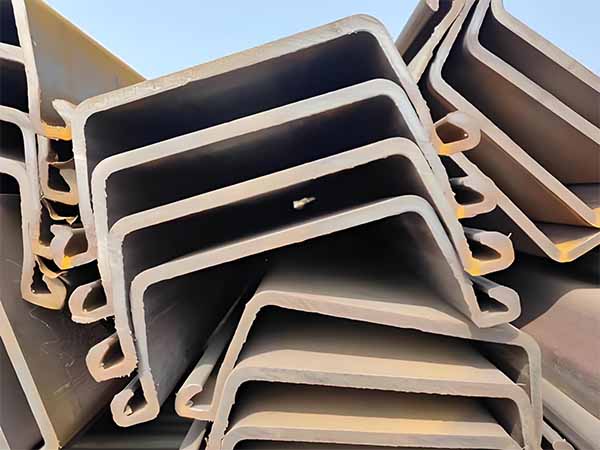
1. Structural Analysis: Common Profiles of Steel Sheet Piles
Steel sheet piles are long structural sections with a vertical interlocking system that creates a continuous wall. In marine applications, the geometry of the pile significantly influences its strength-to-weight ratio and water-retaining efficiency.
Z-Type Sheet Piles: Widely considered the most efficient profile for marine engineering. Because the interlocks are located on the outer fibers of the wall (away from the neutral axis), the section modulus is fully optimized. They offer high bending resistance and are ideal for deep-water ports and heavy-duty retaining walls.
U-Type (Larssen) Sheet Piles: A traditional and highly popular profile. They are easy to drive and reuse, making them excellent for temporary cofferdams. However, because the interlocks are located exactly on the neutral axis, shear transfer can be reduced if the interlocks are not crimped or welded.
Straight Web (Linear) Piles: Used primarily to form circular, self-supporting cells (cellular cofferdams). They are designed to resist high internal tensile forces (hoop stress) rather than bending moments, commonly used in large-scale marine reclamation.
2. Key Design & Environmental Considerations in Selection
When selecting steel sheet piles for marine environments, standard terrestrial design principles are not enough. Engineers must account for dynamic, highly corrosive aquatic forces.
A. Marine Corrosion and Longevity
The ocean is one of the most hostile environments for steel. Corrosion rates vary drastically depending on the specific zone:
Splash Zone: Highest corrosion rate due to continuous exposure to both moisture and abundant oxygen.
Low Water / Tidal Zone: Prone to ALWC (Accelerated Low Water Corrosion), a severe form of localized biocorrosion driven by sulfate-reducing bacteria.
Splash Zone: Highest corrosion rate due to continuous exposure to both moisture and abundant oxygen.
Low Water / Tidal Zone: Prone to ALWC (Accelerated Low Water Corrosion), a severe form of localized biocorrosion driven by sulfate-reducing bacteria.
Selection Tip: To achieve a 30 to 50-year design life, engineers must include a corrosion allowance (extra steel thickness) or specify anti-corrosion solutions like epoxy coatings, cathodic protection (sacrificial anodes), or marine-grade alloys.
B. Geotechnical and Hydraulic Conditions
Soil Parameters: Heavy clays require stiff piles to resist lateral soil pressure, while dense sands demand sections that can withstand high driving stresses without buckling.
Water Pressure & Scour: Tidal fluctuations create hydrostatic pressure differentials across the sheet pile wall. Additionally, underwater currents can scour (erode) the seabed at the toe of the pile, reducing embedded stability.
3. Common Steel Grades and Standards for Marine Sheet Piles
The chemical composition and yield strength of the steel determine its structural capability. The table below outlines the most common international standards and grades used in marine engineering.
|
Standard |
Common Grade |
Minimum Yield Strength (fy) |
Best Used For |
|
EN 10248 (European) |
S270GP / S355GP / S430GP |
270 - 430 MPa |
The global benchmark for hot-rolled sheet piles; high weldability and ductility for marine walls. |
|
Grade 50 / Grade 60 |
345 - 415 MPa |
High-strength, low-alloy columbium-vanadium steel widely specified in US-led marine ports. |
|
|
Grade 50 (Mariner Steel) |
345 MPa |
Specially formulated for marine environments. Contains copper, nickel, and phosphorus, providing 2-3x higher atmospheric and splash-zone corrosion resistance than standard carbon steel. |
|
|
JIS A 5528 (Japanese) |
SY295 / SY390 |
295 - 390 MPa |
High-performance hot-rolled piles popular in Asian-Pacific maritime infrastructure. |
4. Summary Checklist for Engineering Selection
Determine the Profile: Choose Z-piles for permanent, high-bending moments; U-piles for simpler, temporary structures.
Calculate the Section Modulus: Ensure the pile geometry can withstand the maximum lateral soil and water loads.
Analyze Driving Feasibility: Match the pile thickness with the impact energy of the hydraulic vibratory or impact hammers being used.
Specify the Right Grade: Balance structural requirements (e.g., S355GP) with environmental needs (e.g., ASTM A690 for high salinity zones).


 Language
 English
 Español
 بالعربية
 sales@central-steels.com
 0086-731-8865-5017