When choosing metal materials for manufacturing, construction, or DIY projects, you'll often hear the terms "
carbon steel" and "mild steel." Many people ask: which is stronger, carbon steel or mild steel?
The most straightforward answer is: high-carbon steel is stronger than low-carbon steel. However, mild steel is actually a type of carbon steel. To fully understand their strength differences, we need to delve into the fundamental differences between these two materials and the impact of carbon content on steel properties.
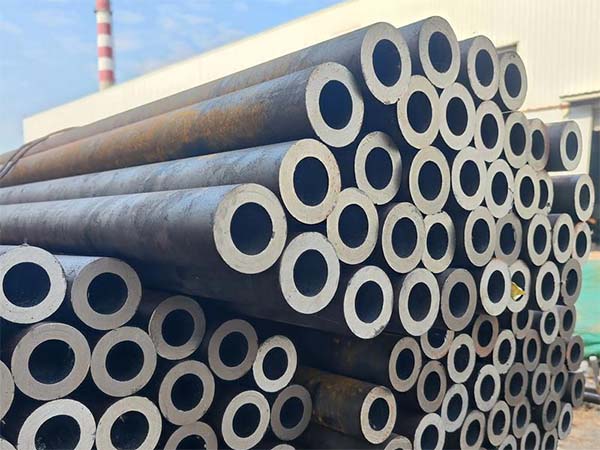
What is Carbon Steel?
Steel is primarily an alloy composed of iron and carbon. Carbon steel is a broad term referring to steel whose mechanical properties are mainly determined by carbon, and which does not contain significant amounts of other alloying elements (such as chromium, nickel, etc.).
Based on carbon content, carbon steel is generally divided into three main categories:
Low Carbon Steel/Mild Steel: Carbon content typically ranges from 0.05% to 0.25%.
Medium Carbon Steel: Carbon content typically ranges from 0.30% to 0.60%.
High Carbon Steel: Carbon content typically ranges from 0.60% to 1.50%.
What is Low Carbon Steel?
Low carbon steel is currently the most widely used steel globally. Due to its low carbon content, it has the following significant characteristics:
High ductility and plasticity: It can be easily bent, stamped, and shaped into various forms without easily breaking.
Excellent weldability: The low carbon content makes it very easy to weld.
High cost-effectiveness: Relatively low manufacturing costs make it ideal for mass production.
Common Applications: Building structures (I-beams, reinforcing bars), automotive body panels, pipes, fences, and everyday hardware.
Strength Comparison: Carbon Content Determines Everything
In the world of steel, carbon acts as a reinforcing agent. The higher the carbon content, the higher the hardness and tensile strength of the steel.
As the carbon content increases (above 0.30%), carbon atoms form a stronger structure in the iron lattice. This makes medium-carbon and high-carbon steels far superior to low-carbon steel in tensile strength (the ability to withstand tensile forces) and yield strength (the ability to resist permanent deformation). Knives, high-strength springs, and wear-resistant parts are typically made of high-carbon steel.
While high-carbon steel has high strength and hardness, it is also more brittle. If excessive impact is applied to high-carbon steel, it is more likely to break directly rather than bend like low-carbon steel.
Advantages of Low-Carbon Steel: Toughness
While low-carbon steel is inferior to high-carbon steel in absolute "hardness" and "tensile strength," it possesses excellent toughness. In construction, the ability of a material to bend (yield) to a certain extent before fracture is a critical safety characteristic.
Conclusion: Which steel should you choose?
Generally speaking, "stronger" usually refers to carbon steel with a higher carbon content, but whether it is "more suitable" depends on specific engineering requirements, processing and welding techniques, and cost constraints.
Read more : Mild steel, medium carbon steel, high carbon steel difference
 Central Steel


 Language
 English
 Español
 بالعربية
 sales@central-steels.com
 0086-731-8865-5017