 Central Steel
Central Steel
Central Steel
Central Steel
Central Steel
|
Standard |
Content |
|
EN 10248 |
European standard for hot rolled steel sheet piles |
|
EN 1993-5 |
EN 1993-5 Design specification for steel sheet piles |
|
JIS A5523 |
JIS A5523 Japanese hot rolled steel sheet piles |
|
ASTM A572 |
ASTM A572 Common Steel Grades |
|
ASTM A690 |
ASTM A690 corrosion-resistant steel sheet piles for marine environments |
|
Standard |
Content |
|
EN 10249 |
Cold-formed sheet piles |
|
BS EN 10249 |
European cold-formed standard |
|
ASTM A857 |
Cold-formed sheet pile steel |
|
ASTM A606 |
Weathering steel cold-formed sheet piles |
Hot-Rolled Sheet Piles VS Cold-Formed Sheet Piles
The core difference between these two different manufacturing processes is that hot-rolled sheet piles emphasize strength, stiffness, and series integrity, while cold-formed sheets are more flexible, economical, and suitable for light to medium-sized projects. For long-term service, larger loads, and higher walls, hot-rolled sheets are generally preferred; if time, cost, and supply flexibility are more important, cold-formed sheets are more advantageous.
|
Comparison Item |
Hot Rolled Sheet Piles |
Cold Formed Sheet Piles |
|
Manufacturing Process |
Produced through high-temperature rolling of steel billets. |
Manufactured by cold-forming steel coils or steel plates. |
|
Applicable Standards |
EN 10248, ASTM A328, ASTM A690, JIS A 5528. |
EN 10249 and related cold-formed pile standards. |
|
Strength Performance |
Generally higher yield strength and structural capacity. |
Suitable for light to medium-duty applications. |
|
Section Modulus Range |
Wide range of section sizes and structural capacities. |
More limited compared with hot rolled profiles. |
|
Wall Stiffness |
Higher bending resistance and rigidity. |
Lower stiffness under comparable dimensions. |
|
Durability |
Ideal for long-term and permanent structures. |
Commonly used in temporary or less demanding projects. |
|
Availability |
Standardized global product range. |
Flexible production and customization options. |
|
Cost Efficiency |
Higher initial material cost but better structural efficiency. |
Lower manufacturing cost and shorter lead times. |
|
Typical Applications |
Ports, harbors, quay walls, deep foundations, marine structures. |
Temporary retaining walls, cofferdams, slope stabilization, small civil projects. |
|
Main Advantages |
Superior strength, durability, and engineering performance. |
Economical, flexible, and readily available. |
|
Main Limitations |
Higher procurement cost. |
Lower load-bearing capacity and structural efficiency. |
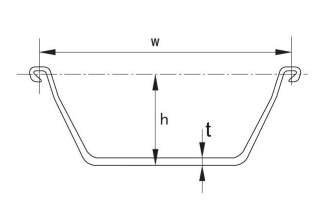
U-shaped sheet piles are sheet piles with a U-shaped cross-section. Their two sides can interlock to form a continuous pile wall, with their centerline located in the middle of a double-U-shaped cross-section pile wall. The most prominent advantages of U-shaped sheet piles are: a wide range of specifications, good static performance, suitability for reuse, suitability for driving into denser soil layers, and good installation quality and construction performance.
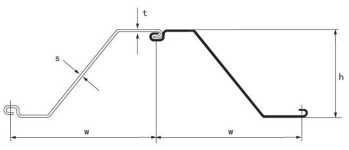
Z-shaped sheet piles are sheet piles with a Z-shaped cross-section. The continuous web and interlocks of a Z-shaped sheet pile are symmetrically arranged on both sides of the neutral axis. These two characteristics increase the section modulus. Its production process is similar to that of U-shaped sheet piles, involving a series of rolling processes to gradually form the Z-shape. The advantages of Z-shaped sheet piles are high load-bearing efficiency. Compared to U-shaped piles with equivalent performance, Z-shaped piles are generally lighter, have greater inertia, less deflection, and are wider, resulting in better installation efficiency and watertightness. They are generally more suitable for permanent projects.
3. Straight Web Sheet Piles
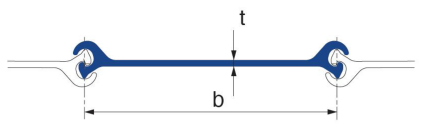
Straight web sheet piles are commonly used to construct cellular structures and are widely used in permanent or temporary infrastructure projects such as cofferdams, wharves, ports, breakwaters, and revetments. Its unique interlocking design allows adjacent sheet piles to form a certain rotation angle. When connected with a standard interlocking joint, each sheet pile can rotate about 4.5°. After pre-bending the sheet piles, the rotation angle can be further increased to about 12°, thus meeting the construction needs of different curvature radii and complex structures.
U type vs Z type steel sheet pile
|
Comparison Item |
U Sheet Piles |
Z Sheet Piles |
|
Cross-Section Shape |
U-shaped profile with interlocks located on both edges. |
Z-shaped profile with interlocks positioned on opposite sides of the neutral axis. |
|
Structural Efficiency |
Provides stable structural performance and reliable load distribution. |
Offers higher section modulus and better bending efficiency. |
|
Material Utilization |
Good overall utilization. |
Typically higher section modulus per ton of steel. |
|
Installation Performance |
Easy to install and widely accepted in construction projects. |
Wider effective wall width can improve installation productivity. |
|
Reuse Capability |
Excellent for temporary works and multiple reuse cycles. |
Generally used in permanent structures but can also be reused. |
|
Wall Stiffness |
Good stiffness for most retaining applications. |
Higher stiffness under equivalent steel weight. |
|
Water Tightness |
Good interlock sealing performance. |
Excellent performance when combined with sealing systems. |
|
Typical Applications |
Cofferdams, excavation support, temporary retaining walls, flood protection. |
Marine structures, port walls, quay walls, deep excavations, permanent retaining walls. |
|
Main Advantages |
Versatile, cost-effective, easy to handle and reuse. |
Higher structural efficiency, reduced steel consumption, greater wall stiffness. |
|
Main Limitations |
Lower section efficiency compared to Z piles. |
May require more detailed engineering design and planning. |
Frequently Asked Questions About Steel Sheet Pile
1. How are Steel Sheet Piles Installed?
Steel sheet piles can be installed using:
Vibratory hammers
Impact hammers
Hydraulic press-in systems
Combined installation methods
The selected method depends on soil conditions, pile length, vibration restrictions, and project requirements.
2. Can Steel Sheet Piles Be Reused?
Yes. One of the major advantages of steel sheet piles is their high recyclability and reusability.When properly extracted and maintained, steel sheet piles can be reused multiple times in temporary works, reducing overall project costs.
3. What are the advantages of different shapes of sheet piles?
U-shaped sheet piles are versatile, easy to construct, and reusable; Z-shaped sheet piles have high cross-sectional efficiency and excellent bending resistance, making them more suitable for large-scale permanent projects; straight-web sheet piles can form cylindrical or compartmentalized structures, offering high overall stability and are mainly used in hydraulic engineering projects such as ports, wharves, and large cofferdams.


 Language
 English
 Español
 بالعربية
 sales@central-steels.com
 0086-731-8865-5017