 Central Steel
Central Steel
Central Steel
Central Steel
Central Steel
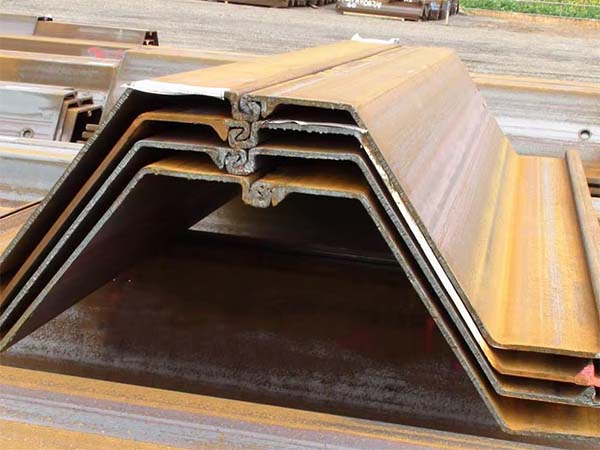
Corrosion resistance requirements: Anti-seepage walls in coastal areas or chemical industrial parks.
Comparison: U Type vs Z Type Steel Sheet Pile
|
Feature |
U Type Sheet Pile |
Z Type Sheet Pile |
|
Section Shape |
U-shaped |
Z-shaped |
|
Single Pile Width |
Relatively narrow (400–500mm) |
Wide (600–700mm or more) |
|
Bending Resistance |
Moderate |
High |
|
Stiffness |
High stiffness per single pile |
Strong overall stiffness after combination |
|
Construction Efficiency |
Average |
Fast, fewer piles needed |
|
Typical Applications |
Temporary excavations, quay walls, cofferdams |
Deep excavations, permanent structures, large port projects |
|
Cost-effectiveness |
Moderate |
Excellent (high material utilization) |
|
Reusability |
Good, easy to extract |
Poor, difficult to extract |
Common misunderstandings about sheet piles
1. The performance of all types of sheet piles is approximately the same
Many people think that as long as it is a sheet pile, it can be used universally. In fact, U-shaped, Z-shaped, straight-web shaped and I-shaped types vary greatly in terms of section modulus, strength, ease of construction and reusability. If the selection is made blindly, it may lead to structural overconfiguration or insufficient strength.
2. Steel sheet piles are all disposable materials
In fact, U-shaped and some straight-web type sheet piles can be pulled out and reused multiple times, making them particularly suitable for temporary projects. Misunderstandings can lead to overestimation of procurement costs and increase unnecessary budgets.
3. The greater the thickness, the better the performance will definitely be
Although increasing thickness can enhance strength, the design of cross-sectional shape is often more important than simply thickening. For instance, under the same weight conditions, Z-shaped often has better bending resistance than U-shaped.
Frequently Asked Questions About U-Type vs Z-Type Steel Sheet Piles
1. What is the main difference between U-type and Z-type steel sheet piles?
The main difference is their cross-sectional shape and structural efficiency. U-type steel sheet piles have a U-shaped profile with interlocks located along the edges, while Z-type steel sheet piles have a Z-shaped profile with the interlocks positioned closer to the neutral axis. Z-type sheet piles generally provide a higher section modulus and better bending efficiency, making them suitable for projects with higher lateral loads.
2. Are Z-type steel sheet piles stronger than U-type sheet piles?
In terms of bending resistance and structural efficiency, Z-type steel sheet piles generally have an advantage over U-type piles, especially when comparing sections with similar steel weight. However, the actual capacity depends on the pile profile, steel grade, section modulus, installation conditions, and project design requirements. Therefore, the stronger option should be determined based on engineering calculations rather than shape alone.
3. Which is better for deep excavation, U-type or Z-type sheet piles?
Z-type steel sheet piles are generally better suited for deep excavations because their higher section modulus provides greater resistance to bending caused by earth and water pressure. They are commonly considered for deep foundation pits, permanent retaining walls, ports, quay walls, and other projects with high lateral loads.


 Language
 English
 Español
 بالعربية
 sales@central-steels.com
 0086-731-8865-5017