Pressure testing is one of the most important quality control procedures for
seamless carbon steel pipes. These pipes are widely used in high-pressure applications such as oil and gas transportation, power plants, boilers, and industrial piping systems. Therefore, before delivery or installation, it is essential to verify that the pipes can safely withstand internal pressure without leakage or structural failure.
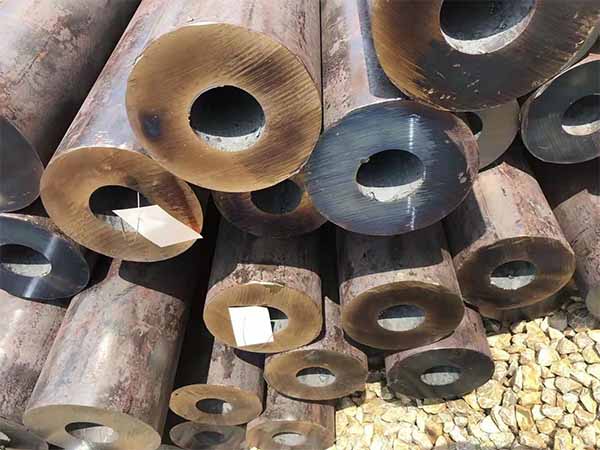
Why is pressure testing of seamless carbon steel pipes crucial?
Because seamless carbon steel pipes are designed to withstand internal pressure, even with advanced manufacturing processes, problems such as internal cracks, wall thickness deviations, or surface defects can still occur. Pressure testing ensures that seamless carbon steel pipes meet pressure design requirements, do not leak during operation, and are safe for long-term industrial use.
The main pressure testing methods for seamless carbon steel pipes include:
Hydraulic pressure testing (water pressure test)
Pneumatic pressure testing (air or gas test)
Non-destructive testing combined with pressure verification
Among these methods, hydraulic pressure testing is the most widely used because it provides accurate results and offers a high degree of safety during the testing process.
1. Hydrostatic Testing of Seamless Carbon Steel Pipes
Hydrostatic testing is the most common pressure testing method for seamless pipes. In this experiment, the pipe is filled with water and pressurized to verify its strength and leak resistance.
Hydrostatic testing typically includes the following steps: sealing both ends of the pipe securely; completely filling the pipe with water; expelling air from the pipe; increasing the pressure inside the pipe to the required test pressure; maintaining the pressure for a specified time; and checking the pipe for leaks or deformation. This process helps detect manufacturing defects and confirms that the pipe can withstand operating pressures.
Advantages of Hydrostatic Testing
High reliability and high accuracy
Safe testing process due to the use of incompressible water
Effective leak detection
Widely adopted by international standards
However, the pipe must be dried after testing, which may extend production time.
2. Pneumatic Testing (Air Pressure Testing)
Pneumatic testing uses compressed air or gas instead of water to test seamless carbon steel pipes. This method is usually used when hydrostatic testing is not applicable.
Because gas is compressible, pneumatic testing requires strict safety measures and a controlled testing environment.
Pneumatic Testing Procedure
The general procedure includes: sealing the pipe ends, introducing compressed air or inert gas, gradually increasing the pressure, monitoring pressure stability, and checking for leaks. This method is effective in detecting leaks, but must be operated with caution.
3. Non-Destructive Testing Combined with Pressure Testing
Modern pipe manufacturing no longer relies solely on pressure testing. Many manufacturers combine pressure testing with advanced non-destructive testing (NDT) methods to ensure pipe integrity. These testing methods help identify potential defects before pressure testing.
Common Non-Destructive Testing Methods for Seamless Pipes
Ultrasonic Testing (UT): Detects internal defects and wall thickness variations.
Eddy Current Testing (ECT): Identifies surface defects and cracks.
Magnetic Flux Leakage Testing (MFL): Detects corrosion or material discontinuities.
In many production lines, seamless carbon steel pipes first undergo ultrasonic testing, followed by hydrostatic testing to ensure full compliance with quality requirements.
Comparison of Pressure Testing Methods
Different testing methods serve different purposes in seamless carbon steel pipe production.
Testing Method Test Medium Application Safety Accuracy
Hydrostatic Testing Water Most pipelines Very High Excellent
Pneumatic Testing Air / Gas Special systems Medium High
Non-Destructive Testing N/A Manufacturing inspection Very High Preventive
Hydrostatic testing remains the industry standard for most applications.
How to Select the Right Pressure Testing Method
Choosing the correct pressure testing method depends on several key factors.
Pipe Application: Pipes used in high-pressure environments typically require hydrostatic testing.
Industry Standards: Project specifications and standards determine the required testing method.
Safety Considerations: Hydrostatic testing is generally safer compared to pneumatic testing.
Project Environment: If water contamination must be avoided, pneumatic testing may be required.
Manufacturing Requirements: Large-scale production often combines NDT and hydrostatic testing.
Selecting the right method ensures both safety and cost Efficiency.
Summary
Understanding pressure testing methods for seamless carbon steel pipes is crucial for ensuring product quality and operational safety. Hydrostatic testing remains the most widely used method due to its accuracy and safety; while pneumatic testing is suitable for specific conditions where hydrostatic testing is not feasible. In modern pipe manufacturing, these pressure tests are often combined with advanced non-destructive testing techniques to improve reliability.
Read more : Steel Pipe Pressure Ratings Guide
 Central Steel


 Language
 English
 Español
 بالعربية
 sales@central-steels.com
 0086-731-8865-5017