 Central Steel
Central Steel
Central Steel
Central Steel
Central Steel
When designing retaining structures or excavation support systems, one of the most common questions is: which steel sheet pile profile should be selected for the project—U-type, Z-type, or other special profiles?
Steel sheet piles may look similar at first glance, but their cross-sectional profile plays a critical role in structural performance, installation, and overall project cost. Choosing the wrong profile can lead to overdesign, insufficient bending resistance, or unnecessary material expenses.
This guide provides a practical, engineering-oriented comparison of U-type, Z-type, and other steel sheet pile profiles, helping you understand how each type performs and how to select the most suitable solution for your project.
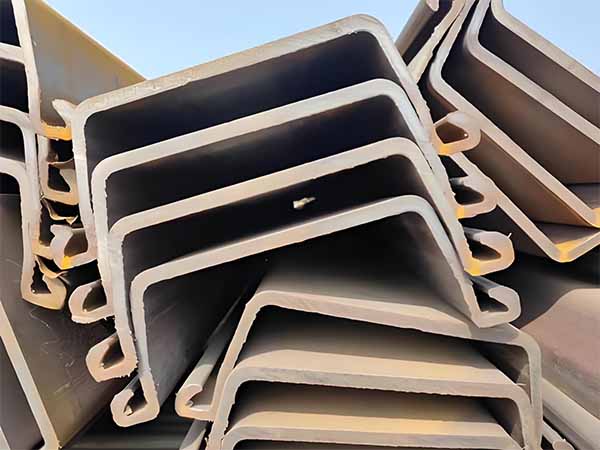
Why Steel Sheet Pile Profile Matters in Engineering Design
The profile of a steel sheet pile determines more than its appearance. It directly affects:
• Section modulus and bending resistance
• Load transfer efficiency
• Interlock position and wall continuity
• Structural behavior under lateral earth and water pressure
In retaining walls and cofferdams, steel sheet piles are primarily subjected to bending moments. A well-designed profile maximizes structural efficiency while minimizing steel consumption. This is why understanding steel sheet pile profiles is essential for both design engineers and procurement teams.
U-Type Steel Sheet Pile: Characteristics, Strengths & Limitations
1. Structural Characteristics of U-Type Steel Sheet Piles
U-type steel sheet piles feature a symmetrical U-shaped cross section, with interlocks located at the edges of each pile. This design allows adjacent piles to connect easily and form a continuous wall.
Key characteristics include:
• Symmetrical section geometry
• Interlocks at the pile edges
• Moderate section modulus compared to Z-type profiles
U-type sheet piles are widely produced and standardized, making them readily available for many projects.
2. Typical Applications of U-Type Steel Sheet Piles
U-type profiles are commonly used in:
• Temporary retaining walls
• Cofferdams for shallow excavations
• Trench shoring and utility works
• Medium-depth foundation pits
Their balanced geometry and ease of installation make them suitable for projects where structural demands are moderate and construction speed is important.
3. When U-Type Sheet Piles Are Not the Best Choice
Despite their versatility, U-type steel sheet piles are not ideal for every situation. They may be less suitable for:
• Deep excavations with high bending moment
• Permanent structures requiring maximum structural efficiency
• Projects where minimizing steel weight per square meter is critical
In these cases, alternative profiles—especially Z-type sheet piles—often provide better performance.
Z-Type Steel Sheet Pile: Designed for High Structural Performance
1. Why Z-Type Profiles Provide Higher Bending Resistance
Z-type steel sheet piles are specifically engineered to deliver higher section modulus per unit width. Their defining feature is that the interlocks are positioned near the neutral axis of the wall, which significantly improves bending efficiency.
Key advantages include:
• Larger effective section modulus
• Better distribution of bending stresses
• Higher load-bearing capacity with less steel
This makes Z-type profiles the preferred choice for structurally demanding applications.
2. Typical Projects Using Z-Type Steel Sheet Piles
Z-type steel sheet piles are widely used in:
• Deep excavation support systems
• Permanent retaining walls
• Port, quay wall, and marine structures
• Flood protection and riverbank reinforcement
For projects exposed to high earth pressure, water pressure, or long service life requirements, Z-type sheet piles offer superior structural performance.
Other Steel Sheet Pile Types: Flat and Special Profiles
In addition to U-type and Z-type profiles, other steel sheet pile types are used for specific engineering purposes.
Flat steel sheet piles are typically employed where bending resistance is not the primary requirement. Their main function is:
• Water cutoff walls
• Seepage control systems
• Soil containment in combination wall structures
Special profiles and combined wall systems—such as steel pipe piles combined with sheet piles—are also used in heavy-duty marine and waterfront projects where extreme loads are present.
U-Type vs Z-Type Steel Sheet Pile: Engineering Comparison
The table below highlights the key engineering differences between U-type and Z-type steel sheet piles:
|
Comparison Aspect |
U-Type Steel Sheet Pile |
Z-Type Steel Sheet Pile |
|
Section Modulus |
Moderate |
High |
|
Bending Resistance |
Medium |
Excellent |
|
Structural Efficiency |
Standard |
Very high |
|
Typical Applications |
Temporary & medium-depth works |
Deep & permanent structures |
|
Cost Performance |
Lower initial cost |
Better long-term efficiency |
This comparison clearly shows why Z-type profiles dominate high-performance retaining structures, while U-type profiles remain popular for general-purpose applications.
How to Choose the Right Steel Sheet Pile Profile for Your Project
Selecting the correct steel sheet pile profile should be based on project conditions, not habit or availability. Consider the following guidelines:
• Shallow excavation or temporary support → U-type steel sheet piles
• Deep excavation or high bending moment → Z-type steel sheet piles
• Water cutoff without major structural load → Flat sheet piles
• Heavy marine or quay wall projects → Combined wall systems
Other important factors include soil conditions, installation method, corrosion allowance, and whether the structure is temporary or permanent.
Conclusion
Choosing the right steel sheet pile profile is not simply a matter of selecting a type—it is a structural decision that directly impacts safety, efficiency, and project cost.U-type steel sheet piles offer flexibility and ease of use for general applications, while Z-type profiles deliver maximum bending resistance and structural efficiency for demanding projects. Flat and special profiles further expand the range of engineering solutions available.
Read more : Types and characteristics of steel piles


 Language
 English
 Español
 بالعربية
 sales@central-steels.com
 0086-731-8865-5017