Among various types of steel pipes,
seamless steel pipes are the preferred choice for high-pressure, high-temperature, and critical load-bearing fluid transmission systems due to their absence of welds and elimination of structural weak points.
This article will, in accordance with industry standards, provide an in-depth analysis of the calculation basis for the pressure rating of seamless steel pipes, the performance differences between different pipe wall series (Schedule 10, 40, 80), and offer an intuitive pressure comparison table to help you make accurate selection decisions.
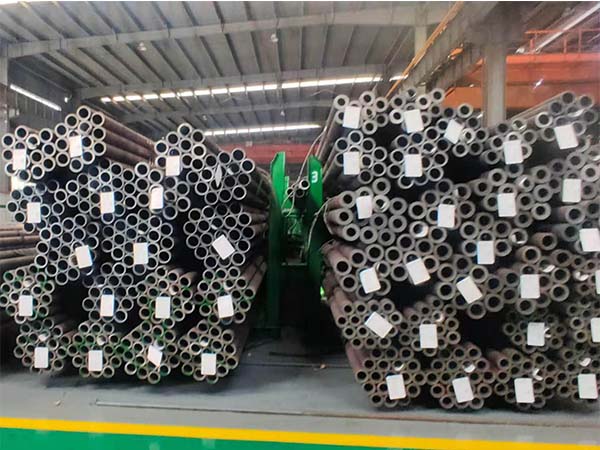
A steel pipe pressure rating refers to the maximum internal pressure (usually expressed in PSI or Bar) that a pipe can safely withstand at a specific operating temperature without permanent deformation or bursting.
For seamless steel pipes, their pressure ratings strictly adhere to international design specifications and manufacturing standards, such as ASME B31.3 (Process Piping Specification), ASME B36.10 (Carbon Steel Pipe Size Standard), and ASME B36.19 (Stainless Steel Pipe Size Standard). It is important to emphasize that the "Schedule" (SCH) number of a steel pipe represents the wall thickness rating, not the direct pressure value. However, since wall thickness directly determines the geometric strength of the pipe, the Schedule number is the core foundation for calculating pressure carrying capacity.
Four Core Factors Determining the Pressure Rating of Seamless Steel Pipes
According to the authoritative industry guide, the Steel Pipe Pressure Ratings Guide, the actual safe operating pressure of a seamless carbon steel or stainless steel pipe is not constant; it is determined by the following four engineering factors:
1. Nominal Pipe Size (NPS)
Pipe size is inversely proportional to pressure capacity. Within the same Schedule, the smaller the diameter, the higher the pressure it can withstand. For example, a 1/2-inch Schedule 40 pipe can withstand a much higher PSI pressure than an 8-inch
Schedule 40 pipe because the ratio of wall thickness to outer diameter (relative wall thickness) is much larger for smaller diameter pipes.
2. Wall Thickness and Barlow's Formula
The theoretical pressure-bearing capacity of seamless steel pipes can be precisely quantified mathematically using the classic Barlow's Formula, which establishes the relationship between internal pressure, wall thickness, outer diameter, and allowable stress of the material:
P = (2 × S × t) / (D − t)
Where:
P = Internal working pressure (PSI)
S = Allowable stress of the material (PSI), depending on the steel grade (e.g., ASTM A106/A53 Grade B)
t = Nominal wall thickness of the pipe (inches)
D = Outer diameter of the pipe (inches)
As the pipe wall series upgrades from Schedule 10 to Schedule 80, the wall thickness increases accordingly, and the pressure-bearing capacity of the pipe increases linearly.
3. Steel Grade and Material Standard
The chemical composition and manufacturing process of steel determine its "allowable stress". The most commonly used standard grades in the field of high-pressure seamless steel pipes include:
ASTM A106 Grade B: The industry gold standard for high-temperature, high-pressure seamless carbon steel pipes.
ASTM A53 Grade B: Widely used for medium- and low-pressure fluid transportation and mechanical structures.
ASTM A312: The standard specification for seamless stainless steel pipes.
The higher the material grade, the greater its allowable stress value. This means that, with identical geometry, an A106 B grade seamless pipe will have a higher pressure rating than a lower grade pipe.
4. Operating Temperature
As the fluid or ambient temperature increases, the tensile strength and yield strength of steel gradually decrease. For example, at ambient temperatures (maximum 100°F / 38°C), the steel pipe can perform at 100% of its allowable stress; however, when the temperature exceeds 400°F (204°C), the allowable stress of the material is significantly reduced, resulting in a 20% to 40% decrease in the overall pressure rating of the steel pipe.
Seamless steel pipe pressure rating comparison chart
|
Nominal Size (in)
|
Outside Diameter (in)
|
SCH 10 Wall Thickness (in)
|
SCH 10 Pressure Rating (PSI)
|
SCH 40 Wall Thickness (in)
|
SCH 40 Pressure Rating (PSI)
|
SCH 80 Wall Thickness (in)
|
SCH 80 Pressure Rating (PSI)
|
|
1/2"
|
0.840
|
0.065
|
3,100
|
0.109
|
4,995
|
0.147
|
7,105
|
|
1"
|
1.315
|
0.109
|
2,750
|
0.133
|
3,810
|
0.179
|
5,450
|
|
2"
|
2.375
|
0.109
|
1,460
|
0.154
|
2,377
|
0.218
|
3,545
|
|
4"
|
4.500
|
0.120
|
890
|
0.237
|
1,914
|
0.337
|
2,825
|
|
6"
|
6.625
|
0.134
|
640
|
0.280
|
1,524
|
0.432
|
2,430
|
|
8"
|
8.625
|
0.148
|
540
|
0.322
|
1,342
|
0.500
|
2,140
|
Frequently Asked Questions (FAQ) in Engineering
1. Why are seamless pipes preferred over welded pipes in high-pressure system design?
Welded pipes have a longitudinal weld seam left during manufacturing. Under extreme pressure or material fatigue, the weld seam can become a potential stress concentration point. Seamless steel pipes, on the other hand, are formed in one piece through piercing and hot rolling/cold drawing processes, resulting in a uniform, continuous overall microstructure. This high degree of structural homogeneity allows seamless pipes, for the same size and material, to typically have a calculated allowable pressure that is 10% to 20% higher than welded pipes.
2. How does the safety factor affect piping design?
In practical engineering, it is absolutely unacceptable for steel pipes to operate near their theoretical burst pressure. According to ASME standards, a system safety factor of 1.5 to 2.0 (or even higher) must be introduced. If the calculated maximum permissible working pressure (MAWP) of a seamless steel pipe is 3,000 PSI, after adjusting for safety factors, the actual design operating pressure of the entire pipeline network is usually limited to between 1,500 and 2,000 PSI.
Read more : Steel Pipe Pressure Ratings Guide or Carbon Steel Pipe Pressure Rating Chart
 Central Steel


 Language
 English
 Español
 بالعربية
 sales@central-steels.com
 0086-731-8865-5017