 Central Steel
Central Steel
Central Steel
Central Steel
Central Steel
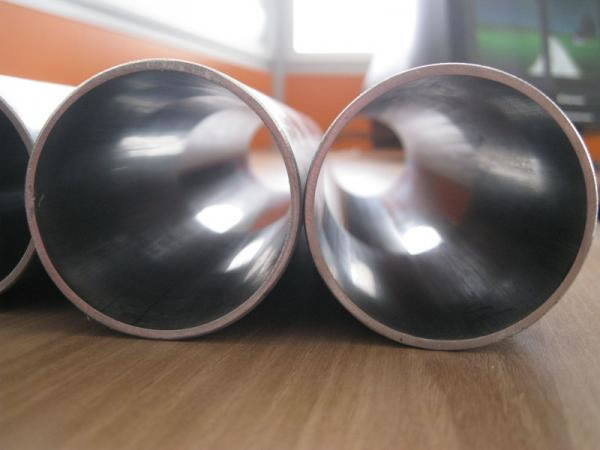
Based on different substrate conditions, manufacturing processes, and post-weld secondary cold working methods, the ASTM A513 standard subdivides steel pipes into six distinct categories (Types):
|
ASTM A513 Type |
Manufacturing Designation |
Description |
|
Type 1A |
AWHR |
As-Welded from Hot-Rolled Steel (Unpickled) |
|
Type 1B |
AWPO |
As-Welded from Hot-Rolled Steel (Pickled & Oiled for better finish) |
|
Type 2 |
AWCR |
As-Welded from Cold-Rolled Steel (High dimensional precision) |
|
Type 3 |
Sink-Drawn |
Cold-Drawn through a die without an internal mandrel |
|
Type 4 |
Sink-Drawn |
Special mandrel processing (Less common) |
|
Type 5 |
DOM (Draw Over Mandrel) |
Cold-drawn over an internal mandrel; the premium grade |
|
Type 6 |
Special DOM |
Optimized DOM for maximum uniform wall thickness and concentricity |
Why is Type 5 DOM tubing the preferred choice for high-precision machining?
Among all categories in ASTM A513, Type 5 DOM (mandrel-drawn tubing) is the most commonly used material in precision machining. Although categorized under welding standards due to its predecessor being ERW (Extended Erector Welded) tubing, DOM tubing is essentially a high-end product reshaped through deep cold drawing deformation:
1. Mandrel Drawing Process: At room temperature, the base ERW welded tubing is drawn forcefully through an external mold while a precision carbide mandrel is inserted internally.
2. Weld Excess Elimination: During the intense cold drawing and extrusion deformation process, the weld spatter and internal weld excess (Flash) inside the steel tube are completely flattened and integrated, fusing with the base material.
3. A Qualitative Leap: After DOM processing, the microstructure and macroscopic traces of the weld seam almost completely disappear. The steel pipe achieves extremely high concentricity (extremely low eccentricity), a mirror-like surface finish, and, due to work hardening, its tensile and yield strengths increase significantly.
Summary
ASTM A513 ERW and DOM mechanical tubes, with their unparalleled dimensional control precision, superior mechanical strength, and excellent machinability, have become cornerstone materials for modern industrial precision manufacturing.


 Language
 English
 Español
 بالعربية
 sales@central-steels.com
 0086-731-8865-5017