In modern industrial thermal systems, selecting pressure piping materials that offer high safety, high thermal conductivity, and cost-effectiveness is crucial. ASTM A178, as the international core standard for
resistance-welded (ERW) carbon steel and carbon-manganese steel boiler and superheater tubes, is widely used in various industrial heat exchange fields.
What is ASTM A178 ERW Boiler Tube?
ASTM A178/A178M is a standard specification developed by the American Society for Testing and Materials (ASTM), specifically for resistance-welded (ERW) carbon steel and carbon-manganese steel boiler and superheater tubes.
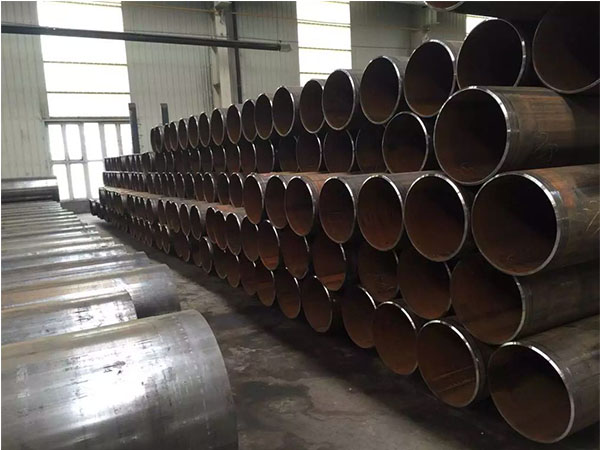
Unlike ordinary welded tubes used for conventional fluid transport, ASTM A178 steel tubes are designed specifically for heat transfer and pressure service under high-temperature and high-pressure environments. As core pressure-bearing components, they must maintain extremely high structural integrity and excellent thermal conductivity under long-term thermal stress.
Core Application Areas
ASTM A178 steel pipes are widely used in various high-requirement industrial thermal energy equipment, including:
* Boilers & Superheaters: Used to transport high-temperature steam and high-pressure water.
* Heat Exchangers & Condensers: Enables efficient heat exchange in chemical, oil refining, and petrochemical equipment.
* Economizers: Utilize waste heat from flue gas to heat boiler feedwater, significantly improving the overall thermal efficiency of the system.
* Thermal Power Plants: Serves as the foundation pipe material for modern power plant heat exchange networks.
ASTM A178 Manufacturing Process and Heat Treatment
The high reliability of ASTM A178 steel pipes stems from its advanced resistance welding (ERW) production line. High-frequency current heats the edges of the steel strip, extruding and fusing it without adding any external filler metal (such as welding rods or wires), ensuring the homogeneity of the weld with the base material. The standard production process typically includes:
1. Coil preparation and slitting: High-quality hot-rolled steel coils are precisely slid into strips of the required width.
2. Roll forming: The steel strip is gradually cold-bent into a circular tube through multiple forming rolls.
3. High-frequency resistance welding (ERW): High-frequency current is concentrated at the butt joint edges of the steel tubes to generate intense resistance heat, bringing them to a molten state. Welding is then completed under the mechanical pressure of extrusion rolls.
4. Post-weld heat treatment (PWHT): This is a crucial step determining quality. After welding, the entire tube or weld area must undergo normalizing heat treatment, followed by air cooling. This process aims to eliminate residual welding stress and refine the grain structure of the weld area.
5. Sizing, straightening, and cutting: After normalizing, the steel tubes are sizing to ensure stringent dimensional tolerances, then straightened and cut to the specified length.
In summary
ASTM A178 ERW boiler tubes, with their superior weld quality, stable dimensional tolerances, excellent heat transfer performance, and significant cost advantages, have become an indispensable cornerstone of the modern thermal energy industry. While seamless tubes such as A192 or A210 still dominate in extreme high-pressure power generation, ASTM A178 remains the best choice for balancing performance and efficiency in medium and low-pressure boilers, industrial heat exchangers, economizers, and conventional heat exchange systems.
 Central Steel


 Language
 English
 Español
 بالعربية
 sales@central-steels.com
 0086-731-8865-5017