Mild steel and
stainless steel are two common iron-based alloy materials. Mild steel's main advantages are strength, cost, and ease of machining, while stainless steel's main advantages are corrosion resistance, aesthetics, and durability. Due to slight differences in chemical composition, they exhibit drastically different characteristics in mechanical properties, corrosion resistance, and processing difficulty.
What is Mild Steel?
Mild steel, also known as mild steel, is a type of carbon structural steel with a carbon content typically between 0.05% and 0.25%. It possesses excellent ductility, toughness, and weldability. It is very easy to cut, bend, and machine, and has strong magnetic properties. It is mainly used in building frames, bridges, automotive parts, and fluid transport pipelines and building foundations in low- to medium-pressure environments. In the field of piping structures, common low-carbon steel grades include ASTM A36 (structural steel plate standard) and ASTM A53 Grade A/B (general-purpose low-carbon steel pipe).
What is Stainless Steel?
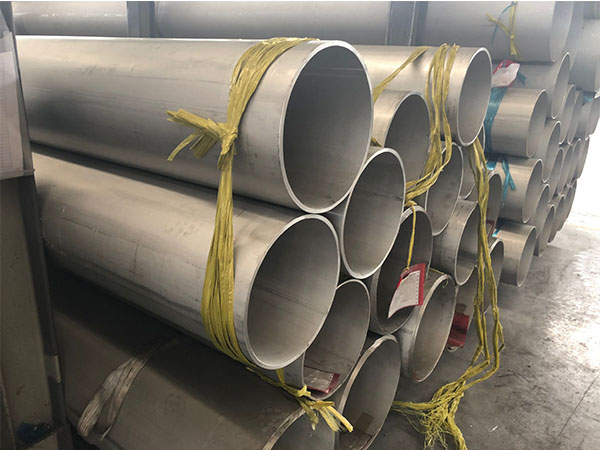
Stainless steel is an alloy steel specially designed to resist corrosion. Its core characteristic is that it contains at least 10.5% chromium. It is mainly used in chemical storage tanks, high-pressure boiler tubes, food processing equipment, medical devices, and Schedule 10S piping systems with extremely high corrosion resistance requirements. It can be divided into two types: austenitic stainless steel and martensitic stainless steel:
Austenitic stainless steel: Non-magnetic or weakly magnetic, with excellent corrosion resistance. Examples include the most famous 304 (containing 18% chromium + 8% nickel) and 316 (containing added molybdenum), commonly used in marine and highly corrosive chemical environments.
Martensitic/ferritic stainless steel: Magnetic, with high strength, but relatively weaker corrosion resistance (e.g., 410, 430).
Why does stainless steel have corrosion-resistant properties? What is the principle behind it?
When chromium in stainless steel is exposed to air, it reacts with oxygen to form a very dense, invisible chromium oxide passivation film on the steel surface. This film completely isolates oxygen and moisture, and even if the surface suffers mechanical damage, it can automatically repair itself in the air.
Mild Steel vs. Stainless Steel: 5 Core Engineering Differences
1. Corrosion Resistance (Most Significant Difference)
Mild Steel: Lacking a self-healing protective film, it is highly susceptible to oxidation and rust (forming rust) in humid, acidic, or salty air. Therefore, low carbon steel must undergo surface anti-corrosion treatments such as hot-dip galvanizing, 3LPE coating, epoxy resin powder (FBE), or cement lining when used outdoors.
Stainless Steel: With its built-in chromium passivation film, it perfectly resists the corrosion of moisture and most acidic and alkaline fluids without any surface treatment.
2. Material Cost
Mild Steel: Low raw material cost, extremely economical processing and manufacturing, making it the first choice for budget-sensitive large-scale projects.
Stainless Steel: Due to the addition of high-value precious metal alloying elements such as chromium, nickel, and molybdenum, and the higher processing difficulty, its initial procurement cost is typically 3 to 5 times that of low carbon steel. However, in highly corrosive environments, stainless steel, with its maintenance-free operation and ultra-long lifespan, often boasts a better life-cycle return on investment (LCC).
3. Mechanical Strength and Temperature Resistance
Mild Steel: Although called mild steel, it possesses extremely high toughness and impact resistance. However, its performance degrades significantly at extreme high or low temperatures.
Stainless steel: Especially austenitic stainless steels (such as 304/316), not only exhibit extremely high tensile strength at room temperature, but also maintain excellent structural strength and resistance to brittle fracture in extreme high-temperature environments (such as boiler tubes in thermal power plants) and cryogenic extreme low-temperature environments (such as LNG liquefied natural gas pipelines).
4. Machinability and Weldability
Mild Steel: Possesses unparalleled weldability and machinability, allowing for easy joining using almost any standard welding method (such as ERW, submerged arc welding) with minimal weld cracking.
Stainless steel: Due to its high toughness and severe work hardening, it causes significant tool wear during machining. Due to its high coefficient of thermal expansion, welding with stainless steel requires experienced welders using specialized stainless steel electrodes and strict control of heat input to prevent a decrease in localized corrosion resistance (sensitization).
5. Aesthetics and Surface Treatment
Mild Steel: Possesses strong weldability and machinability, allowing for easy joining using almost any standard welding method (such as ERW, submerged arc welding) with minimal risk of weld cracking.
Stainless steel: Due to its high toughness and severe work hardening, it causes significant tool wear during machining. Welding with stainless steel requires experienced welders using specialized stainless steel electrodes and strict control of heat input to prevent a decrease in localized corrosion resistance (sensitization).
Frequently Asked Questions (FAQ)
1. Will stainless steel never rust?
This is a common misconception. Although stainless steel is called "stainless," in certain harsh environments (such as high-concentration chloride ion environments, severely salt-sprayed marine beaches, or electrochemical corrosion caused by accumulated carbon steel filings), its surface chromium protective film can be damaged and unable to be repaired in time, leading to pitting corrosion or crevice corrosion. Therefore, in marine engineering, it is often necessary to upgrade to molybdenum-containing 316 stainless steel or duplex stainless steel.
2. Why is low-carbon steel used more than stainless steel in some high-pressure pipeline designs?
The main reasons are cost and ease of processing. In large-diameter, long-distance oil and gas pipelines, the amount of pipe material used is extremely large. Low-carbon steel (such as API 5L grade pipeline steel) combined with a mature 3LPE anti-corrosion coating on the outer wall can provide extremely high pressure ratings while keeping project costs within a reasonable range.
Read more : What is Mild Carbon Steel?
 Central Steel


 Language
 English
 Español
 بالعربية
 sales@central-steels.com
 0086-731-8865-5017