Mild carbon steel is one of the most widely used materials in construction, manufacturing, piping, and infrastructure projects. It is renowned for its excellent weldability, ductility, and cost-effectiveness, playing a crucial role in modern industrial production.
In short,
Mild carbon steel is a type of steel with a carbon content of approximately 0.05% to 0.25%. Compared to many other types of steel, this relatively low carbon content makes it easier to process, weld, and form.
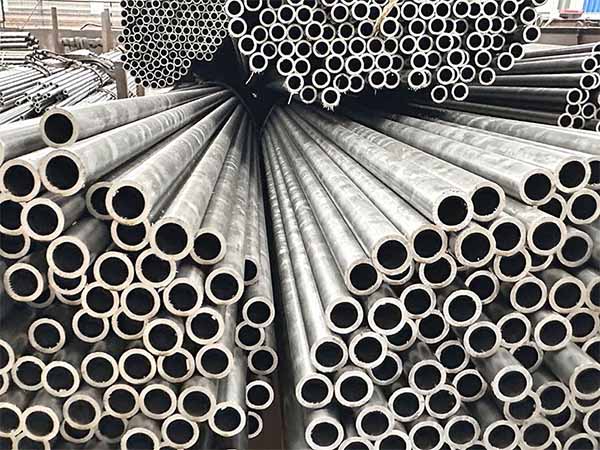
Definition of Mild Carbon Steel
Mild carbon steel is a type of carbon steel with a low carbon content. It possesses good weldability, ductility, and economy, and is widely used in construction, piping, machinery manufacturing, and structural and industrial fields. Unlike high-carbon steel, m
ild carbon steel is neither too hard nor too brittle; instead, it maintains stable mechanical properties while being easy to process.
It mainly includes the following characteristics: good weldability, high ductility, ease of processing, and reliable strength.
Typical Chemical Composition of Mild Carbon Steel
Carbon: 0.05% – 0.25%
Manganese: Up to 1.65%
Silicon: Up to 0.60%
Mechanical Properties of Mild Carbon Steel
Strength:
Mild carbon steel possesses sufficient tensile and yield strength for structural and industrial applications. While not as strong as high-carbon steel, it provides reliable performance for most projects.
Ductility: One of the most important properties of low-carbon steel is its excellent ductility. It can be bent, rolled, and formed without cracking, which is crucial in manufacturing and construction.
Weldability: Due to its low carbon content, m
ild carbon steel exhibits excellent weldability. This makes it an ideal material for the manufacture of pipes, steel structures, and industrial equipment.
Processability: The material is easy to cut, drill, and machine, enabling the efficient production of mechanical parts and structural components.
Toughness:
Mild carbon steel also possesses good toughness, allowing it to withstand impacts without fracturing, which is crucial in structural applications.
Common Applications of Mild Carbon Steel
Building and Structural Engineering:
Mild carbon steel is widely used in buildings, bridges, and infrastructure projects. Due to its reliable performance and cost-effectiveness, structural beams, frames, and reinforcing bars are often made of m
ild carbon steel.
Pipe and Pipe Industry: In piping systems, low-carbon steel is commonly used for water pipelines, structural piping, and industrial piping systems. Its good weldability and mechanical strength make it suitable for large-scale piping projects.
Manufacturing: Manufacturers rely on m
ild carbon steel to produce mechanical frames, equipment components, and prefabricated structures. Its good machinability helps improve production efficiency.
Automotive Industry: The automotive industry uses m
ild carbon steel in bodywork, structural components, and safety components. It provides both strength and controllable production costs.
Infrastructure and Energy Projects:
Mild carbon steel is also used in power plants, industrial facilities, and transportation systems where durability and structural integrity are critical.
Summary
Mild carbon steel is one of the most fundamental materials in modern industry. Its low carbon content gives it excellent weldability, ductility, and cost-effectiveness, making it suitable for building, piping, manufacturing, and infrastructure projects.
 Central Steel


 Language
 English
 Español
 بالعربية
 sales@central-steels.com
 0086-731-8865-5017