Steel pipes are an indispensable component in construction, energy transmission, mechanical engineering, and infrastructure development. Among the many widely used materials, carbon steel pipes and low-carbon steel pipes stand out due to their balance of performance, usability, and cost-effectiveness.
Although these two materials are often discussed together, they are not interchangeable in engineering practice. Understanding their metallurgical differences and applications is crucial for selecting the appropriate piping system. This article provides a professional comparison of carbon steel pipes and
mild steel pipes in terms of composition, mechanical properties, processing characteristics, and industrial applicability.
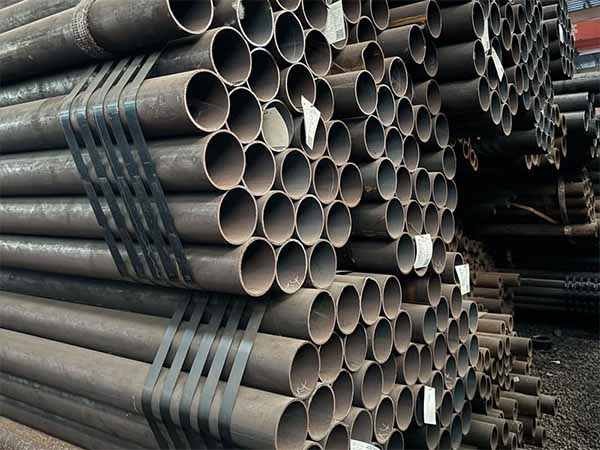
Understanding Mild Steel Pipes
Mild Steel Pipes, also known as low-carbon steel pipes, typically contain 0.05% to 0.25% carbon. Their low carbon content gives them excellent formability and weldability, making them ideal for processing-intensive projects.
Key Characteristics of Low-Carbon Steel Pipes
Low carbon content ensures high ductility and toughness;
Easy to cut, bend, and weld without preheating;
Stable mechanical properties, suitable for general engineering applications;
Economical, ideal for high-volume applications;
Requires surface protection to prevent corrosion in humid or chemical environments.
Low-carbon steel pipes are widely used in structural frames, scaffolding systems, low-pressure piping, and general manufacturing engineering, where ease of installation and cost control are more important than strength.
Understanding Carbon Steel Pipes
Carbon steel pipes encompass a wider range of materials, typically containing 0.25% to 2.0% carbon (depending on the steel grade). As carbon content increases, strength, hardness, and wear resistance also improve, making these pipes suitable for harsher industrial environments.
Key Characteristics of Carbon Steel Pipes
Higher tensile and yield strength than low-carbon steel;
Superior resistance to mechanical wear and deformation;
Poorer ductility, more sensitive to welding parameters;
Commonly used in high-pressure, high-temperature systems;
Usually coated or lined to control corrosion. Carbon steel pipes are widely used in oil and gas transportation, petrochemical processing, power generation, and heavy machinery, where stress performance is a primary consideration.
Carbon Steel Pipes vs. Low-Carbon Steel Pipes: Key Differences
1. Chemical Composition and Metallurgical Properties
The fundamental difference lies in the carbon content, which directly affects the microstructure.
Low-carbon steel pipes are primarily composed of ferrite with a lower pearlite content, ensuring their flexibility and toughness. Carbon steel pipes contain a higher proportion of pearlite, increasing strength but reducing plasticity. This metallurgical difference explains why low-carbon steel performs better in manufacturing and processing, while carbon steel performs better in load-bearing environments.
2. Mechanical Properties
From a practical engineering perspective:
Low-carbon steel pipes have sufficient strength to meet the needs of general construction and low-to-medium pressure fluid transportation. Carbon steel pipes have a higher load-bearing capacity, making them suitable for structural reinforcement and pressure systems. For projects involving vibration, thermal expansion, or dynamic loads, the flexibility of low-carbon steel typically improves long-term reliability. Conversely, carbon steel is preferred when static strength and wear resistance are primary design considerations.
3. Weldability and Manufacturability
From a manufacturing perspective, weldability is a decisive factor.
Low-carbon steel pipes can generally be welded using standard methods without preheating or post-weld heat treatment. Carbon steel pipes, especially medium and high-carbon steel pipes, may require controlled heat input, preheating, and stress relief to prevent cracking. For projects requiring frequent on-site adjustments, low-carbon steel can significantly reduce manufacturing risks and labor costs.
4. Corrosion Resistance
Both carbon and low-carbon steels are susceptible to corrosion due to the lack of alloying elements found in stainless steel. Common protective methods include galvanizing, epoxy coating, and lining.
In corrosive environments, the choice between low-carbon and carbon steel depends more on the surface treatment strategy than on the base material itself.
5. Cost-Effectiveness
Low-carbon steel pipes are generally cheaper and easier to purchase in bulk.
Carbon steel pipes are more expensive due to higher mechanical performance requirements and the need for additional processing.
In summary, both low-carbon steel pipes and carbon steel pipes are indispensable in modern industry, but they serve different engineering applications. Low-carbon steel pipes offer flexibility, economy, and ease of manufacture, making them ideal for general construction and low-pressure systems. Carbon steel pipes, with their superior strength and durability, are specifically designed for industrial environments with extremely high performance requirements.
 Central Steel


 Language
 English
 Español
 بالعربية
 sales@central-steels.com
 0086-731-8865-5017