Seamless pipe fittings—including seamless elbows, tees, reducers, and caps—play a crucial role in changing fluid direction and regulating flow. Like seamless steel pipes, seamless fittings, due to the absence of any weld joints, possess extremely high microstructural uniformity, making them the preferred choice for high-pressure, high-fatigue environments.
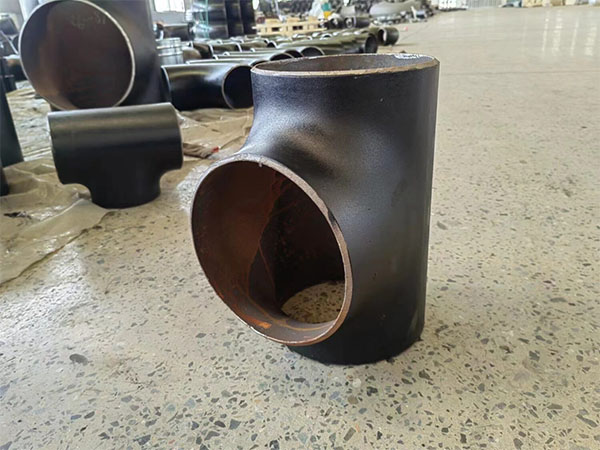
What are seamless pipe fittings? What are the core standards for their manufacturing?
Seamless pipe fittings are pipe connections manufactured using
seamless steel pipes as the base material through various cold-forming or hot-forming processes. Because no longitudinal or circumferential welds are introduced during the entire manufacturing process, they perfectly inherit the excellent pressure rating of seamless steel pipes.
In international engineering, the production and dimensional design of seamless pipe fittings strictly adhere to the following core standards:
ASME B16.9: Standards for factory-manufactured forged steel butt-welded pipe fittings (covering dimensions, tolerances, and testing).
ASTM A234 / A234M: Standard specifications for carbon steel and alloy steel pipe fittings for medium and high temperatures (such as the common WPB and WP91 grades).
ASTM A403: Specification for forged austenitic stainless steel pipe fittings.
4 Core Seamless Pipe Fitting Forming Processes
Depending on the shape of the pipe fitting (elbow, tee, or reducer) and material properties, manufacturers typically employ the following four mainstream seamless forming technologies:
1. Mandrel Method / Hot Push Forming – Specifically for Elbows
This is the most commonly used and efficient process for manufacturing seamless elbows globally.
Process Flow: Seamless steel pipe is cut to a specific length and fitted into a mandrel with an internal horn-shaped, tapered diameter. With the aid of an induction heating coil, mechanical thrust propels the pipe forward. As the pipe passes through the mandrel, it simultaneously expands in diameter and bends.
Technical Advantages: The produced elbows have extremely uniform wall thickness and an aesthetically pleasing appearance, making them ideal for mass production of Schedule 40 and Schedule 80 carbon steel and alloy steel elbows.
2. Hydraulic Bulging Method
Specifically for tees. For manufacturing seamless tees with small to medium diameters, hydraulic bulging is an excellent cold forming process.
Process Flow: A seamless tube blank is placed in a specific forming mold. Liquid is injected into the tube and pressurized. Under the simultaneous extrusion of mechanical forces on both sides, the high-pressure liquid inside the tube forces the tube wall to "bulge" towards the side hole of the mold, thus forming the branch pipe of the tee.
Technical Advantages: This process is a cold working process, resulting in extremely high surface finish and dimensional accuracy. It is commonly used in the manufacture of stainless steel and non-ferrous metal tees.
3. Compression Molding (Die Forging)
This process is widely used in the manufacture of seamless reducers and some large-diameter tees.
4. Process Flow
Reducing Ends: After heating the pipe blank, it is placed in a reducing or expanding die and pressed to reduce or expand the diameter of the pipe end.
Tee (Hot Drawing): The pipe blank is heated above the critical temperature, and a small hole is punched at the part where the branch pipe will be inserted. The branch pipe is then "drawn" into shape using a die.
4. Stamping Method/Pressing – Specifically for Pipe Caps
Seamless pipe caps are typically produced using a one-piece steel plate stamping process. A round steel plate is heated and placed between male and female dies, then stamped into a hemispherical or elliptical structure in one pass using a hydraulic press.
Heat Treatment and Surface Treatment
Forming is only the first step. Because stress concentration or work hardening occurs during forming, the following subsequent processes are necessary to restore its physical properties:
Heat Treatment:This is crucial in determining the final physical properties (yield strength, impact toughness) of seamless pipe fittings. Depending on the material grade, pipe fittings require normalizing, quenching and tempering, or solution annealing (for stainless steel). This eliminates internal residual stress, optimizes the grain structure, and ensures that the fittings will not experience brittle fracture during future high-pressure pipeline operation.
Sandblasting and Pickling (Surface Passivation): Heat-treated pipe fittings will have an oxide scale on their surface. Carbon steel fittings require sandblasting for polishing, followed by application of rust-preventive oil or hot-dip galvanizing. Stainless steel fittings must undergo pickling and passivation to restore their surface's corrosion-resistant passivation film.
Beveling: To facilitate on-site butt welding, the ends of seamless pipe fittings must be precisely beveled according to ASME B16.25 standards. A bevel of approximately 37.5 mm is typically used to ensure good penetration when butt-welding the fitting to the seamless steel pipe.
 Central Steel


 Language
 English
 Español
 بالعربية
 sales@central-steels.com
 0086-731-8865-5017