In oil and gas transportation, fluid pipelines, and industrial structural systems, the weld quality of
ERW (electric resistance welded) steel pipes directly determines the safe service life of the pipeline. During the manufacturing process of ERW steel pipes, the maximum welding temperature is the most critical parameter for controlling the weld strength, toughness, and crack resistance. This article will provide an in-depth analysis of the maximum temperature that ERW steel pipes can withstand during welding, the key factors affecting heat input, and how to meet international engineering standards through strict temperature control.
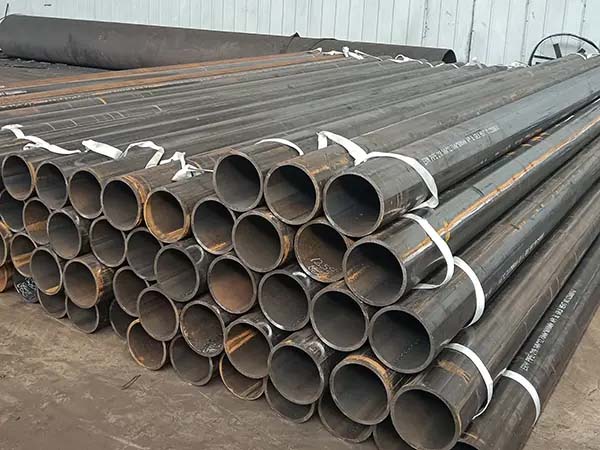
What is the welding temperature of ERW steel pipes?
Unlike traditional arc welding with filler metal, ERW (Electric Resistance Welding) utilizes the skin effect and proximity effect of high-frequency current to rapidly heat the edge of the pipe blank to a molten state, which is then forged using extrusion rolls.
Therefore, the "welding temperature" of ERW steel pipes actually refers to the local melting and forging temperature reached instantaneously at the edge of the pipe. For standard carbon steel, this ideal operating temperature range is typically between 1300°C and 1450°C.
Below the lower limit (cold welding): The metal fails to fully fuse, resulting in residual inclusions in the weld and a precipitous drop in strength.
Exceeding the limit (overheating): When the temperature exceeds the limit (usually greater than 1500°C), the steel grains become severely coarse, and a large amount of carbon is burned off, leading to extreme brittleness in the weld. This irreversible damage is called "overheating."
Four Core Factors Determining the Welding Limit Temperature of ERW Steel Pipes
The extremely high temperatures that ERW steel pipes can withstand during welding are not fixed; they depend on the following four key engineering variables:
1. Material Grade and Carbon Equivalent
The chemical composition of the steel pipe directly determines its melting point and heat sensitivity. According to standards such as
API 5L and ASTM A53, high-grade steel pipes (such as API 5L X65, X70) contain more alloying elements (such as niobium, vanadium, and titanium), and their welding limit temperature window is narrower than that of basic carbon steel (such as ASTM A53 Grade B). Materials with higher carbon equivalent (CEV) are more sensitive to heat-affected zone (HAZ) embrittlement caused by high-temperature overheating.
2. Wall Thickness
Wall thickness is a key factor in determining heat input. Thick-walled tubes require higher current power to penetrate and heat, easily leading to a "V-shaped temperature gradient" where the surface temperature exceeds the limit and overheats, while the core layer has not yet reached its melting point. Therefore, the maximum heating temperature of thick-walled ERW tubes usually needs to be more strictly limited, coupled with a slower welding speed.
3. Power/Speed Ratio in High-Frequency Welding
Welding temperature is determined by heat input, which is directly proportional to the equipment output power and inversely proportional to the welding speed. If too much power is input at low speeds, the instantaneous temperature at the tube edge will instantly exceed the limit, causing severe spatter and oxidation.
4. Post-Weld Heat Treatment (PWHT) Temperature
Although this is not the temperature at the instant of welding, it is a necessary means to eliminate the negative effects of extreme high temperatures. For high-standard ERW steel pipes, the weld area must be reheated to 850°C-950°C for normalizing via medium-frequency induction heating to refine the grains coarsened at extreme high temperatures and restore the microstructure.
Typical Welding Temperature Parameters for ERW Steel Pipes
Note: The following data is based on typical
high-frequency straight seam welding (HFW) processes and conventional production parameters. Actual engineering projects should adhere to the specific manufacturer's Welding Procedure Qualification (WPS).
High-Temperature Effects of ERW Pipe vs. Seamless Steel Pipes
In harsh environments involving high temperatures and pressures (such as high-pressure boiler tubes or demanding fluid transport), the thermal sensitivity of pipelines varies significantly:
Comparison Dimensions: ERW (Resistance Welded Steel Pipe) Seamless steel pipes have a longitudinal heat-affected zone (HAZ) in their thermodynamic structure. The microstructure in this area is prone to stress concentration due to the extreme temperatures experienced. Seamless pipes, on the other hand, are formed in one piece through hot rolling or cold drawing and piercing, eliminating localized ultra-high temperature areas and resulting in a uniform grain structure. Overheating failure risk: If the welding temperature exceeds the limit, the weld is prone to microcracks and brittle fracture. Uniform overall pressure bearing, with no weak points caused by localized welding heat input. Typical applications include low-pressure water, oil and gas pipelines (with strict PWHT), and structural pipes. High-pressure boilers, ultra-high-temperature steam pipelines, and deep-water hydraulic systems.
Engineering Selection and Quality Control Guidelines: How to Avoid Temperature Limit Issues?
When purchasing and using ERW steel pipes, to ensure that the pipes have not suffered extreme temperature damage during production, engineers should pay attention to the following:
Review the Post-Weld Heat Treatment (PWHT) report: Request the manufacturer to provide the temperature records of weld annealing/normalizing to ensure that the weld microstructure has been fully restored.
Require Non-Destructive Testing (NDT): Ultrasonic testing (UT) or eddy current testing (ET) can effectively detect cracks and micro-inclusions caused by abnormal welding temperatures (cold welding or overheating).
Metallographic microscopy inspection: In destructive sampling tests, observe the fusion line at the weld center. If no coarse Widmanstätten structure or severe oxides are observed, it indicates good control of the welding limit temperature.
Frequently Asked Questions (FAQ) about ERW welding temperature
Q: If the temperature accidentally exceeds the limit during ERW welding, can it be salvaged through heat treatment?
No. Overheating caused by exceeding the limit temperature will cause localized melting or even oxidation of the grain boundaries within the metal, destroying the bonding force between the crystals. This structural damage is irreversible and cannot be repaired by subsequent annealing or normalizing treatments; the section of pipe must be scrapped and cut off.
Q: Does the pipe diameter affect the welding temperature setting?
It will indirectly affect it. Although the melting point of steel is fixed, the larger the pipe diameter, the greater the springback stress during pipe forming. To ensure smooth extrusion fusion at the V-angle, large-diameter ERW pipes often require more precise adjustment of the heat input in actual production to avoid uneven temperature.
Q: Why do high-grade API line pipes have lower weld limit temperatures?
High-strength steel pipes achieve high strength through the addition of microalloying elements (Nb, V, Ti) and controlled rolling and cooling processes (TMCP). Excessively high welding temperatures can destroy the carbonitride precipitation formed by these microalloying elements, leading to severe softening and embrittlement of the heat-affected zone. Therefore, high-strength materials must adhere to the principle of "low heat input."
Summary
The weld limit temperature of ERW steel pipes (typically between 1400°C and 1500°C, depending on the material) is a critical threshold. Precise temperature control, combined with scientific post-weld normalizing treatment (PWHT), is the cornerstone of ensuring pipeline compliance with stringent international standards such as API, ASTM, and EN. In the procurement and design phases of large-scale engineering projects, a thorough understanding of the manufacturer's temperature control system and non-destructive testing procedures is best practice to ensure the long-term safe and stable operation of pipelines.
 Central Steel


 Language
 English
 Español
 بالعربية
 sales@central-steels.com
 0086-731-8865-5017