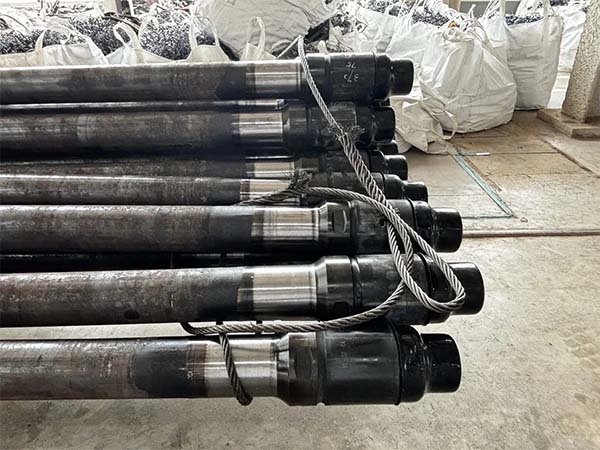
Seamless steel pipes are widely used in the petroleum drilling sector, particularly for the manufacture of drill pipes and other high-strength drilling tubulars. Drill pipe bodies are typically made from high-strength steel and feature end-upsetting and welded tool joints.
Unlike standard line pipe used for fluid transport, drill pipe functions as a mechanical component within the drill string. It must not only transmit torque and withstand axial and bending loads but also serve as a high-pressure conduit for drilling fluid. Consequently, the selection of seamless drill pipe requires careful consideration of key factors such as steel grade, wall thickness, end-upsetting configuration, tool joint connection method, heat treatment process, inspection requirements, and traceability.
Understanding the Oil Drilling Process
Before diving into the equipment, it is essential to understand the sheer physical demands of the oil drilling process.
Modern rotary drilling involves boring a hole deep into the earth's crust to reach oil or natural gas reservoirs. This process requires a massive drill bit attached to a string of specialized steel pipes. As the drill bit grinds through rock formations, drilling fluid (commonly known as "mud") is pumped down the pipe. This fluid cools the bit, stabilizes the wellbore pressure, and carries rock cuttings back to the surface.
This environment is characterized by:
Extreme depths: Often exceeding thousands of meters.
High hydrostatic pressure: From both the surrounding earth and the internal drilling fluids.
Dynamic stress: Constant vibration, rotation, and bending forces.
The Critical Role of the Drilling Pipe
In this complex operation, the drilling pipe acts as the crucial lifeline of the entire rig. It is not merely a hollow tube; it is a highly engineered mechanical component.
The primary functions of a drill pipe include:
Transmitting Torque: It transfers rotational power from the drilling rig at the surface down to the drill bit at the bottom of the well.
Withstanding Axial Tension: It must support its own massive weight, as well as the weight of the bottom hole assembly (BHA), without snapping under the tension.
Fluid Circulation: It serves as the high-pressure conduit for the drilling mud, which is vital for maintaining the integrity of the wellbore and preventing blowouts.
Given these intense responsibilities, the structural integrity of the drill pipe dictates the safety and success of the entire drilling project.
Why Must Drilling Pipes Be Seamless?
1. The Absence of a Weak Point (No Weld Seam)
Welded pipes are created by rolling a steel sheet and welding the seam. Even with advanced manufacturing, that longitudinal weld seam acts as a structural weak point. In the oil drilling process, the pipe is subjected to massive torsional (twisting) stress. A seamless steel pipe is extruded from a solid steel billet, meaning it has zero seams. This homogeneous structure provides uniform strength across the entire circumference of the pipe, drastically reducing the risk of catastrophic failure under rotational stress.
2. Superior Pressure Resistance
Drill pipes must handle extreme internal pressure from the circulating drilling mud, as well as external hydrostatic pressure from the deep earth. Seamless pipes inherently boast a 20% higher working pressure capability compared to welded pipes of the same material and size.
3. Maximum Tensile and Yield Strength
The sheer weight of a drill string hanging thousands of meters deep generates immense longitudinal strain. Seamless steel pipes are manufactured using high-grade alloy steels (such as API 5DP grades E75, X95, G105, and S135). The seamless extrusion and subsequent heat treatment processes yield a metallurgical structure that offers unparalleled tensile strength, preventing the pipe from stretching or snapping under its own weight.
4. Resistance to Corrosive Environments
Oil wells frequently contain corrosive compounds like hydrogen sulfide (H₂S) and carbon dioxide (CO₂). Welded seams are highly susceptible to localized corrosion and cracking (such as SSC - Sulfide Stress Cracking). The uniform surface of a seamless pipe offers better overall resistance to harsh chemical degradation, ensuring a longer operational lifespan.
FAQ about seamless steel pipe for oil drilling
1. Is seamless steel pipe used for oil drilling?
Yes. Seamless steel pipe is widely used in oil and gas drilling applications, particularly as the pipe body of drill pipe. Specialized drill pipe must meet the applicable drill-pipe specification rather than simply being a general-purpose seamless pipe.
2. What standard is used for seamless drill pipe?
API Spec 5DP and ISO 11961 are key standards for steel drill pipe. API currently lists API Spec 5DP, Second Edition, together with later addenda and errata.
3. What are the common API 5DP drill pipe grades?
Common grades include E75, X95, G105, and S135. The required grade depends on the mechanical loads and drilling conditions.
Conclusion
In the high-stakes world of oil and gas exploration, equipment failure is not an option. The applications and benefits of seamless steel pipes directly translate to safer, more efficient, and more profitable oil drilling operations. Because they lack a weld seam, offer superior pressure resistance, and deliver exceptional tensile strength, seamless drill pipes remain the undisputed backbone of modern oil extraction.
 Central Steel


 Language
 English
 Español
 بالعربية
 sales@central-steels.com
 0086-731-8865-5017