Carbon steel pipe and
alloy seamless steel pipe are two of the most frequently mentioned and compared main materials in heavy industries such as oil and gas, chemical, power generation, and machinery manufacturing. The choice of materials for a pipeline system directly affects the safety, service life, and overall budget of the project.
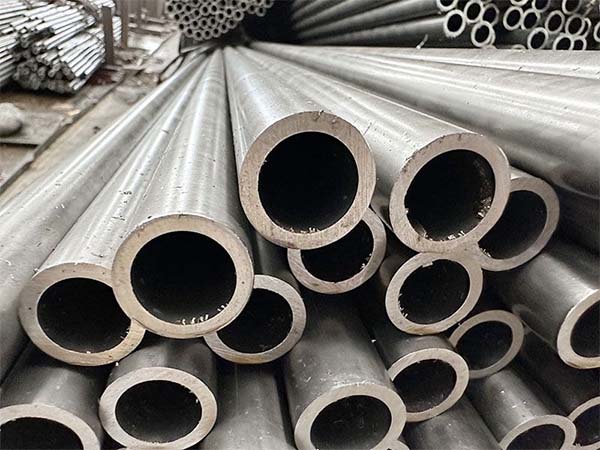
1. What is Carbon Steel Pipe?
Carbon steel pipe is mainly composed of iron and carbon, with the carbon mass fraction typically between 0.02% and 2.1%. It also contains small amounts of impurities such as silicon, manganese, sulfur, and phosphorus. It does not contain a large number of other specially added alloying elements.
Key characteristics of carbon steel pipe:
High cost-effectiveness: Carbon steel pipe has a relatively low manufacturing cost, making it the first choice when budgets are limited.
High strength and machinability: The high carbon content gives it excellent mechanical strength, while also making it easy to weld, cut, and form.
Limitations: The biggest drawback is its poor corrosion resistance. 1. Carbon steel pipes are prone to rust and oxidation in humid, acidic, or harsh weather environments; and their performance at extreme high or low temperatures is inferior to that of alloy steel.
2. What is Alloy Seamless Steel Pipe?
Alloy seamless steel pipe is a high-grade pipe made by artificially adding specific proportions of alloying elements (such as chromium (Cr), molybdenum (Mo), nickel (Ni), vanadium (V), and titanium (Ti)) to carbon steel, and then manufacturing it through seamless processes such as hot rolling or cold drawing.
Core characteristics of alloy seamless steel pipe:
Excellent resistance to extreme environments: The addition of molybdenum and chromium gives it extremely high high-temperature creep strength and oxidation resistance.
Excellent corrosion and wear resistance: It can resist the corrosion of chemical media (such as acids, alkalis, and hydrogen sulfide), significantly extending its service life.
Seamless structure for greater safety: The pipe body has no welded seams, making it extremely stable under extremely high internal pressure and less prone to bursting.
3. Comprehensive Comparison of Carbon Steel Pipes and Alloy Seamless Steel Pipes
To more intuitively demonstrate the differences between the two, we have conducted a detailed comparative analysis from the following key dimensions:
|
Comparison Dimension
|
Carbon Steel Pipe
|
Alloy Seamless Pipe
|
|
Chemical Composition
|
Mainly iron (Fe) and carbon (C)
|
Includes alloy elements such as Fe, C, Cr, Mo, Ni, V, etc.
|
|
Working Temperature Limit
|
Suitable for medium and low temperature environments (typically < 425°C)
|
Can operate stably at extreme high temperatures (e.g. above 600°C) or extremely low temperatures
|
|
Pressure-bearing Capacity
|
Medium to high pressure-bearing capacity, but limited by welds (if any)
|
Extremely high pressure-bearing capacity, seamless design eliminates stress concentration points
|
|
Corrosion Resistance
|
Poor, prone to rusting, usually requires anti-corrosion coating or galvanization
|
Excellent, alloy elements naturally resist oxidation and acid-base pitting
|
|
Material Cost
|
Low, cost-effective, suitable for large-scale conventional applications
|
High, high initial investment, but low maintenance and replacement costs
|
|
Common Application Standards
|
ASTM A106, ASTM A53, API 5L (partially)
|
ASTM A335 (P11, P22, P91, etc.), API 5L (higher grades)
|
4. Application Scenarios Analysis
Choosing the right steel pipe is not only about budget, but also about the safety of the entire system. You can refer to the following industry scenarios to determine your application:
Best Scenarios for Using Carbon Steel Pipes:
Water Supply and Wastewater Treatment Pipelines: Urban water supply networks, sewage discharge systems (usually equipped with anti-corrosion coatings).
General Building and Structural Engineering: Building scaffolding, support columns, structural frames.
Ambient Temperature and Low Pressure Oil and Gas Transportation: Conventional pipelines located away from corrosive sources, with temperature and pressure within controllable ranges.
Essential Scenarios for Using Alloy Seamless Steel Pipes:
Power Plants (Thermal/Nuclear Power): Used for boiler water-cooled walls, superheaters, and main steam pipelines (requiring resistance to extremely high temperatures and pressures).
Upstream oil and gas: Deep-sea drilling casing; oil and gas extraction pipelines containing high concentrations of corrosive gases such as H2S (hydrogen sulfide).
Heavy petrochemicals: High-pressure cracking pipes in oil refineries; chemical pipelines transporting strong acid and alkali solutions.
 Central Steel


 Language
 English
 Español
 بالعربية
 sales@central-steels.com
 0086-731-8865-5017