Alloy steel seamless pipe is a seamless steel pipe made from alloy steel containing elements such as chromium, molybdenum, nickel, or vanadium to improve strength, high-temperature performance, corrosion resistance, and creep resistance. Unlike welded pipe, it has no longitudinal weld seam and is therefore widely used in high-pressure and high-temperature applications such as power plants, boilers, petrochemical facilities, oil and gas processing, and heavy machinery. Common grades include ASTM A335 P11, P22, P91, and P92, with the appropriate grade selected according to operating temperature, pressure, medium, and required mechanical properties.
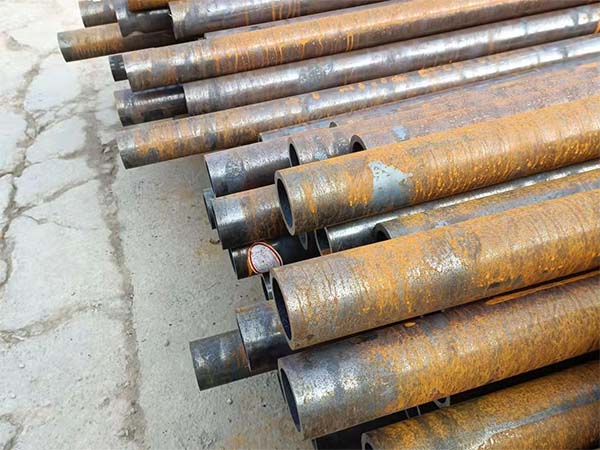
What is Alloy Steel Seamless Pipe?
Alloy steel seamless pipe is a pipe manufactured from alloy steel without a welded seam. The pipe is generally produced from a solid round billet through processes such as heating, piercing, hot rolling, cold drawing, heat treatment, and finishing.
|
Alloying Element
|
Main Function
|
Typical Benefit
|
|
Chromium (Cr)
|
Improves oxidation and corrosion resistance
|
Better performance at elevated temperatures
|
|
Molybdenum (Mo)
|
Improves creep and high-temperature strength
|
Suitable for high-temperature service
|
|
Nickel (Ni)
|
Improves toughness
|
Better low-temperature performance
|
|
Vanadium (V)
|
Refines grain structure
|
Higher strength and hardness
|
|
Titanium (Ti)
|
Stabilizes the steel structure
|
Improved strength and microstructural stability
|
Compared with ordinary carbon steel, alloy steel can provide better performance when the pipe is exposed to high temperature, high pressure, thermal cycling, or demanding mechanical loads.
Why Choose Alloy Steel Seamless Pipes?
In harsh environments where ordinary carbon steel pipes or welded pipes may fracture, deform, or corrode, alloy steel seamless pipes offer extremely stable performance. Their core advantages include:
Exceptional High-Pressure Resistance: Because the pipe body has no welded joints (welds are typically weak points under pressure), this type of pipe can withstand internal stress and high-pressure fluids uniformly throughout the 360-degree range.
Superior Temperature Limits: It maintains excellent mechanical structural stability in both ultra-low temperature environments and ultra-high temperature conditions (such as power plant boilers).
Excellent Corrosion and Wear Resistance: For fluid media containing high acids, high alkalis, or abrasive particles, the alloy composition effectively extends the service life of the pipeline and reduces maintenance costs.
Application Scenarios of Alloy Steel Seamless Pipes
Due to their customized material properties, alloy steel seamless pipes are widely used in the following high-standard industries:
1. Oil & Gas Industry
This is one of the largest consumers of alloy steel seamless pipes, covering the entire process from upstream extraction to downstream refining:
Oil Well Drilling and Extraction: Used as drill pipe, tubing, and casing. In deep-sea or deep-ground extraction, the pipes need to withstand extremely high ground stress, mud pressure, and environments containing highly corrosive gases such as hydrogen sulfide (H2S).
High-Temperature and High-Pressure Fluid Transportation: Used in oil and gas gathering and transportation pipelines for long-distance transportation of corrosive or pressurized unrefined crude oil and natural gas.
High-Temperature Equipment in Refineries: Widely used in petroleum cracking pipes (such as transporting high-temperature oil and gas mixtures), these pipelines typically need to operate in environments above 500°C for extended periods.
2. Power Generation
In thermal power plants (especially supercritical and ultra-supercritical units) and nuclear power plants, seamless alloy steel tubes are crucial to the safety and efficiency of the units:
Boiler Systems: Used as water-cooled wall tubes and economizer tubes.
Superheaters and Reheaters: These areas have extremely high steam temperatures (up to 600°C or higher), requiring alloy tubes containing high chromium and molybdenum (such as P91 and P92 steel) to prevent high-temperature creep and oxidation failure.
Main Steam Piping: Responsible for transporting high-temperature, high-pressure, high-energy steam from the boiler to the turbine, demanding stringent requirements on the overall tensile strength of the materials.
3. Petrochemical Industry
Chemical processes often involve hazardous chemical reactions and extreme physical conditions:
Heat Exchangers and Condensers: Alloy tubes are used in these devices to isolate and exchange heat between media of different temperatures or corrosive properties.
High-Pressure Reactor Piping: Used for conveying high-temperature syngas, strong acids (such as sulfuric acid and nitric acid), or strong alkalis. Alloy pipes effectively resist chemical pitting and crevice corrosion.
4. Mechanical Engineering
Hydraulic Transmission Systems: Used for hydraulic cylinders and high-pressure oil pipes in heavy-duty construction machinery (such as excavators and cranes), withstanding frequent hydraulic pulse impacts.
Structural Components and Driveshafts: Vehicle rear axle pipes, gearbox gear bushings, etc., utilizing their high hardness and fatigue resistance to transmit large torques.
5. Aerospace & Shipbuilding
Marine Core Piping Systems: High-pressure structural pipes for marine boilers, superheaters, and deep-sea submersibles.
Aerospace Structural Components: Aircraft landing gear systems, engine heat-resistant components, etc. These components require materials with extremely high strength-to-weight ratios and fatigue resistance.
Selection Guide: Key Specifications to Consider
When procuring and selecting pipes, carefully review the following four core technical parameters:
Material Grade and Standard: Must match the specific operating conditions. The most common international standards include
ASTM A335 (seamless ferritic alloy steel pipes specifically designed for high-temperature operations, such as P11, P22, P91, etc.) and API 5L (pipeline steel standard).
Dimensions and Wall Thickness (Schedule/SCH): Accurately calculate the outer diameter (OD) and wall thickness. High-pressure environments often require thicker-walled pipes with higher Schedule grades (such as SCH 80, SCH 160, or XXS).
Mechanical Properties: Ensure that the material's yield strength, tensile strength, elongation, and hardness (such as Brinell hardness, Rockwell hardness) meet engineering design requirements.
Heat Treatment and Non-Destructive Testing (NDT): Determine if the pipe has undergone heat treatments such as normalizing and tempering to eliminate internal stress. In critical industrial applications, non-destructive testing reports such as ultrasonic testing (UT) or eddy current testing (ET) are mandatory.
Comparison: Alloy Steel Seamless Pipe vs. Carbon Steel Pipe
Applicability: Carbon steel pipe is generally more economical and perfectly capable of handling medium- and low-pressure water pipes, structural pipes, or transporting non-corrosive fluids at room temperature.
Performance Boundaries: When the operating temperature exceeds 425°C, the system pressure reaches hazardous levels, or the medium is highly corrosive, carbon steel pipe will rapidly oxidize or fail. In these situations, alloy steel seamless pipe is the only and irreplaceable reliable choice.
FAQ: Alloy Steel Seamless Pipe
1. What is alloy steel seamless pipe?
Alloy steel seamless pipe is a steel pipe manufactured without a welded seam and containing alloying elements such as chromium, molybdenum, nickel, or vanadium to improve strength, temperature resistance, toughness, or other performance characteristics.
2. What is alloy steel seamless pipe used for?
It is commonly used for boilers, superheaters, reheaters, power plants, petrochemical equipment, refinery piping, heat exchangers, and other high-temperature or high-pressure applications.
3. What are the most common alloy steel seamless pipe grades?
Common grades include ASTM A335 P5, P9, P11, P22, P91, and P92. ASTM A213 also includes alloy-steel tube grades such as T11, T22, and T91.
4. Is alloy steel seamless pipe better than carbon steel pipe?
Not necessarily for every application. Alloy steel generally provides better high-temperature strength, creep resistance, and oxidation resistance, but carbon steel is often more economical and sufficient for normal-temperature and less demanding applications.
5. What is ASTM A335 P11 pipe?
ASTM A335 P11 is a chromium-molybdenum ferritic alloy steel seamless pipe grade designed for high-temperature service. It is commonly used in boilers, power plants, heat exchangers, and high-temperature piping systems.
Summary
Alloy steel seamless pipe is primarily selected for applications requiring reliable performance under high temperature, high pressure, and demanding mechanical conditions. Grades such as ASTM A335 P11, P22, P91, and P92 are widely used in power generation, boilers, petrochemical plants, refineries, and high-temperature piping systems.
 Central Steel


 Language
 English
 Español
 بالعربية
 sales@central-steels.com
 0086-731-8865-5017