In the complex and demanding world of the oil and gas industry, selecting the right equipment is critical for safety, efficiency, and project success. One of the most common dilemmas is understanding the differences between
seamless casing and
ERW casing. Both play vital roles in well drilling and completion, but their distinct manufacturing processes, physical properties, and costs make them suitable for different applications.
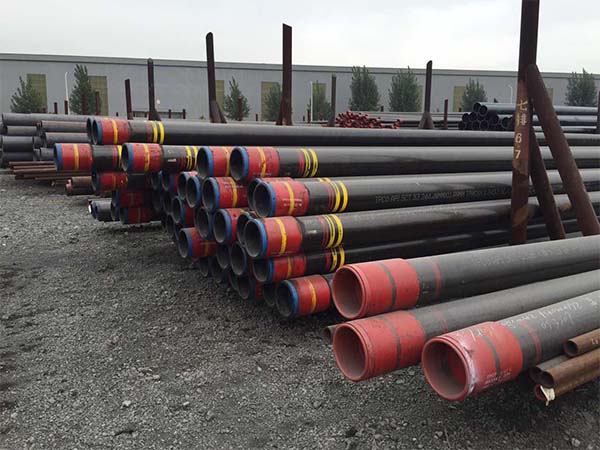
What is a Seamless Casing Pipe?
A seamless steel casing pipe is manufactured from a solid cylindrical steel billet. The billet is heated to extreme temperatures and pushed or pulled over a form until the steel is shaped into a hollow tube. Because of this extrusion process, the pipe has no welding seam or joint.
This structural uniformity gives seamless pipes exceptional strength and the ability to withstand extreme internal and external pressures, making them a staple in deep-well and high-pressure drilling environments.
What is an ERW Casing Pipe?
ERW (Electric Resistance Welded) casing pipe is created by taking a flat sheet of steel (skelp), rolling it into a cylindrical shape, and then welding the edges together using an electric current. Unlike older welding methods, modern ERW uses high-frequency currents that create a strong, clean weld without the need for filler metals.
After the welding process, the seam is often heat-treated to ensure the weld area matches the strength and integrity of the rest of the pipe. ERW pipes are highly valued for their dimensional accuracy and cost-effectiveness.
Key Differences Between Seamless Casing and ERW Casing
To make an informed decision for your oil and gas operations, it is essential to compare these two types of casing across several critical metrics.
1. Manufacturing Process and Structure
The most fundamental difference lies in how they are made. Seamless casing has a continuous, homogeneous structure with no weak points. In contrast, ERW casing contains a longitudinal weld seam. Although modern high-frequency welding makes this seam incredibly strong, the presence of a weld is structurally different from a fully seamless body.
2. Pressure Tolerance and Strength
When comparing seamless vs ERW casing, pressure rating is often the deciding factor.
Seamless Casing: Can withstand approximately 20% higher working pressure than welded pipes of the same material and size. It is the preferred choice for extreme conditions, ultra-deep wells, and offshore drilling.
ERW Casing: While strong enough for standard operations, the weld seam can be a theoretical point of vulnerability under extreme stress or highly corrosive environments.
3. Dimensional Accuracy
Because ERW casing is formed from flat steel sheets, it generally offers superior dimensional accuracy. The wall thickness of an ERW pipe is highly uniform compared to seamless casing, which can sometimes have slight variations in wall thickness due to the extrusion process.
4. Cost-Effectiveness
If budget is a primary concern, ERW casing takes the lead. The manufacturing process for ERW pipes is faster, requires less energy, and utilizes raw materials more efficiently. Therefore, ERW casing pipe is significantly more cost-effective than seamless casing, making it ideal for shallow to medium-depth wells where extreme pressure is not a factor.
5. Lead Time and Availability
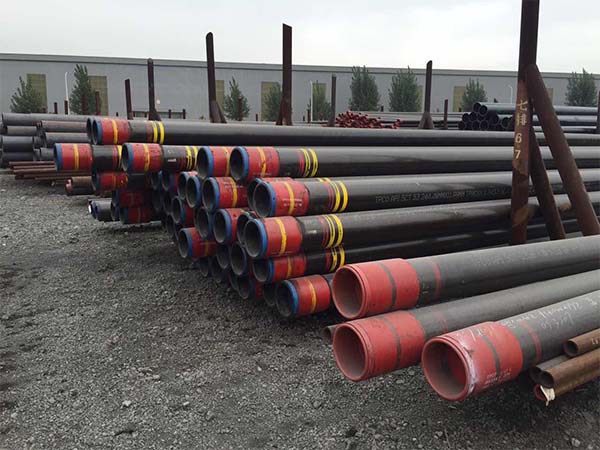
ERW manufacturing is highly automated and faster to produce in large batches. If your project requires a massive volume of casing with a tight deadline, ERW is often more readily available. Seamless pipe production is a longer, more energy-intensive process, which can lead to extended lead times.
Seamless vs. ERW Casing: Which Should You Choose?
Selecting the right pipe depends entirely on your specific drilling environment:
Choose Seamless Casing if: You are dealing with deep-water offshore drilling, high-pressure/high-temperature (HPHT) wells, or highly corrosive environments where structural failure is not an option.
Choose ERW Casing if: You are drilling shallow to medium-depth wells, require highly uniform wall thickness, or need a cost-effective solution for a large-scale project with standard pressure requirements.
Conclusion
While seamless casing offers unmatched strength and pressure tolerance for extreme environments, ERW casing provides excellent value, dimensional accuracy, and faster delivery for standard applications.
Read more : API 5CT oil casing and its heat treatment method
 Central Steel


 Language
 English
 Español
 بالعربية
 sales@central-steels.com
 0086-731-8865-5017