In oil and gas drilling operations, steel pipe products are not just materials—they are the backbone of the entire system. From penetrating thousands of meters underground to safely transporting hydrocarbons to the surface, a wide range of specialized oilfield pipes must work together in a highly coordinated, high-pressure environment.
This comprehensive guide provides a complete overview of the steel pipe products used in oil drilling, including drill pipes, casing, tubing, and other critical
OCTG (Oil Country Tubular Goods) components, explaining their vital functions at each stage of the drilling process.
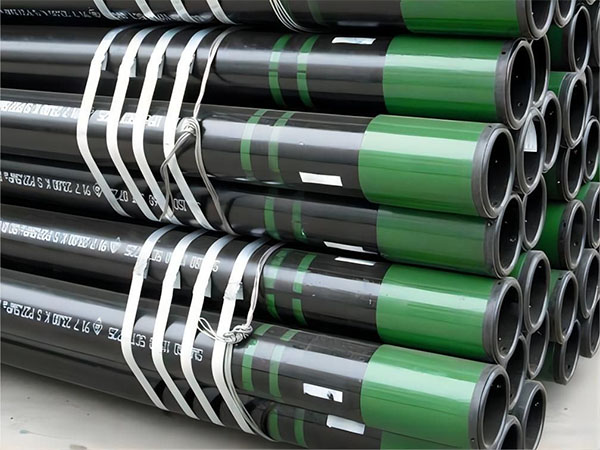
1. The Drill String: The Core of Drilling Operations
At the heart of every exploration and drilling operation is the drill string. This is a complex assembly of steel pipes responsible for transmitting power from the surface rig to the drill bit.
Drill Pipe
The drill pipe connects the surface equipment to the drill bit. It is engineered to transmit high torque and circulate drilling fluid (mud) down the wellbore, making it essential for continuous and efficient drilling operations.
Heavy Weight Drill Pipe (HWDP)
HWDP serves as a crucial transition component between the standard drill pipe and the heavier drill collars. It reduces stress concentration, prevents pipe fatigue failure, and adds weight to the drill string.
Drill Collar
Thick-walled and heavy, drill collars provide the necessary Weight on Bit (WOB). This ensures efficient penetration into hard rock formations while maintaining directional control and keeping the drill string in tension.
2. Casing Systems: Ensuring Well Integrity
Once a section of the well is drilled, casing pipes are installed and cemented into place. These are critical for maintaining the structural integrity of the wellbore and protecting the surrounding environment.
Surface Casing: Protects freshwater aquifers from contamination and provides a foundation for the wellhead structure and blowout preventers (BOP).
Intermediate Casing: Isolates unstable, fragile, or high-pressure formations encountered during deeper drilling phases.
Production Casing: Acts as the primary conduit for oil and gas production, preventing formation collapse and isolating the production zones.
Liner: A cost-effective casing solution used to reinforce the lower section of the wellbore without extending all the way back to the surface.
3. Tubing: The Production Lifeline
Tubing is inserted inside the production casing to transport oil and gas from the reservoir to the surface efficiently. Unlike casing, which is permanently cemented, tubing is designed to be extracted and replaced, making it a flexible and maintainable component during the lifespan of a producing well.
4. OCTG: The Oilfield Industry Standard
OCTG (Oil Country Tubular Goods) is the overarching industry term that encompasses casing, tubing, and drill pipe. To guarantee safety and reliability, high-quality OCTG products are strictly manufactured according to API (American Petroleum Institute) standards. They are specifically metallurgically designed to withstand extreme pressure, high temperatures, and highly corrosive downhole environments.
5. Specialty Steel Pipes for Advanced Operations
Modern drilling often requires specialized pipe solutions to handle complex well conditions:
Coiled Tubing: A continuous length of flexible steel pipe used in well intervention operations without needing to remove the main drill string, significantly reducing downtime.
Screen Pipe: Acts as a filter to prevent sand and solid particles from entering the wellbore, protecting sensitive surface equipment and sustaining production rates.
Perforated Pipe: Features pre-drilled holes that allow hydrocarbons to flow freely from the target reservoir into the wellbore after the perforation process.
6. Line Pipe: Transportation Beyond the Well
After successful extraction, crude oil and natural gas must be moved safely. Line pipes (such as [API 5L Line Pipes]) are utilized to transport these resources from the well pad to refineries, storage tanks, and processing facilities. These pipelines are engineered for safe, efficient, long-distance transportation under varying environmental conditions.
7. Corrosion-Resistant Pipes: Extending Service Life
In harsh drilling environments containing hydrogen sulfide (H₂S) or carbon dioxide (CO₂)—often referred to as "sour service"—standard steel degrades quickly. Corrosion-resistant alloy (CRA) pipes and pipes with specialized coatings (like 3LPE coated pipes) are essential to prevent leaks, maintain long-term performance, and ensure environmental safety.
Conclusion
From the initial spudding of a well to long-distance pipeline transport, steel pipe products play an indispensable role in every phase of the oil and gas lifecycle. Choosing the right type, grade, and specification of pipe not only ensures maximum operational efficiency but also dictates the safety and profitability of the entire project.
 Central Steel


 Language
 English
 Español
 بالعربية
 sales@central-steels.com
 0086-731-8865-5017