A
piping pressure rating, also known as the maximum allowable working pressure (MAWP), refers to the highest internal fluid pressure that a pipe, fitting, or flange can safely and continuously withstand at a specific operating temperature.
It is not a physical dimension that can be measured with calipers, but a performance indicator derived from rigorous engineering calculations. In North American standards, pressure ratings are usually expressed in PSI (pounds per square inch) or ASME Class (such as Class 150, Class 300); while in European or international standards, they are often expressed in PN (nominal pressure, such as PN16, PN40) or Bar.
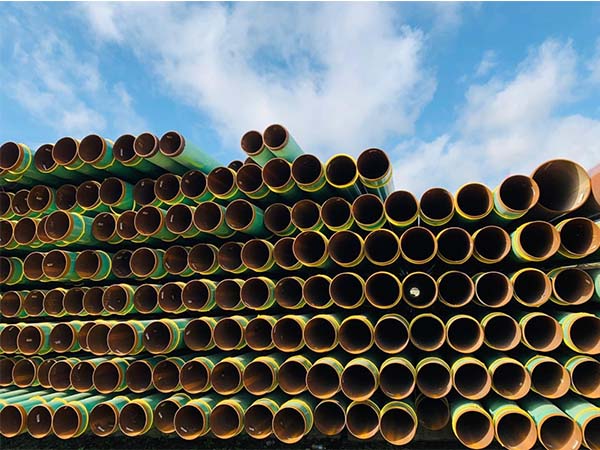
Four Core Elements Affecting Pressure Ratings
The rated pressure of a pipe is not a fixed number. Even for the same pipe, its pressure rating can vary drastically under different conditions. It is mainly constrained by the following four factors:
1. Physical Wall Thickness
This is the most direct physical basis for determining the maximum internal pressure a pipe can withstand. According to Barlow's Formula, with a fixed outer diameter, the thicker the wall, the stronger its resistance to internal expansion and rupture, and the higher the pressure rating. This is why high-pressure systems often require higher schedule grades (such as Sch 80 or Sch 160).
2. Material Yield Strength
Different steels have different tensile strengths. For example, the allowable stress of ordinary carbon steel (ASTM A53 Gr.B) is much lower than that of high-strength pipeline steel (API 5L X70) or special duplex stainless steel. The better the material, the higher the pressure rating at the same wall thickness.
3. Operating Temperature
Temperature is the "hidden killer" of pressure ratings. The tensile strength of all metal pipes decreases significantly with increasing temperature. A pipe rated at 1000 PSI at room temperature (100°F) may only have a rated pressure of 700 PSI when operating at high temperature (600°F).
4. Corrosion Allowance & Safety Factor
In practical engineering calculations, to cope with long-term internal fluid corrosion, design engineers deduct a "corrosion allowance" from the theoretically calculated wall thickness. At the same time, standards such as ASME B31.3 mandate the introduction of a safety factor (usually 3 to 4) to ensure sufficient redundancy in the pressure rating.
Typical Carbon Steel Flange Pipe Pressure-Temperature Decrease Table
Taking the most common carbon steel in industry (ASTM A105/A53) as an example, under the matching ASME B16.5 standard, the pressure rating of different classes decreases with increasing temperature as follows:
|
Operating temperature (°F / °C)
|
Class 150 Rated Pressure (PSI)
|
Class 300 Rated Pressure (PSI)
|
Class 600 rated pressure (PSI)
|
|
-20 to 100°F (38°C)
|
285
|
740
|
1480
|
|
200°F (93°C)
|
260
|
680
|
1360
|
|
400°F (204°C)
|
200
|
635
|
1270
|
|
600°F (315°C)
|
140
|
570
|
1140
|
|
800°F (426°C)
|
80
|
410
|
820
|
Frequently Asked Questions (FAQ) about Piping Pressure Rating
Q: Does a Sch 40 pipe mean its pressure rating is 40 PSI or 40 Bar?
A: Absolutely not. This is an extremely dangerous and common misconception. The Schedule number only represents the standardized designation of the wall thickness and has no direct mathematical conversion relationship with the pressure value. As mentioned above, the rated pressure of a Sch 40 pipe depends on its diameter, material, and temperature.
Q: Since the pressure rating determines safety, can I directly request the factory to produce steel pipes with a "pressure rating of 1000 PSI"?
A: Factories cannot directly produce pipes with a "1000 PSI" rating. As a buyer, you must perform design conversions and inform the steel pipe manufacturer of the specific outer diameter (OD), material grade, and wall thickness rating (Schedule) you require. The factory is only responsible for the physical dimensions and material, while the design engineer is responsible for the pressure rating.
Q: Is PN16 in the European standard equivalent to ASME Class 150?
A: They are similar in terms of pressure range (PN16 represents approximately 16 Bar or 232 PSI at room temperature; Class 150 is approximately 285 PSI at room temperature), but the dimensional standards and flange hole spacing are completely different, and the two cannot be directly interchanged.
Read more : Schedule 80 steel pipe pressure rating or What pressure is schedule 40 pipe?
 Central Steel


 Language
 English
 Español
 بالعربية
 sales@central-steels.com
 0086-731-8865-5017