 Central Steel
Central Steel
Central Steel
Central Steel
Central Steel
Comparison Table of Hot and Cold Rolling
|
Comparison Dimensions |
Hot Rolled |
Cold Rolled |
|
Processing temperature |
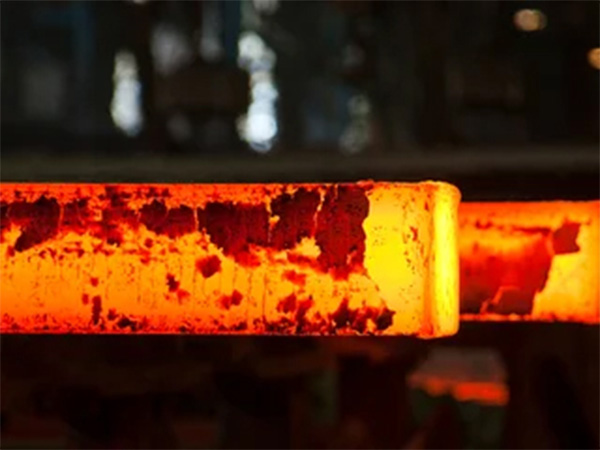
Above the recrystallization temperature (> 1700°F / 926°C) |
Room temperature (below the recrystallization temperature) |
|
Surface treatment |
Rough, with iron oxide scale (Mill Scale) |
Smooth, often coated with anti-rust oil, with a metallic luster |
|
Dimensional accuracy (tolerance) |
Lower precision (uncontrollable shrinkage during cooling process) |
Extremely high (very small tolerances, precise dimensions) |
|
Mechanical properties |
It has good ductility, no internal stress, and moderate strength. |
It has high strength and hardness, but reduced ductility and internal stress. |
|
Making shapes |
With fewer restrictions, it can manufacture large components (I-beams, H-beams, thick plates). |
Mainly used for flat materials (thin plates, steel strips) and smaller tubes/bars. |
|
Manufacturing costs |
Lower cost (fewer processes, faster production speed) |
High cost (multiple cold processing steps, resulting in significant equipment wear) |
How to make a choice in a project?
The choice between hot-rolled and cold-rolled steel ultimately depends on the project's requirements for surface quality, dimensional accuracy, and mechanical strength, as well as the cost budget.
If your project is not sensitive to the appearance and minor dimensional deviations of the steel, and primarily focuses on structural load-bearing, hot-rolled steel is the most cost-effective option.
Typical applications: building structures (I-beams, H-beams), railway tracks, heavy machinery frames, welded structures, piping (large-diameter pipes).
If your project requires extremely high surface finish (for subsequent painting or electroplating), tight dimensional tolerances, or higher material strength, cold-rolled steel is the must.
Typical applications: automotive body panels, household appliance housings (refrigerators, washing machines), precision hardware, metal furniture, aerospace components.
Frequently Asked Questions (FAQ)
Q: Is cold-rolled steel always stronger than hot-rolled steel?
A: Yes. Due to the "work hardening" effect in the cold-rolling process, the yield strength and tensile strength of cold-rolled steel are usually significantly higher than those of hot-rolled steel of the same material. However, this increase in strength comes at the cost of some ductility (plasticity).
Q: What are the differences in weldability between steel produced using these two processes?
A: Hot-rolled steel has almost no internal stress, making it very easy to weld; however, surface oxide scale usually needs to be removed before welding. Cold-rolled steel has a cleaner surface, making it easier to initiate an arc, but due to its higher internal stress, it may experience thermal warping or deformation during high-temperature welding.
Q: Why is cold-rolled steel significantly more expensive than hot-rolled steel?
A: Because cold rolling is a subsequent process to hot rolling. Cold-rolled steel not only undergoes the entire hot rolling process but also requires additional processes such as pickling (to remove oxide scale), multiple passes of room-temperature rolling, and even annealing. The increased processing time and energy consumption directly drive up costs.


 Language
 English
 Español
 بالعربية
 sales@central-steels.com
 0086-731-8865-5017