 Central Steel
Central Steel
Central Steel
Central Steel
Central Steel
Alloy steel pipes, due to the addition of alloying elements such as chromium (Cr), molybdenum (Mo), nickel (Ni), and manganese (Mn), possess outstanding tensile strength, toughness, corrosion resistance, and high-temperature stability. Whether in oil and gas refineries, high-pressure boiler systems, power plants, or cryogenic applications, selecting the appropriate piping standards is crucial for ensuring structural integrity and operational safety.
This guide comprehensively analyzes the global mainstream alloy steel pipe standard systems, manufacturing processes, key steel grades, and important applications, helping you clarify the differences between US (ASTM), European (EN), Japanese (JIS), and Chinese (GB) standards, and also clarifying the relevant provisions in each standard regarding the use of seamless or welded manufacturing processes.
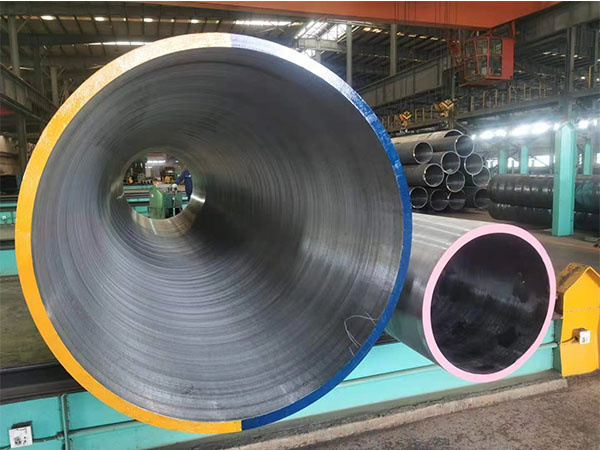
1. US Alloy Steel Pipe Standards
The American Society for Testing and Materials (ASTM) and the American Society of Mechanical Engineers (ASME) have established the most widely accepted piping specifications globally, especially in the oil, gas, petrochemical, and power generation industries.
ASTM A335 / A335M — Seamless Ferritic Alloy Steel Tubing for High Temperatures
ASTM A335 / A335M is manufactured using a seamless process and is commonly used for high-temperature steam piping, power plant manifolds, petrochemical refinery furnace tubes, and high-pressure process piping (often referred to as "chromium-molybdenum steel tubing").
Main Steel Grades:
P11 and P22 grades: The most widely used low-alloy chromium-molybdenum steels. They possess excellent high-temperature strength and resistance to hydrogen corrosion, with a maximum temperature resistance of 550°C.
P91 (9Cr-1Mo-V): A high-quality, high-strength martensitic heat-resistant steel. Designed specifically for power generation, it is primarily used for high-temperature, high-pressure steam piping and boiler tubes operating at temperatures up to 650°C. It exhibits extremely high creep rupture strength and is the industry standard for ultra-supercritical (USC) power plant piping.
Other commonly used grades: P5, P9, P12.
ASTM A213 / A213M — Seamless Ferritic and Austenitic Alloy Steel Tubes for Boilers, Superheaters, and Heat Exchangers
ASTM A213 / A213M is manufactured using a seamless process and is commonly used for heat exchanger tubes, condenser lines, and boiler superheaters. Its dimensional tolerances are more stringent compared to A335 pipes.
Main Steel Grades:
T11, T22, T91: These grades have chemical compositions directly corresponding to the A335 "P" series, but are specifically designed for high-precision heat exchange applications.
ASTM A333 / A333M — Seamless and Welded Steel Tubes for Cryogenic Applications
ASTM A333 / A333M can be manufactured using both seamless and welded processes and is primarily used in liquefied natural gas (LNG) processing, cryogenic chemical transportation, and long-distance pipelines in extremely cold climates. These steel tubes are designed to maintain high notch toughness below zero degrees Celsius.
Main Steel Grades:
Grade 6: The most widely specified grade for general low-temperature piping (rated down to -45°C / -50°F). It is a carbon-manganese micro-alloyed steel.
Grade 3 & Grade 8 (9% Ni steel): Designed for extreme cryogenic service, with Grade 8 maintaining structural integrity down to -196°C (-320°F).
ASTM A691 / A691M — Carbon and alloy steel pipes, electrofusion welded, suitable for high-temperature and high-pressure environments.
ASTM A691 / A691M are manufactured solely using welding (electrofusion welding EFW) processes and are commonly used for large-diameter, high-temperature and high-pressure steam distribution mains made of alloy steel.
Main Steel Grades:
1-1/4 Cr (Grade 11/12), 2-1/4 Cr (Grade 22): Welded from A387 alloy steel plates, their chemical composition is comparable to A335 P11 and P22, suitable for large-diameter pipeline layouts.
2. European Alloy Steel Pipe Standards (EN/DIN)
European standards (EN 10216 and EN 10217 series) have largely replaced the older German DIN standards and established strict European-wide safety standards under the Pressure Equipment Directive (PED).
EN 10216-2 — Seamless steel pipes for pressure applications: Non-alloy and alloy steel pipes with specific high-temperature properties
Manufactured only using seamless processes, commonly used for pressure vessels, power plant boilers, and high-temperature chemical reactor piping.
Main Steel Grades:
16Mo3: A simple molybdenum alloy steel, widely used in medium- and high-temperature pressure applications.
13CrMo4-5: Equivalent to ASTM A335 P11 grade, possessing excellent high-temperature and high-pressure steam resistance.
10CrMo9-10: Equivalent to ASTM A335 P22 grade, with higher chromium and molybdenum content, thus enhancing creep resistance.
EN 10217-2 — Welded steel pipes for pressure applications: Electricly weldable non-alloy and alloy steel pipes with specified high-temperature properties.
Manufactured solely for welding processes, commonly used in economical heat exchangers, hot water systems, and low-pressure industrial boilers where seamless piping is not structurally required.
Main steel grades:
16Mo3 (welded): A welded version of 16Mo3 seamless pipe, combining high thermal performance and cost-effectiveness.
3. Japanese Alloy Steel Pipe Standards
JIS G3458 — Alloy steel pipes for high-temperature applications
Manufactured using seamless processes, widely used in refinery pipelines, high-temperature petrochemical pipelines, and high-pressure boiler pipelines.
Main Steel Grades:
STPA 12: Molybdenum steel, equivalent to ASTM A335 P1.
STPA 22 and STPA 24: Chromium-molybdenum steel, equivalent to ASTM A335 P11 and P22 respectively.
JIS G3462 — Alloy Steel Tubes for Boilers and Heat Exchangers
Can be manufactured using both seamless and welded processes, commonly used for water-cooled wall tubes, superheaters, and heat exchanger tubes in commercial and industrial boilers.
Main Steel Grades:
STBA 12, STBA 22, STBA 24: Chemical composition is the same as STPA pipe steel, but the manufacturing process has been optimized.
4. Chinese Alloy Steel Pipe Standards (GB)
GB/T 5310 — Seamless Steel Tubes for High-Pressure Boilers
Manufactured using seamless technology, used in supercritical and ultra-supercritical coal-fired power plants, high-pressure steam pipelines, and steam manifolds.
Main Steel Grades:
15CrMoG and 12Cr1MoVG: The most widely used high-pressure alloy seamless steel grades in China's power generation industry. 12Cr1MoVG has added vanadium (V), giving it excellent creep strength at temperatures up to 580°C.
10Cr9Mo1VNbN (equivalent to P91/T91): An advanced martensitic steel specifically manufactured for ultra-supercritical power plant environments.
GB/T 9948 — Seamless Steel Tubes for Petroleum Refining
Manufactured using seamless technology, used in furnace tubes, heat exchangers, and high-pressure cracking pipelines in crude oil refineries.
Main Steel Grades:
15CrMo, 12Cr2Mo, 1Cr5Mo: Possess excellent resistance to hydrogen corrosion and high-temperature sulfur corrosion.
GB/T 12771 — Welded Stainless Steel Pipes for Liquid Transportation
Manufactured using welding technology, commonly used in chemical plants and processing facilities for transporting corrosive fluids or high-alloy chemical mixtures.
5. How to Choose the Right Alloy Steel Pipe
Temperature and Environment Matching
Low Temperature and Low Temperature Environments (-45°C to -196°C): Prioritize nickel-containing or carbon-manganese steels, such as ASTM A333 Grade 6 or 8, to avoid brittle fracture.
High Temperature Steam Environments (above 600°C): Choose chromium-molybdenum-vanadium alloy steels, such as ASTM A335 P22/P91 or GB/T 5310 12Cr1MoVG, to maintain mechanical strength and prevent long-term creep.
Seamless vs. Welded Pipes: How to Choose?
Seamless Alloy Steel Pipes: Essential for ultra-high pressure and critical safety applications. Because they are extruded from solid steel billets, there are no longitudinal welds, eliminating the risk of weld joint failure.
Welded Alloy Pipes: Suitable for large-diameter pipelines at medium to low pressures, offering excellent cost-effectiveness. Modern electrofusion welding (EFW) techniques, such as the ASTM A691 standard, provide efficient welded joints, enabling them to replace seamless pipes in many bulk conveying systems.
Equivalent Standard Substitutions
In multinational projects, equivalent grades are often sought. For example, ASTM A335 P11 can often be replaced by GB/T 5310 15CrMoG or EN 10216-2 13CrMo4-5. However, before making any substitutions, it is essential to consult your project engineer to ensure that chemical composition restrictions, heat treatment methods (such as normalizing and tempering), and impact testing requirements are fully consistent with your design specifications.


 Language
 English
 Español
 بالعربية
 sales@central-steels.com
 0086-731-8865-5017