Spiral welded pipes are widely used in various structural and piping applications. Although the manufacturing methods are the same, the applicable standards determine the design, testing, and final application of the pipes in engineering projects.
Among the most commonly used standards, ASTM A252 and API 5L represent two distinct application directions for spiral welded pipes. Understanding the differences between these two standards is crucial for effective production planning, quality control, and project compliance.
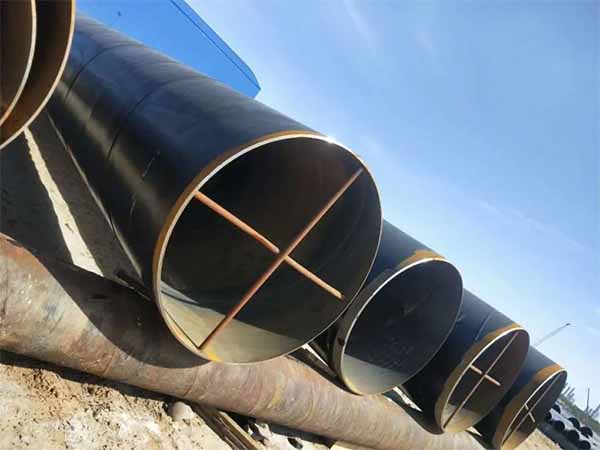
The Role of Standards in Spiral Welded Pipe Manufacturing
In spiral welded pipe production, standards themselves do not define the welding methods. Instead, they specify the pipe's performance objectives, mechanical property requirements, inspection and acceptance criteria, and expected service conditions.
Therefore, as long as the final product meets the corresponding technical requirements, the same spiral welding process can be applied to pipes manufactured according to different standards. Thus, spiral welded steel pipes can be used for both structural and piping engineering.
ASTM A252: Steel Pipe Pile Structural Guidance Standard
ASTM A252 is a standard specifically developed for steel pipe piles, where the steel pipe functions as a structural member rather than a load-bearing member.
From a manufacturing perspective, ASTM A252 emphasizes:
Yield strength and structural integrity;
Suitability for axial and lateral loads;
Dimensional consistency in pile foundation installation.
Spiral welded steel pipe manufactured according to ASTM A252 standards is commonly used for:
Building foundation piles
Bridge and highway structures
Marine and port construction
This standard allows for spiral welding and large-diameter steel pipes, making it well-suited for pile foundation projects where load-bearing capacity and installation efficiency are primary considerations. Since the steel pipes are not intended for fluid transport, chemical composition control and pressure testing are not its primary focus.
API 5L: Fluid Transport Piping Standard
API 5L is a piping standard specifically designed for transporting oil, natural gas, and water. When applied to spiral welded pipes, this standard focuses on pressure safety, weld quality, and material consistency.
Key manufacturing and quality control considerations for API 5L include:
Controlled chemical composition;
Defined range of mechanical properties;
Weld integrity and non-destructive testing;
Suitability for internal pressure conditions.
Spiral welded pipes manufactured according to API 5L standards are widely used in:
Oil and gas pipelines
Water supply systems
Long-distance pipeline projects
Typical grades such as X42, X52, and X60 allow engineers to select the appropriate strength grade based on design pressure and operating conditions.
Fundamental Differences Between ASTM A252 and API 5L
While both standards apply to spiral welded pipes, their design philosophies are fundamentally different. ASTM A252 focuses on structural performance. The pipe is designed to resist external forces from soil, structures, and environmental loads. API 5L focuses on pressure sealing. The pipe is designed to safely transport fluids under specified internal pressure conditions.
Therefore, the two standards differ in the following areas: performance objectives, testing and inspection requirements, and application limitations.
Even if pipe dimensions appear similar, ASTM A252 and API 5L are not interchangeable without proper technical evaluation.
Same Process, Different Requirements
From a manufacturing perspective, spiral welding is a forming technology that allows for flexible control over diameter and wall thickness.
The applicable standards determine: material selection, inspection scope, and quality acceptance criteria.
Compared to ASTM A252, manufacturing spiral welded pipe according to API 5L typically requires more stringent controls and additional testing, reflecting the higher safety requirements of pressure piping.
In summary
ASTM A252 spiral welded pipe is primarily used in structural and foundation engineering, applications with extremely high requirements for load-bearing capacity and installation performance. API 5L spiral welded pipe is primarily used for pipeline transportation, applications with extremely high requirements for pressure resistance, weld integrity, and material consistency.
Read more : Spiral Welded Pipe Specifications: Size Range, Thickness and Standards
 Central Steel


 Language
 English
 Español
 بالعربية
 sales@central-steels.com
 0086-731-8865-5017