In industrial piping systems, selecting the correct pipe wall thickness class (SCH) is crucial for project safety, operational efficiency, and total cost. ASME B36.10M (carbon steel) and ASME B36.19M (stainless steel) define several pipe wall thickness classes, with
SCH10 pipes and
SCH80 pipes differing significantly in wall thickness and pressure resistance.
Although for a given nominal pipe diameter (NPS), these two classes have the same outer diameter (OD), their different wall thicknesses significantly affect inner diameter, weight, pressure resistance, and connection methods.
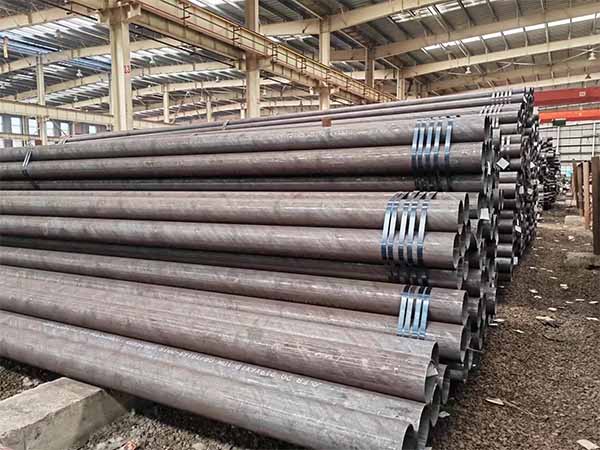
What is Schedule 10 steel pipe?
Schedule 10 belongs to thin-walled steel pipes, which are light in weight and low in cost. They are often used in:
Water supply and drainage system
Fire sprinkler piping
Low-pressure air and gas transportation
Food-grade and pharmaceutical industry pipes (especially stainless steel Schedule 10 stainless steel pipes
Due to its light weight, Schedule 10 steel pipes are easier and faster to install, making them highly suitable for large-scale engineering projects.
What is Schedule 80 steel pipe?
Schedule 80 belongs to thick-walled steel pipes, with a wall thickness almost twice that of Schedule 10. It has a higher pressure-bearing capacity and durability, and is often used for:
High-pressure steam and boiler systems
Oil, natural gas and chemical pipelines
Industrial applications with high strength and high safety requirements
Comparison of Schedule 10 vs. Schedule 80
Wall thickness: Schedule 10 has a thinner wall thickness, while Schedule 80 has a thicker wall thickness.
Weight: Schedule 10 is lighter in weight, making it easier to handle and install. Schedule 80 is heavier.
Pressure resistance capacity:
Schedule 10 pressure resistance capacity is suitable for medium and low-pressure systems, while Schedule 80 is suitable for high-pressure working conditions.
Cost: Schedule 10 has a lower cost and better economy. Schedule 80 is more costly but safer.
Key Differences: Schedule 10 vs. Schedule 80
|
Technical Feature
|
Schedule 10 Steel Pipe
|
Schedule 80 Steel Pipe
|
|
Wall Thickness Classification
|
Thin-walled (Lightweight)
|
Thick-walled (Extra Heavy / XS)
|
|
Pressure Rating
|
Low to Moderate Pressure
|
High Pressure & High Temperature
|
|
Internal Diameter (ID)
|
Larger (Maximizes flow rate)
|
Smaller (Restricts flow rate slightly)
|
|
Structural Weight
|
Light (Lower freight & handling costs)
|
Heavy (Requires stronger supports)
|
|
Common Joining Methods
|
Roll-grooved, Butt-welding, Flanged
|
NPT Threading, Socket Weld, Butt-welding
|
|
Primary Material Types
|
Stainless Steel (304/316), Light Carbon
|
Carbon Steel, Alloy Steel, Stainless Steel
|
|
Cost Efficiency
|
Lower initial material cost
|
Higher material cost
|
How to Choose Between Schedule 10 and Schedule 80
When evaluating specifications for your engineering project, consider the following key factors:
System Working Pressure & Temperature: Check standard ANSI/ASME pressure rating tables. If system operating pressure exceeds moderate thresholds or experiences severe pressure surges, Schedule 80 is mandatory.
Fluid Dynamics & Flow Velocity: If maximizing volumetric flow rate with minimal pump horsepower is required, Schedule 10 provides a wider internal cross-section.
Connection Method: Threaded connections cut into the pipe wall thickness; therefore, Schedule 80 is required for threaded piping systems. Schedule 10 is best joined via roll-grooving or butt-welding.
Mechanical Exposure: For underground installations or exposed outdoor lines prone to mechanical shock, the ruggedness of Schedule 80 ensures long-term safety.
Conclusion
Both Schedule 10 steel pipes and Schedule 80 steel pipes play significant roles in industrial and engineering applications. For most low-pressure, economical applications, Schedule 10 steel pipes offer a balanced option in terms of cost, performance and installation convenience.
 Central Steel


 Language
 English
 Español
 بالعربية
 sales@central-steels.com
 0086-731-8865-5017