 Central Steel
Central Steel
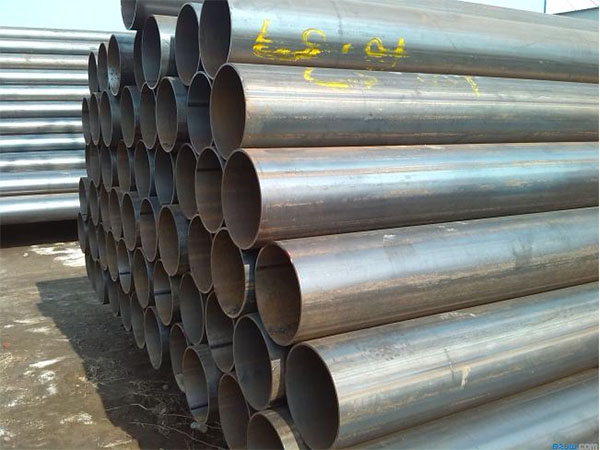
Key Application Areas for ERW Steel Pipes
ERW (Electric Resistance Welding) steel pipes are manufactured using hot-rolled steel coils that are shaped and joined through a high-frequency electric resistance welding process. Due to their high dimensional accuracy, uniform wall thickness, superior surface quality, high production efficiency, and excellent cost-effectiveness, they are widely used in both industrial and civil construction.
1. Oil and Gas Transportation
Oil and gas transportation is a major application area for ERW steel pipes. They are frequently used as line pipes for transporting natural gas, crude oil, and other petroleum products, and are extensively employed in onshore pipeline systems. The primary standard is API 5L; these pipes are available in a variety of specifications, which can be selected based on specific design pressures, fluid characteristics, environmental conditions, and project technical requirements.
2. Water Supply and Fluid Transport
ERW steel pipes are also widely used in water supply systems, industrial circulating water systems, and various other fluid transport applications. Common standards include ASTM A53 (Gr. A/B) and EN 10217. For water supply projects, additional factors such as internal linings, external anti-corrosion coatings, cathodic protection, and water quality requirements must be taken into account.
3. Construction and Structural Engineering
Structural applications represent another major market for ERW steel pipes, particularly in the form of circular, square, and rectangular hollow sections. Key standards include ASTM A500 (Gr. B/C) and EN 10219, which govern cold-formed structural hollow sections. Compared to solid steel, hollow structural sections offer an excellent strength-to-weight ratio, making them suitable for use in a wide range of load-bearing structures.
4. Automotive and Machinery Manufacturing
In the field of machinery manufacturing, ERW steel pipes often serve as base stock for precision structural components and transmission parts. ASTM A513 is a common standard for electric-resistance-welded carbon and alloy steel mechanical tubing. Depending on the specific type and steel grade, these pipes can be utilized in machinery manufacturing, automotive components, and various other fabricated products. In precision mechanical applications, factors such as dimensional tolerances, surface condition, straightness, and mechanical properties must be considered, alongside any specific requirements for subsequent processing or forming.
5. Boilers and Heat-Transfer Equipment
While high-pressure boilers typically utilize seamless pipes, high-quality ERW (Electric Resistance Welded) pipes serve as a highly cost-effective alternative for medium- and low-pressure boilers and heat exchangers. Common standards for these applications include ASTM A178 and ASTM A214. When selecting materials, it is essential to carefully account for temperature, pressure, material properties, and inspection requirements.
Applications of ERW Steel Pipes Based on Various Standards
Different standards have been established for ERW (Electric Resistance Welded) steel pipes to suit various product applications. Some of these standards focus on fluid transport, while others emphasize structural performance, mechanical characteristics, or specific operating conditions.
The table below summarizes common standards and their typical areas of application.
|
Standard |
Product type |
Typical application fields |
|
API 5L |
Steel line pipe, including ERW |
Onshore oil and gas pipelines, gathering systems, and energy transportation |
|
ASTM A53/A53M Type E |
Electric-resistance-welded carbon steel pipe |
Water, gas, steam, and general industrial fluid transportation |
|
ASTM A135/A135M |
Electric-resistance-welded steel pipe |
Gas, vapor, water, and other liquid transportation |
|
ASTM A500/A500M |
Cold-formed carbon steel structural tubing |
Buildings, bridges, industrial structures, and structural frameworks |
|
EN 10219 |
Cold-formed welded structural hollow sections |
Construction, structural supports, machinery frameworks, and engineering structures |
|
ASTM A513/A513M |
Electric-resistance-welded mechanical tubing |
Automotive components, machinery, rollers, and mechanical assemblies |
|
ASTM A178/A178M |
ERW boiler and superheater tubes |
Boilers, superheaters, and heat-transfer equipment |
|
ASTM A252/A252M |
Welded or seamless steel pipe piles |
Bridge foundations, marine structures, ports, and deep foundations |
How to Select ERW (Electric Resistance Welded) Steel Pipes for Different Application Scenarios
1. Application Fields and Product Standards
First, identify the intended use of the steel pipe—such as for fluid transport, structural engineering, mechanical manufacturing, or boiler equipment. Select the appropriate product standard accordingly, such as API 5L, ASTM A53, ASTM A500, or ASTM A513.
2. Steel Grade and Mechanical Properties
Verify the required yield strength, tensile strength, elongation, impact toughness (if specified), and chemical composition. The selected steel grade must meet the design and operational requirements of the project.
3. Dimensions and Dimensional Tolerances
Determine the outer diameter, wall thickness, length, out-of-roundness, straightness, and applicable dimensional tolerances. Requirements for structural or mechanical-grade pipes may differ from those for general-purpose line pipes.
4. Weld Quality and Inspection
Depending on relevant standards and project specifications, inspection procedures may include visual examination, hydrostatic testing, eddy current testing, ultrasonic testing, or other specified non-destructive testing (NDT) methods.
5. Corrosion Protection
If the steel pipes are to be used outdoors, underground, in marine environments, or in corrosive conditions, appropriate surface protection may be required. Common protective measures include hot-dip galvanizing, Fusion-Bonded Epoxy (FBE) coating, Three-Layer Polyethylene (3LPE) coating, or internal cement-mortar lining, depending on the specific operating conditions.
Frequently Asked Questions Regarding ERW (Electric Resistance Welded) Steel Pipes
Q1: What are the primary applications for ERW steel pipes?
ERW steel pipes are primarily used for oil and gas transmission, water supply, industrial piping, building structures, mechanical manufacturing, automotive components, and certain boiler or heat-transfer equipment applications.
Q2: Which standard applies to ERW steel pipes used in oil and gas pipelines?
API 5L is the primary standard for line pipes used in oil and gas transmission systems.
Q3: Which standard applies to ERW steel pipes used for structural purposes?
ASTM A500 and EN 10219 are common standards for structural hollow sections (structural steel pipes).
Q4: What is the difference between ERW steel pipes manufactured under the ASTM A53 standard and those under the ASTM A500 standard?
The ASTM A53 standard covers general-purpose steel pipes (including Type E electric-resistance-welded pipes), typically used for fluid transport and other permitted applications; in contrast, the ASTM A500 standard covers cold-formed structural steel sections, primarily intended for use in building and construction.
Conclusion
ERW (electric-resistance-welded) steel pipes are widely used across various industries, including oil and gas transmission, municipal water supply systems, structural engineering, automotive manufacturing, and industrial equipment.
Central Steel supplies ERW steel pipes for a diverse range of industrial and infrastructure projects. We provide products tailored to specific standards, steel grades, dimensional specifications, surface treatments, and unique project requirements.


 Language
 English
 Español
 بالعربية
 sales@central-steels.com
 0086-731-8865-5017