The most direct way to distinguish between
seamless pipes and
welded pipes is by their appearance: seamless pipes have smooth, fine walls both inside and out, without any seams; while welded pipes usually have a clear straight or spiral weld seam on their walls (especially the inner wall).
If the weld seam has been treated and is difficult to discern with the naked eye, we can observe the uniformity of the pipe wall thickness (welded pipes have very uniform wall thickness, while seamless pipes often exhibit slight wall thickness variations) or use pickling/grinding to make the hidden weld seam visible. In general, the presence or absence of a weld seam in appearance, whether the manufacturing process involves perforation or roll welding, and the difference in pressure resistance constitute the core distinguishing criteria between the two.
Next, we will break down the methods for distinguishing these two types of pipes in detail from several aspects, including appearance, weld seam type, manufacturing process, and advanced identification techniques.
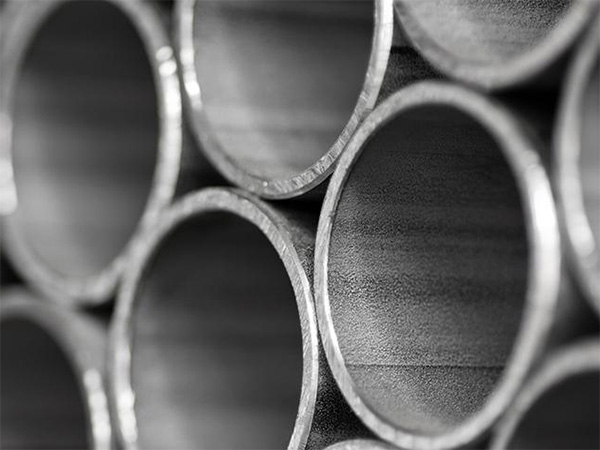
1. Initial Judgment Based on Appearance and Touch
This is the simplest and most basic method of identification, suitable for quick inspection on the construction site.
Seamless steel pipes are characterized by their seamless construction: Because they are formed in one piece, the surface of a seamless pipe is relatively smooth, both inside and out, without obvious seam lines. Touching the inner wall of the pipe feels continuous and smooth.
Welded steel pipes, on the other hand, often have visible weld seams: Welded pipes are made by rolling and welding steel plates or strips, so their surface (especially the unfinished inner wall) usually has a noticeable raised line. Even if the external weld seam is scraped and ground down, the weld seam traces can often still be felt or seen on the inner side.
2. In-depth understanding of welded pipes: Detailed explanation of common weld seam types
Since the weld seam is a key indicator distinguishing between the two, understanding its specific form can not only help you quickly identify welded pipes but also help you determine the specific application of the pipe. Depending on the welding process, welded steel pipe weld seams are mainly divided into the following types:
Straight seam high-frequency resistance welding (ERW - Electric Resistance Welding)
The weld seam of a straight seam steel pipe is a straight line, parallel to the axis of the steel pipe. The weld seam is extremely smooth, sometimes even difficult to see with the naked eye. It utilizes the skin effect and proximity effect of high-frequency current to locally heat and melt the edges of the pipe blank. It requires no welding wire and has a fast welding speed. It is widely used in water supply projects, petrochemical industries, chemical industries, and power industries for medium and low-pressure fluid transportation.
Longitudinal Submerged Arc Welding (LSAW)
The weld seam of straight seam steel pipes is also straight, but compared to ERW, LSAW weld seams are usually wider and more pronounced, and due to the addition of filler metal, the weld seam is slightly raised. It uses double-sided submerged arc welding technology and is suitable for producing large-diameter, thick-walled steel pipes. It has extremely high pressure resistance and is often used in high-pressure oil and gas long-distance pipelines, marine engineering, and heavy building structures.
Spiral Submerged Arc Welding (SSAW)
The weld seam of spiral steel pipes is spiral-shaped and surrounds the steel pipe body. Different diameter steel pipes can be produced using the same width of strip steel, resulting in lower costs. Mainly used in large-diameter water supply, agricultural irrigation, and piling pipe applications where pressure requirements are relatively less extreme.
3. Tracing the Origins: Core Differences in Manufacturing Processes
Beyond just looking at the appearance, understanding how they are manufactured will help you remember their differences more deeply:
Seamless Steel Pipes: These are made by heating solid round steel billets to extremely high temperatures, piercing a hole in the center with a piercing machine, and then stretching them into pipes through processes such as hot rolling, cold rolling, or cold drawing. No welding technology is used in the entire process.
Welded Steel Pipes: The raw material is flat steel plates or strips (coils). The steel plates are rolled into cylindrical shapes by machines, and then the edges are stitched together using the aforementioned welding techniques (ERW/LSAW/SSAW).
4. Advanced Identification Methods: How to Distinguish Between "Seamless" Pipes
In modern manufacturing processes, there's a technique called "seamless pipe treatment," which uses thermal tension reduction and internal scraping techniques to make the weld seam of welded pipes almost invisible to the naked eye, used to imitate or replace seamless pipes. How can you distinguish them in this case?
Check Wall Thickness Uniformity (Most Effective):
Welded Pipes: Because the raw material is precision-rolled steel plate, the wall thickness is extremely uniform with very small tolerances.
Seamless Pipes: During the piercing process, it's difficult to ensure absolute central symmetry, so seamless pipes usually have a slight "wall asymmetry," meaning the wall thickness is not completely uniform.
Examine the End Face (Cross-section):
On the cut end face of a steel pipe, a seamless pipe is a complete circle; while with a polished welded pipe, careful observation of the end face sometimes still reveals subtle differences in the crystal structure at the material joint.
Metallographic Inspection or Acid Pickling (Destructive Testing):
Cut a small section of the steel pipe, polish it smooth, and then apply an acidic etching solution. For welded pipes, the metallographic structure at the weld seam differs from the base material, and corrosion will clearly reveal a white or black line; seamless pipes, on the other hand, exhibit a uniform corrosion surface.
Summary and Recommendations:
Seamless steel pipes, due to their high pressure resistance and structural stability, are the lifeblood of core industries such as high-pressure boilers, hydraulic systems, and petroleum refining; while welded steel pipes, with their excellent cost-effectiveness and superior wall thickness uniformity, shine in low-pressure fluid transportation, building structures, and mechanical supports.
 Central Steel


 Language
 English
 Español
 بالعربية
 sales@central-steels.com
 0086-731-8865-5017