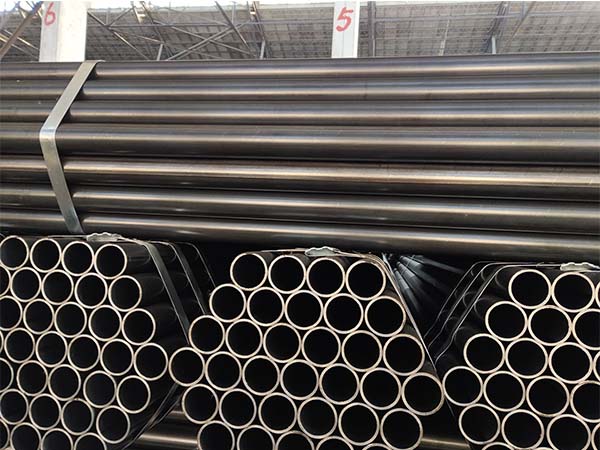
ERW steel pipes come in various grades and specifications. When selecting ERW steel pipes, it is necessary to carefully compare the pipe's dimensions, wall thickness, material grade (such as ASTM A53, API 5L, etc.), and corresponding mechanical property parameters. An ERW pipe weight chart is crucial for selection. By comparing the weight per unit length, the total material cost can be accurately calculated, transportation and lifting loads can be assessed, and the load-bearing capacity of the steel pipes can be ensured to meet design requirements, avoiding structural safety hazards caused by overloading or improper selection.
Why is an ERW pipe weight chart so important?
A pipe weight chart helps buyers, engineers, and manufacturers quickly estimate the actual weight of pipes before procurement or shipment.
Key Advantages
Cost Estimation: Steel products are typically priced by weight.
Transportation Planning: Freight costs depend on total tonnage.
Load Calculation: Crucial for building and support design.
Project Pricing: Easier to calculate total material requirements.
ERW Pipe Weight Calculation Formula
The standard formula for calculating steel pipe weight is:
Weight per meter (kg/m) = 0.02466 × t × (OD − t)
Where:
OD = outside diameter in mm
t = wall thickness in mm
For imperial units:
Weight per foot (lb/ft) = 10.69 × t × (OD − t) / 1000
This formula is widely used for carbon steel pipe and works well for ERW pipe weight estimation.
Common ERW Pipe Weight Chart
Below is a practical ERW pipe weight chart for common carbon
steel pipe sizes. The values are approximate and may vary slightly depending on mill tolerance and standard.
ERW Pipe Weight Chart for Common Sizes
|
NPS (inch)
|
Outside Diameter (mm)
|
Wall Thickness (mm)
|
Weight (kg/m)
|
Weight (lb/ft)
|
|
1/2"
|
21.3
|
2.77
|
1.27
|
0.85
|
|
3/4"
|
26.7
|
2.87
|
1.68
|
1.13
|
|
1"
|
33.4
|
3.38
|
2.50
|
1.68
|
|
1 1/4"
|
42.2
|
3.56
|
3.39
|
2.28
|
|
1 1/2"
|
48.3
|
3.68
|
4.05
|
2.72
|
|
2"
|
60.3
|
3.91
|
5.44
|
3.66
|
|
2 1/2"
|
73.0
|
5.16
|
8.36
|
5.62
|
|
3"
|
88.9
|
5.49
|
11.29
|
7.58
|
|
4"
|
114.3
|
6.02
|
16.07
|
10.80
|
|
5"
|
141.3
|
6.55
|
22.30
|
14.98
|
|
6"
|
168.3
|
7.11
|
29.36
|
19.72
|
|
8"
|
219.1
|
8.18
|
42.55
|
28.59
|
|
10"
|
273.1
|
9.27
|
59.31
|
39.84
|
|
12"
|
323.9
|
9.53
|
74.64
|
50.14
|
ERW Pipe Weight Chart by Schedule
In actual projects, ERW pipe is often ordered by schedule or wall thickness. The same outside diameter can have very different weights depending on the schedule.
Example: 2" ERW Pipe
|
Schedule
|
OD (mm)
|
Wall Thickness (mm)
|
Weight (kg/m)
|
|
Sch 10
|
60.3
|
2.77
|
3.77
|
|
Sch 40
|
60.3
|
3.91
|
5.44
|
|
Sch 80
|
60.3
|
5.54
|
7.39
|
Example: 4" ERW Pipe
|
Schedule
|
OD (mm)
|
Wall Thickness (mm)
|
Weight (kg/m)
|
|
Sch 10
|
114.3
|
2.77
|
7.58
|
|
Sch 40
|
114.3
|
6.02
|
16.07
|
|
Sch 80
|
114.3
|
8.56
|
22.89
|
These differences show why a weight chart is essential before placing an order.
FAQ About ERW Pipe Weight Chart
1. Is ERW pipe weight different from seamless pipe weight?
No, if the outside diameter and wall thickness are the same, the weight is nearly the same.
2. How do I calculate ERW pipe weight manually?
Use the formula: 0.02466 × t × (OD − t) in metric units.
3. Does galvanizing increase pipe weight?
Yes, slightly. The zinc coating adds extra weight, but the increase is usually small.
4. Why does the actual pipe weight differ from the chart?
Because of manufacturing tolerance, coating, and slight dimensional differences.
Conclusion
The dimensions, wall thickness, and wall thickness schedule of ERW steel pipes directly determine their weight per unit length (per meter), thereby influencing material costs, transportation, handling, and project load calculations.
 Central Steel


 Language
 English
 Español
 بالعربية
 sales@central-steels.com
 0086-731-8865-5017