 Central Steel
Central Steel
Central Steel
Central Steel
Central Steel
ASTM A513 includes the following manufacturing categories:
|
Type |
Description |
|
Type 1A |
Hot-Rolled ERW Tubing |
|
Type 1B |
Hot-Rolled Pickled & Oiled ERW Tubing |
|
Type 2 |
Cold-Rolled ERW Tubing |
|
Type 3 |
Hot-Rolled DOM Tubing |
|
Type 4 |
Cold-Rolled DOM Tubing |
|
Type 5 |
Mandrel Drawn Tubing |
|
Type 6 |
Special Smooth ID Tubing |
|
Criteria |
ASTM A513 Mechanical Tubing |
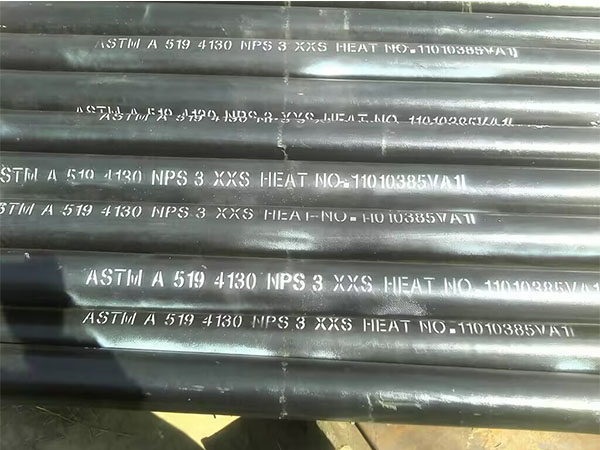
ASTM A519 Mechanical Tubing |
|
Material & Process |
Resistance-welded carbon and alloy steel tubing. Can be cold or hot rolled. |
Seamless carbon and alloy steel mechanical tubing. Available in both hot-finished and cold-finished conditions. |
|
Shapes & Sizes |
Available in various shapes: round, square, rectangular, and special shapes. Round tube: 0.500-2.00 inches. Square pipe: 0.500-1.500 inches. |
Primarily focuses on seamless tubing. Available in round, square, and rectangular profiles. |
|
Performance Standards |
Offers increased ductility with tightly controlled carbon steel grades. ASTM A513 1010, ASTM A513 1020, ASTM A513 1026, ASTM A513 4130. |
Detailed mechanical property requirements. Includes hardness, tensile, and non-destructive tests. |
|
Applications |
Widely used in construction, bridges, marine navigation, and oil and gas industry. |
Used in applications requiring machining, heat treating, close tolerances, and specific physical properties. |
|
Chemical Composition |
Made of 1008-1015 steel, primarily iron with trace amounts of carbon. |
Varies by grade, with specific requirements for carbon, manganese, phosphorus, silicon, and other elements. |
|
Environmental Focus |
Considers environmental performance and sustainability. |
Not specifically highlighted, but quality and performance imply use of stringent production standards. |
|
Certification & Marking |
General focus on quality and performance standards. |
Includes specific certification requirements for government orders. |
|
Tolerances & Finish |
Specific dimensional tolerances and shapes available as per project requirements. |
Detailed allowances for machining, decarburization, and camber. |
FAQ About ASTM A513 and ASTM A519
Is ASTM A519 stronger than ASTM A513?
Yes. ASTM A519 seamless tubing generally offers higher tensile strength, yield strength, and fatigue resistance because it contains no welded seam.
Can ASTM A513 replace ASTM A519?
In non-critical applications, ASTM A513 can often replace ASTM A519 and reduce costs.
However, for hydraulic cylinders, pressure systems, and high-stress mechanical components, ASTM A519 is usually required.
Is ASTM A519 seamless or welded?
ASTM A519 is a seamless mechanical tubing specification.
What is the most common ASTM A513 grade?
The most widely used grades are:
ASTM A513 1010
ASTM A513 1020
ASTM A513 1026
What is the most common ASTM A519 grade?
Popular grades include:
ASTM A519 1020
ASTM A519 1026
ASTM A519 4130
ASTM A519 4140
Summary
ASTM A513 and ASTM A519 are both important standards for mechanical tubing, but their applications differ.
ASTM A513 offers excellent dimensional control and shape flexibility, making it ideal for structural and general mechanical applications. ASTM A519 features seamless construction, superior strength, higher fatigue resistance, and enhanced pressure resistance, making it suitable for demanding engineering applications.


 Language
 English
 Español
 بالعربية
 sales@central-steels.com
 0086-731-8865-5017