In modern industry,
seamless steel pipes are hailed as the "blood vessels of industry" due to their excellent pressure-bearing capacity and integrity. Whether in deep-sea oil and gas extraction, high-pressure boiler manufacturing, or precision machining of mechanical parts, seamless steel pipes play an irreplaceable role.
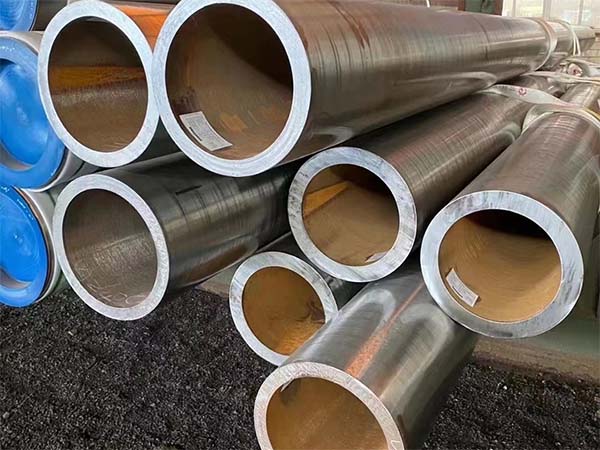
1. Classification by Production Process: The Source of Performance
The production process not only determines the cost of steel pipes but also directly affects their dimensional accuracy and internal structural stability.
Hot-Rolled Pipe
Process Characteristics: Rolled above the recrystallization temperature. High output, low cost, but a wider range of dimensional tolerances.
Corresponding Standard:
ASTM A106 (commonly used for carbon steel pipes in high-temperature environments). This standard is specifically for seamless carbon steel pipes used in high-temperature services. It requires the steel pipes to undergo a hydrostatic test or an alternative non-destructive electrical test (NDE). Its chemical composition strictly limits the content of carbon (C), manganese (Mn), phosphorus (P), sulfur (S), and silicon (Si) to ensure structural stability at high temperatures.
Cold-Drawn Pipe
Process Characteristics: Forced drawing at room temperature. High surface finish, extremely precise dimensions, suitable for manufacturing precision machinery.
Corresponding Standard:
ASTM A519 (Carbon and Alloy Steel Tubes for Precision Machinery), which covers various grades of carbon and alloy steels. Its core value lies in allowing extremely small outer diameter and wall thickness tolerances and specifying various heat treatment states (such as annealing, normalizing, stress relief, etc.) to balance the material's hardness and ductility.
Extruded Pipe
Process Characteristics: The billet is extruded into shape using a die. Commonly used for processing difficult-to-deform high-alloy steels or stainless steels.
Corresponding Standard: ASTM A312 (Common Standard for Seamless Austenitic Stainless Steel Tubes), this standard is the industry benchmark for seamless stainless steel tubes. For pipes produced using the extrusion process, strict requirements are placed on the intergranular corrosion test to ensure that the stainless steel maintains extremely high rust resistance after welding or high-temperature operations.
Forged Pipe
Process Characteristics: Forged multiple times using a large press. Extremely dense structure, primarily used in critical ultra-high pressure components.
Corresponding Standard: ASTM A369 (Forged, Bored Carbon and Alloy Steel Tubes for High Temperatures), this standard applies to forged ferritic alloy steel tubes for high-temperature and high-pressure environments. Due to forging and boring, it can withstand extremely high circumferential stress. The standard requires a transverse tensile test to verify the mechanical consistency of the pipe in different pressure directions.
Hot-Expanded Pipe
Process Characteristics: A small-diameter pipe is expanded into a large-diameter pipe using medium-frequency induction heating. An effective method for producing non-standard large-diameter steel pipes.
Corresponding Standard: ASTM A530 (General Requirements for Carbon and Alloy Steel Pipes), which is actually a "General Requirements for Carbon and Alloy Steel Pipes for Special Purposes." It specifies dimensional deviations after hot expansion, quality inspection standards, and limitations on weld repair, serving as a fundamental standard to ensure the safety of large-diameter hot-expanded pipes.
2. Classification by Material (Steel Grade): The Core of Performance
Material directly affects the corrosion resistance, strength, and performance under extreme temperatures of the steel pipe.
Carbon Steel Pipe: A basic material with high cost-effectiveness. Corresponding Standard: ASTM A53 / A106.
Alloy Steel Pipe: Contains elements such as Cr, Mo, and Ni, providing oxidation resistance and high-temperature resistance. Corresponding Standard: ASTM A335 (Ferritic Alloy Steel Pipes, such as P11, P22, P91).
Stainless Steel Pipe: Excellent corrosion resistance, used in food, pharmaceutical, and chemical industries. Corresponding Standards: ASTM A312 / SA312 (304/316L series).
3. Classification by Product Shape: Form Serves Structure
Round Pipe: The most common geometry, with the most uniform stress distribution and low fluid resistance. Corresponding Standard: API SPEC 5L (Oil Pipeline Specification).
Special-shaped Tubing: Includes square, rectangular, and hexagonal tubes. Often used for mechanical parts and building frames. Corresponding Standard: ASTM A500 (Structural Carbon Steel Cold-Formed Tubing).
4. Classification by Wall Thickness: Reflecting Pressure Bearing Capacity
The wall thickness of steel pipes is usually indicated by Schedule (Sch) designations.
Thin-Wall Seamless Pipe: High D/S (diameter-to-thickness ratio), used in low-pressure systems or lightweight structures. Often corresponds to Sch 5S/10S.
Thick-walled seamless pipes: Extremely high diameter-to-thickness ratio, used in extremely high-pressure environments, such as deep well drilling. Often corresponds to ultra-thick specifications such as Sch 160/XXS.
5. Classification by Application: Precisely Matching Industry Needs
Structural Tubing
Used in general structures and mechanical structures, such as building supports, vehicle axles, and brackets. Emphasis is placed on mechanical strength (yield/tensile strength) and dimensional stability; pressure testing is not mandatory.
Corresponding standards: ASTM A519 (American Standard) / EN 10210 (European Standard). ASTM A519 covers various grades of carbon steel and alloy steel. Its advantages lie in providing extremely high dimensional accuracy and various heat treatment states (such as SR stress relief), making it ideal for precision machining.
Fluid Pipes
Commonly used for transporting fluids such as water, oil, and gas, possessing excellent sealing properties. Each tube must undergo a hydrostatic test or ultrasonic flaw detection before leaving the factory.
Corresponding standard: ASTM A53 Grade B (American Standard) / API 5L (Oil Pipeline Standard). ASTM A53 Grade B is a globally recognized fluid pipe standard. It specifies that the pipe must have good bending and flanging properties, suitable for welding, winding, and bending operations in low-to-medium pressure environments.
Seamless Tubes for Low-Medium Pressure Boilers
Commonly used in the heating surface piping of industrial boilers and locomotive boilers, possessing good thermal conductivity and flaring performance.
Corresponding standard: ASTM A179 / ASTM A192. This is a cold-drawn low-carbon steel standard specifically designed for heat exchangers and condensers. It has strict upper limits on hardness to ensure that the tubes will not crack when inserted into the boiler tube sheet and flared.
Seamless Steel Tubes for High Pressure Boilers
Commonly used in superheaters, reheaters, and economizers of high-pressure and supercritical boilers. They possess extremely high oxidation resistance and high-temperature creep strength.
Corresponding standards: ASTM A192 / ASME SA213. SA213 covers ferritic and austenitic alloy steels (such as the well-known T11, T22, and T91). These materials maintain structural stability at high temperatures, preventing tube wall cracking due to prolonged high temperatures.
Pipes for Petrochemical & Fertilizer Equipment
Commonly used in refinery furnace tubes, heat exchangers, and pipelines for high-pressure chemical equipment. They possess excellent resistance to hydrogen corrosion and sulfidation.
Corresponding standards: ASTM A335 (alloy tubes) / ASTM A312 (stainless steel). In fertilizer and cracking plants, grades P5, P9, or P11 are commonly used. These standards have precise requirements for the chromium (Cr) and molybdenum (Mo) content in the chemical composition to resist corrosion from chemical media.
Geological & Oil Drilling Pipes
Commonly used in oil drilling for casing, tubing, and drill pipe. They possess extremely high tensile strength, crush resistance, and torque resistance.
Corresponding Standards: API SPEC 5CT / API SPEC 5DP. API 5CT is the "constitutional" standard of the petroleum industry. It classifies steel grades into J55, K55, N80, P110, etc., with different grades corresponding to different well depths and geological pressure environments, and has strict threaded connection specifications.
Seamless Steel Pipes for Marine Use
Commonly used in marine pressure piping systems, boilers, and superheaters. They require certification from classification societies (such as ABS, DNV, LR) and possess good resistance to seawater corrosion.
Corresponding standards: ASTM A131 (General Specification for Marine Steel) / ASTM A106. Marine pipes typically follow A106 or A53 standards directly, but must undergo on-site supervision and material re-inspection by a specific classification society to ensure reliability in marine salt spray environments.
Conclusion
Choosing the right seamless steel pipes not only ensures the safety and durability of a project but also effectively controls the project budget. From hot-rolled to cold-drawn, from carbon steel to alloy steel, each classification reflects a specific industrial application logic.
Read more : What is seamless steel pipe?
 Central Steel


 Language
 English
 Español
 بالعربية
 sales@central-steels.com
 0086-731-8865-5017