In modern industrial piping systems,
seamless steel pipe plays a critical role in ensuring safe and reliable fluid transportation. Among the many standards available, ASTM A106 Schedule 80 seamless steel pipe is widely used for high-temperature and high-pressure services in industries such as oil and gas, petrochemical processing, and power generation.
Because of its thicker wall design and excellent mechanical performance, ASTM A106 SCH 80 pipe provides higher pressure resistance and structural strength than lighter wall pipe schedules. This article explains the specifications, dimensions, manufacturing process, and practical applications of ASTM A106 Schedule 80 seamless steel pipe, helping engineers and buyers make informed decisions.
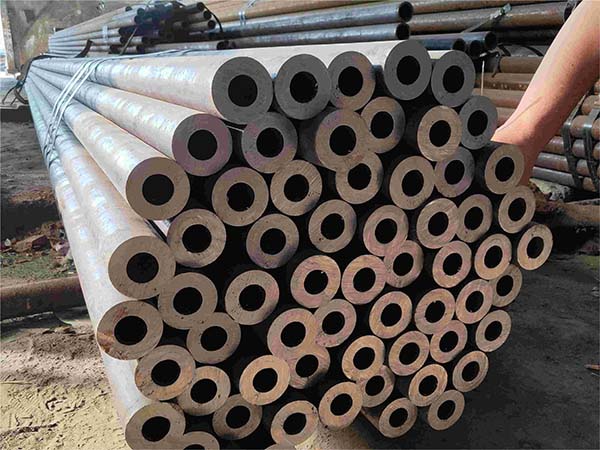
What is ASTM A106 Seamless Steel Pipe?
ASTM A106 is a standard specification for seamless carbon steel pipe intended for high-temperature service. It is commonly used in refineries, power plants, boilers, and chemical plants where pipelines must withstand high pressure and elevated temperatures.
Unlike welded pipe, seamless steel pipe is manufactured without a welded seam, which improves its ability to withstand internal pressure and reduces the risk of leakage or structural failure.
ASTM A106 pipes are available in three grades:
Grade A – Lower strength, suitable for general applications
Grade B – The most widely used grade with balanced strength and ductility
Grade C – Higher strength grade for demanding service conditions
Among these,
ASTM A106 Grade B seamless steel pipe is the most commonly specified material for industrial pipelines.
Understanding Schedule 80 Pipe
The term Schedule 80 (SCH 80) refers to a standardized pipe wall thickness defined in piping dimension standards such as ASME B36.10M. For a given nominal pipe size (NPS), Schedule 80 pipe has a thicker wall than Schedule 40 pipe.
The thicker wall provides several important advantages:
Higher pressure capacity;
Greater mechanical strength;
Improved resistance to external impact;
Better durability in demanding industrial environments.
For this reason, ASTM A106 Schedule 80 seamless steel pipe is often selected for high-pressure systems and critical pipelines.
Chemical Composition and Mechanical Properties
The chemical composition of ASTM A106 pipe ensures a balance between strength, ductility, and weldability. For Grade B, the typical composition limits include:
Carbon: ≤ 0.30%
Manganese: 0.29 – 1.06%
Phosphorus: ≤ 0.035%
Sulfur: ≤ 0.035%
Silicon: ≥ 0.10%
These alloying elements contribute to the pipe's mechanical performance and structural integrity.
Mechanical Properties (Grade B)
Minimum Tensile Strength: 415 MPa (60,000 psi)
Minimum Yield Strength: 240 MPa (35,000 psi)
Elongation: typically ≥ 20%
These properties allow ASTM A106 SCH 80 seamless steel pipe to withstand significant internal pressure and mechanical stress.
Manufacturing Process of Seamless Steel Pipe
The production of ASTM A106 seamless steel pipe typically involves hot-rolling or cold-drawing processes.
1. Billet Preparation
Steel billets are heated to high temperatures before forming.
2. Piercing Process
The heated billet is pierced to create a hollow tube.
3. Rolling or Extrusion
The hollow shell is rolled or stretched to achieve the desired diameter and wall thickness.
4. Heat Treatment
Heat treatment improves the pipe's mechanical properties and internal structure.
5. Finishing and Inspection
Final operations include sizing, cutting, surface treatment, and testing.
Because seamless pipes do not contain weld seams, they offer superior strength and pressure resistance compared with welded pipes.
Testing and Quality Inspection
To ensure product reliability, ASTM A106 pipes must undergo several inspections and tests before shipment. These may include:
Hydrostatic pressure testing to verify pressure integrity
Ultrasonic testing (UT) for internal defects
Chemical composition analysis
Tensile strength testing
Dimensional inspection
Manufacturers typically provide a Mill Test Certificate (MTC) confirming that the pipe meets all specified standards.
Applications of ASTM A106 Schedule 80 Seamless Steel Pipe
Because of its strength and pressure resistance, ASTM A106 SCH 80 pipe is widely used in demanding industrial systems.
Common applications include:
Oil and Gas Industry: Transporting crude oil, natural gas, and refined petroleum products.
Power Generation: Steam pipelines in thermal power plants and boiler systems.
Petrochemical Plants: Transporting chemicals and high-temperature fluids.
Industrial Process Piping: Used in refineries, processing plants, and heavy industrial facilities.
In these environments, the combination of high temperature resistance and thick wall strength makes Schedule 80 seamless steel pipe a reliable solution.
Conclusion
ASTM A106 Schedule 80 seamless steel pipe is a reliable and widely used solution for high-pressure and high-temperature piping systems. With its thick wall structure, strong mechanical properties, and seamless manufacturing process, it provides excellent durability and safety in demanding industrial environments.
Read more : ASTM A106 schedule 40 seamless carbon steel pipe or Schedule 80 steel pipe pressure rating
 Central Steel


 Language
 English
 Español
 بالعربية
 sales@central-steels.com
 0086-731-8865-5017