In modern industry and large power plants,
high-pressure boilers are often referred to as the "heart" of the system. However, this heart operates in extremely harsh environments, constantly subjected to extremely high temperatures and pressures. Under such extreme conditions,
seamless steel tubes for high-pressure boilers have become the absolute mainstay in ensuring the safe and efficient operation of the system.
Why are seamless tubes the preferred choice for heat exchanger tubes, superheater tubes, and reheater tubes in high-pressure boilers? This article provides a comprehensive understanding of the irreplaceable role of seamless steel tubes in high-pressure boilers and the core technologies behind them.
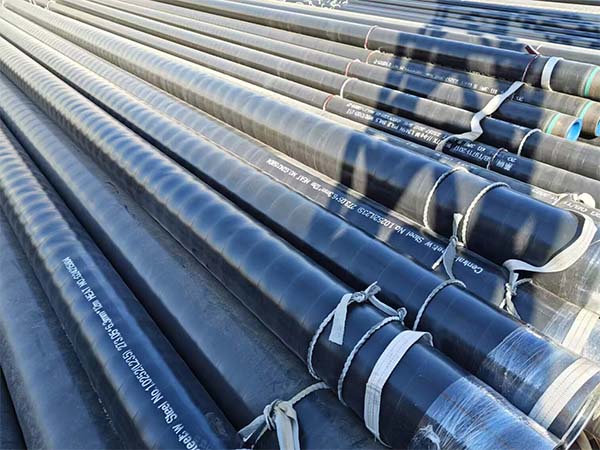
What are Seamless Steel Tubes? Why are they best suited for high-pressure boilers?
As the name suggests, the biggest characteristic of seamless steel tubes is their "seamlessness." They are formed from a single solid steel billet through high-temperature piercing, rolling, or cold drawing.
In ordinary welded steel pipes, the weld seam is often a breeding ground for stress concentration and potential defects. Seamless steel tubes, due to the absence of weld joints, completely eliminate the hidden dangers of weld stress or weld defects. This continuous grain structure gives it unparalleled advantages:
More uniform wall thickness and microstructure: Extremely high overall structural consistency.
Larger pressure safety margin: Able to withstand the severe impact of high-pressure steam.
Longer fatigue life: Exhibits excellent stability in the high-temperature, high-pressure alternating environment of boiler start-up and shutdown.
Extremely low defect risk: Significantly reduces the systemic risk of tube rupture and leakage.
Common standards and grades for high-pressure boiler tubes
Different boiler sections require different materials. The following standards are among the most relevant specifications for seamless boiler and superheater tubes.
|
Standard
|
Tube type
|
Typical material
|
Typical applications
|
|
ASTM A192/A192M
|
Seamless carbon steel boiler and superheater tube
|
Carbon steel
|
High-pressure boiler and superheater service
|
|
ASTM A210/A210M
|
Seamless medium-carbon steel boiler and superheater tube
|
Medium-carbon steel
|
Boiler tubes, boiler flues and superheater tubes
|
|
ASTM A213/A213M
|
Seamless ferritic and austenitic alloy-steel tube
|
Alloy steel / stainless steel
|
Boilers, superheaters and heat exchangers
|
|
ASTM A209/A209M
|
Seamless carbon-molybdenum alloy-steel tube
|
Carbon-molybdenum alloy steel
|
Boiler and superheater service
|
|
ASME SA-192/SA-192M
|
ASME version of A192
|
Carbon steel
|
Code applications requiring ASME material specifications
|
|
ASME SA-210/SA-210M
|
ASME version of A210
|
Medium-carbon steel
|
Boiler and superheater applications
|
|
ASME SA-213/SA-213M
|
ASME version of A213
|
Ferritic/austenitic alloy steel
|
High-temperature boiler, superheater and heat-exchanger service
|
Coping with extreme operating conditions: Key Performance Requirements of High-Pressure Boiler Tubes
The selection of tube materials for high-pressure boilers is extremely selective. A qualified seamless steel tube must excel in the following key performance indicators:
High yield strength and tensile strength: This is the most basic safety guarantee. The tube must be strong and tough enough to ensure that it does not prematurely undergo plastic deformation or rupture under continuous ultra-high internal pressure.
Excellent high-temperature creep strength: The superheated section of the boiler needs to operate continuously at extremely high temperatures for a long time. The material must have strong "creep resistance," that is, maintain its shape for a long time under high temperature and constant stress without slow deformation.
Excellent Impact Toughness: Boilers experience thermal expansion and contraction during operation and cooling. Good low-temperature and high-temperature impact toughness effectively resists thermal shock and prevents crack propagation in stress concentration areas.
Corrosion and Oxidation Resistance: Water and steam inside boilers often contain trace impurities. High-quality tubing must resist oxidation and corrosion in this complex high-temperature, steamy environment, extending its service life.
Strict Dimensional and Surface Quality: High-precision outer diameter and wall thickness tolerances not only ensure the accuracy of complex internal boiler assembly but also guarantee efficient and uniform heat transfer.
Good Weldability: Although the tubing itself is seamless, splicing or welding is still required between tubes and between tubes and headers during on-site installation or subsequent maintenance. Good weldability greatly reduces on-site construction difficulties.
Core Materials and Manufacturing Processes Revealed
To meet the above stringent performance requirements, high-pressure boiler seamless tubes undergo rigorous selection of materials and manufacturing processes.
1. Common Material Grades
Alloy Steel: This is the absolute mainstay in high-temperature and high-pressure sections (such as superheaters and reheaters). By adding alloying elements such as chromium (Cr), molybdenum (Mo), and vanadium (V), the high-temperature strength, creep resistance, and oxidation resistance of the steel can be significantly improved.
Carbon Steel or Low-Alloy Steel: Typically used in relatively low-temperature or low-pressure sections of boilers (such as economizers or water-cooled walls), balancing safety with economy.
2. Precision Manufacturing Processes
Forming Technology: This mainly includes hot rolling piercing combined with subsequent rolling, or cold drawing and hot expansion techniques used to achieve higher dimensional accuracy.
Heat Treatment Control: This is the step that gives seamless tubes their "soul." Through precision heat treatment processes such as normalizing, tempering, quenching and tempering, or solution treatment followed by aging, the microstructure of the steel can be completely altered, thereby improving its toughness, eliminating manufacturing-induced internal stresses, and maximizing its high-temperature strength and thermal stability.
Stringent Quality Control
Manufacturing completion is only the first step. To be labeled as qualified Seamless Steel Tubes for High Pressure Boilers, they must undergo a series of extremely rigorous quality inspections:
Chemical Composition Analysis: Precisely verifying the content of key elements such as carbon (C), silicon (Si), manganese (Mn), chromium (Cr), and molybdenum (Mo) to ensure they possess the fundamental high-temperature performance required for the design.
Mechanical Property Testing: Verifying the core physical strength through a series of destructive tests, including tensile, yield, hardness, and impact tests.
Non-Destructive Testing (NDT): Employing "X-ray vision" technologies such as ultrasonic testing (UT), radiographic testing (RT), magnetic particle testing (MT), and penetrant testing (PT), ensuring that the pipe's inner and outer surfaces and interior are absolutely free of any minute defects.
Hydraulic/Airtightness Testing: Simulating actual working conditions, testing with ultra-high-pressure water or gas to verify the pipeline's absolute pressure resistance and sealing performance.
Microstructure and Microhardness Inspection: Under a microscope, the uniformity of the steel's internal structure is confirmed, eliminating any weak points such as overheated or incompletely tempered areas.
FAQ about seamless steel tubes for high-pressure boilers
1. What are seamless steel tubes for high-pressure boilers?
They are seamless tubes designed for pressure and heat-transfer applications in boilers and related equipment. Common specifications include ASTM A192, A210, and A213, depending on the material and service requirements.
2. Which ASTM standard is used for high-pressure boiler tubes?
ASTM A192/A192M is specifically intended for seamless carbon steel boiler and superheater tubes for high-pressure service. ASTM A210 covers seamless medium-carbon steel boiler and superheater tubes, while ASTM A213 covers seamless ferritic and austenitic alloy-steel boiler, superheater, and heat-exchanger tubes.
3. What is ASTM A192 boiler tube?
ASTM A192/A192M covers minimum-wall-thickness seamless carbon steel boiler and superheater tubes for high-pressure service. The specification includes requirements for chemical composition, hardness, flattening, flaring, and hydrostatic testing.
Summary
In equipment like high-pressure boilers, which push the limits of engineering, any compromise in materials can have catastrophic consequences. Seamless Steel Tubes for High Pressure Boilers, with their seamless structure, scientifically formulated alloy ratios, and rigorous manufacturing and testing processes, perfectly fulfill the heat transfer and pressure-bearing tasks under high temperature and pressure. They are not only the lifeblood of efficient boiler operation but also a solid shield for the safety of the entire industrial system.
Read more: ASTM A572 Grade 50 boiler plates or What is a high pressure seamless pipe
 Central Steel


 Language
 English
 Español
 بالعربية
 sales@central-steels.com
 0086-731-8865-5017