In modern piping systems, pipe selection is crucial, directly impacting the safety and durability of the entire system. Among various pipe specifications,
Schedule 40 seamless steel pipe is one of the most commonly used solutions due to its balanced performance in terms of strength, pressure resistance, and cost.
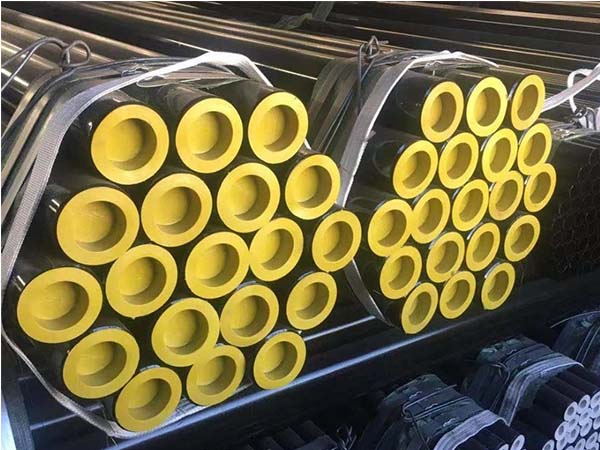
What is Schedule 40 Seamless Pipe?
“Schedule 40” originates from piping standards such as ASME B36.10 and ASME B36.19, where “Schedule” defines the relationship between pipe wall thickness and its nominal size (NPS). In this system, for a given pipe size, its outer diameter (OD) remains constant, while the wall thickness varies according to the pipe diameter class (Schedule 40). Schedule 40 represents a medium wall thickness, suitable for a variety of general and medium-requirement applications.
Seamless pipe is a steel pipe manufactured using a seamless manufacturing process. It is made from a solid steel billet through piercing and rolling, and there are no welds on the inner or outer walls of the pipe. This manufacturing process results in a uniform pipe structure, eliminating potential weak points and improving its pressure resistance and mechanical stress resistance.
Schedule 40 Seamless Pipe Dimensions, Wall Thickness, and Standardization
Schedule 40 pipes follow standardized dimensions based on the Nominal Diameter (NPS) system. It's important to note that NPS is not a direct measurement but rather an identifier. For each nominal size (NPS), the outer diameter is fixed, while the wall thickness is determined by the pipe grade (Schedule).
|
NPS
|
OD (mm)
|
Wall Thickness (mm)
|
|
1"
|
33.4
|
3.38
|
|
2"
|
60.3
|
3.91
|
|
3"
|
88.9
|
5.49
|
|
4"
|
114.3
|
6.02
|
|
6"
|
168.3
|
7.11
|
SCH 40 Seamless Pipe Pressure Capacity
The pressure performance of 40 seamless steel pipe depends on a number of interacting factors, not just the pipe diameter number. These factors include material strength, wall thickness, operating temperature, and corrosion allowance.
From an engineering perspective, the internal pressure capacity can be estimated using the classic Barlow equation: P = D/2St. This relationship shows that pressure capacity increases with increasing wall thickness and allowable material stress, and decreases with increasing pipe diameter. However, in practical applications, the temperature environment and the environment in which the steel pipe is located must be considered to ensure the safety of the piping system.
The Impact of Material Selection on SCH 40 Seamless Pipe
SCH 40 seamless pipe can be manufactured from a variety of materials, each designed for specific application conditions. Carbon steel pipes, such as ASTM A106 Grade B and ASTM A53 Grade B, are the most common choice, offering good strength and cost-effectiveness for oil and gas transportation, water pipelines, and structural applications.
For high-temperature and high-pressure environments, alloy steel is often the preferred choice. Alloy steels (such as ASTM A335 P11 and P22) offer superior creep resistance and heat resistance, making them ideal for power plants and refineries.
In corrosive environments, stainless steel effectively resists environmental corrosion of piping systems and is commonly used in chemical, food industries, and marine environments.
Comparison of SCH 40 Seamless Pipe with Other Steel Pipe Specifications
Compared to other steel pipe specifications, Schedule 40 steel pipe offers moderate performance.
Lower specification steel pipes, such as Schedule 10, have thinner walls and are suitable for low-pressure applications where weight reduction and cost reduction are priorities. On the other hand, higher-specification steel pipes, such as Schedule 80, have thicker walls and stronger pressure resistance, but they are also more expensive and heavier.
Schedule 40 steel pipes are frequently chosen because they achieve an optimal balance between mechanical properties and economic efficiency, making them suitable for most standard industrial applications.
In summary
40 seamless steel pipes are one of the most widely used piping solutions in industrial systems due to their strength, reliability, and versatility. By combining standardized wall thickness with a seamless manufacturing process, it delivers reliable performance under a wide range of operating conditions.
 Central Steel


 Language
 English
 Español
 بالعربية
 sales@central-steels.com
 0086-731-8865-5017