The
pressure rating of
ERW (Electric Resistance Welded) steel pipe is not determined solely by the manufacturing process; rather, it depends primarily on pipe diameter, wall thickness, material grade, allowable stress at the design temperature, weld quality, corrosion allowance, and applicable design codes. Generally, ERW pipes with greater wall thickness can withstand higher internal pressures, whereas—holding wall thickness and other conditions constant—pipes with larger diameters have a relatively lower pressure-bearing capacity.
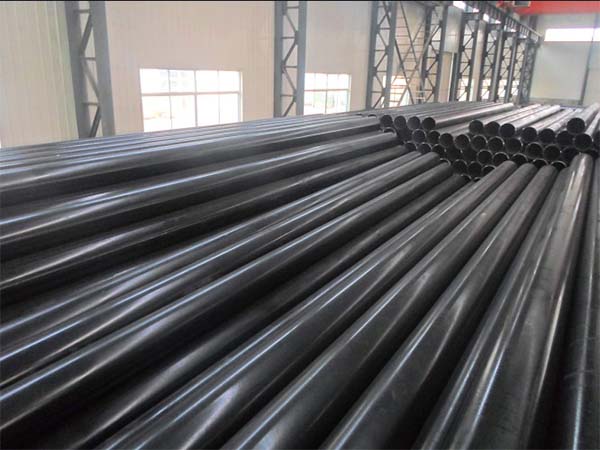
Understanding these factors is crucial when selecting ERW steel pipe for applications such as water, oil, and gas pipelines, process piping, fire protection systems, and other pressure-bearing uses.
During the manufacturing process, ERW steel pipe is formed by shaping steel strip or plate into a cylinder and welding the edges together using electric resistance heating. Because ERW pipe features a longitudinal weld seam, pressure design calculations must account for both the properties of the pipe body itself and the quality requirements of the welded joint.
Key factors influencing the pressure rating of ERW steel pipe include:
Outside diameter (OD)
Wall thickness
Material grade
Allowable stress
Design temperature
Weld quality and applicable quality factors
Corrosion allowance
Manufacturing tolerances
Wall thickness is the most critical factor affecting the pressure rating of ERW steel pipe. For a given outside diameter, material, temperature, and weld factor, an ERW pipe with a thicker wall offers a higher pressure-bearing capacity. For example, consider NPS 4 carbon steel ERW pipes specified as Schedule 20, Schedule 40, and Schedule 80; the Schedule 80 pipe has a significantly thicker wall and, consequently, a higher theoretical pressure-bearing capacity.
ERW (High-Frequency Electric Resistance Welded) Steel Pipe: Pressure Ratings and Wall Thickness Schedules
"Schedule" (wall thickness designation) is often confused with "pressure rating."
Schedule 10, Schedule 40, Schedule 80, Schedule 120, and Schedule 160 are designations used within standardized pipe sizing systems to indicate wall thickness. The actual wall thickness varies according to the Nominal Pipe Size (NPS).
For a given Nominal Pipe Size, and assuming other conditions remain constant, a higher schedule number generally indicates a thicker pipe wall, thereby providing a higher theoretical pressure-bearing capacity. However:
Pipe wall thickness ratings are not equivalent to pressure ratings.
For example, without specifying the pipe diameter, material, temperature, and design standard, it is inaccurate to make a generalized statement such as "Schedule 40 pipe has a pressure rating of X psi."
Key factors influencing the pressure rating of ERW steel pipe
|
Factor
|
General effect on pressure capacity
|
Why it matters
|
|
Wall thickness
|
Greater thickness generally increases capacity
|
Provides greater resistance to internal pressure
|
|
Pipe diameter
|
Larger diameter generally reduces capacity at the same wall thickness
|
Increases circumferential stress
|
|
Material grade
|
Higher allowable stress can increase capacity
|
Determines the stress the material can safely withstand
|
|
Design temperature
|
Higher temperature can reduce capacity
|
Allowable material stress may decrease
|
|
Weld quality
|
Better-qualified welds support pressure integrity
|
ERW pipe contains a longitudinal weld
|
|
Corrosion allowance
|
Greater allowance reduces effective thickness
|
Accounts for material loss during service
|
|
Pipe Schedule
|
Higher Schedule generally means greater wall thickness
|
Schedule defines a wall-thickness series
|
|
Manufacturing tolerance
|
Negative tolerance can reduce effective thickness
|
Actual minimum wall must meet design requirements
|
|
Design code
|
Determines calculation and safety requirements
|
Different applications may use different design rules
|
Practical Considerations When Selecting ERW Steel Pipe
When procuring ERW steel pipe for pressure applications, buyers should avoid selecting pipe based solely on the pipe grade or material grade.
A practical selection process is as follows:
Determine the application → Determine design pressure → Determine design temperature → Select material → Determine pipe size → Calculate required wall thickness → Consider corrosion allowance and manufacturing tolerances → Confirm welding and testing requirements → Check the entire piping system.
The final step is particularly important because the pipe is merely one component of a pressure system. Flanges, valves, fittings, gaskets, and connections must also meet the required design conditions.
The pressure capacity of the entire piping system may ultimately be limited by the pressure-containing component with the lowest pressure rating.
FAQs Regarding ERW Steel Pipe Pressure Ratings
1. What is the pressure rating of ERW steel pipe?
There is no single, universal pressure rating for ERW steel pipe. Its allowable pressure depends on pipe diameter, wall thickness, material grade, design temperature, weld quality, corrosion allowance, and applicable design codes.
2. Can ERW steel pipe be used in high-pressure applications?
Yes. Provided they meet the relevant requirements for materials, manufacturing, testing, inspection, and design codes, both ERW and HFW steel pipes can be used in pressure-containing applications.
3. Is ERW steel pipe weaker than seamless steel pipe?
Not necessarily. ERW and seamless steel pipes utilize different manufacturing processes, but their pressure-bearing performance depends on a combination of specifications, including material, dimensions, weld quality, inspection standards, and design requirements.
4. Does Schedule 40 (Sch 40) represent a specific pressure rating?
No. Schedule 40 merely indicates a standardized wall thickness series; it does not represent a universal pressure rating. The actual allowable pressure depends on pipe diameter, material, temperature, and design conditions.
Summary
The pressure rating of ERW steel pipe is determined by a combination of factors, including pipe diameter, wall thickness, material allowable stress, design temperature, weld quality, corrosion allowance, manufacturing tolerances, and applicable design codes.
Read more : What pressure is schedule 40 pipe or Schedule 10S Pipe Pressure Rating Explained
 Central Steel


 Language
 English
 Español
 بالعربية
 sales@central-steels.com
 0086-731-8865-5017