Steel sheet piles and
concrete retaining walls are commonly used in port construction, deep foundation pit engineering, river management, and urban underground structure construction. Both can be used for soil retention and support, but they differ significantly in construction methods, cost structure, applicable scenarios, and long-term performance.
This article will compare steel sheet piles and concrete retaining walls from multiple aspects, including construction, performance, cost, applicable projects, and environmental friendliness.
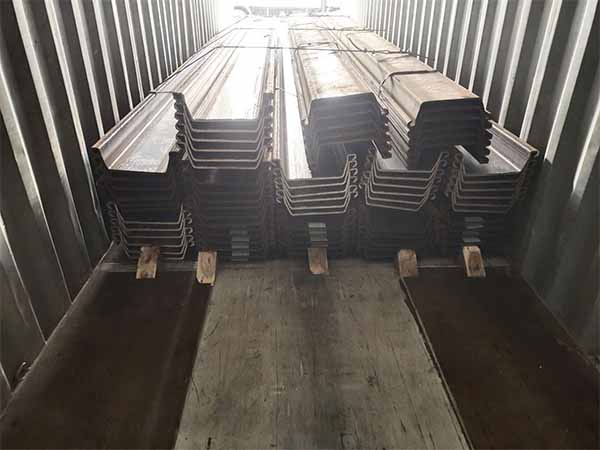
What is a Steel Sheet Pile?
A steel sheet pile is a type of steel profile with an interlocking structure. These profiles interlock to form a continuous retaining wall, and are driven into the ground using piling equipment to create a stable structure. It is widely used in dock and port engineering, cofferdam construction, deep foundation pit support, river management, and flood control projects. A core characteristic of steel sheet piles is their high structural strength and fast construction speed. In many projects, they are referred to as: Sheet Pile Wall, Steel Sheet Piling System, or Sheet Pile Retaining Wall.
What is a Concrete Retaining Wall?
Concrete retaining walls are a traditional type of retaining structure, typically constructed by pouring reinforced concrete to form a stable retaining wall that resists soil pressure through its own weight or structural design. Common types include gravity retaining walls, cantilever retaining walls, and buttress retaining walls. Compared to steel sheet piles, concrete retaining walls offer advantages such as structural stability, long service life, and suitability for permanent projects.
Steel Sheet Pile vs. Concrete Retaining Wall: Key Differences
1. Structural Form
Steel Sheet Pile: Flexible structure, relying on the strength of steel and interlocking joints to form a unified structure.
Concrete Retaining Wall: Rigid structure, relying on the self-weight of concrete and structural design to withstand soil pressure.
2. Construction Speed
Steel Sheet Pile: Fast construction speed, allowing for rapid support formation.
Concrete Retaining Wall: Longer construction period, requiring pouring and curing time.
3. Construction Space
Steel Sheet Pile: Suitable for urban projects with limited space.
Concrete Retaining Wall: Typically requires a larger construction site.
4. Reusability
Steel Sheet Pile: Recyclable and reusable.
Concrete Retaining Wall: Generally not reusable after dismantling.
5. Applicable Projects
Steel Sheet Pile: More suitable for temporary support, port projects, and deep foundation pits.
Concrete Retaining Wall: More suitable for permanent infrastructure.
6. Construction Method Comparison
Steel Sheet Pile Construction Method: Steel sheet pile construction is mainly completed using piling equipment, such as: vibratory hammer, impact hammer, and press-in method. In port or cofferdam projects, steel sheet piles can often complete the main support structure within a few days.
Concrete Retaining Wall Construction Process: Concrete retaining wall construction typically requires the following steps: foundation excavation, formwork installation, reinforcement binding, concrete pouring, curing, and backfilling. This process can take several weeks or even longer, especially in large-scale projects where the construction period can be significantly increased. Therefore, steel sheet piles are generally more advantageous in projects with tight schedules.
7. Bearing Capacity Comparison
Concrete Retaining Wall: Typically designed as a permanent structure with stable load-bearing capacity.
Steel Sheet Pile: Can be used for both temporary and permanent structures.
Summary
Both steel sheet piles and concrete retaining walls are important retaining structures, but they serve different types of engineering needs. Steel sheet piles are more suitable for rapid construction, deep foundation pits, and hydraulic structures. Concrete retaining walls are more suitable for traditional civil engineering and long-term infrastructure.
Read more : What is a piling pipe?
 Central Steel


 Language
 English
 Español
 بالعربية
 sales@central-steels.com
 0086-731-8865-5017