Seamless carbon steel pipes for high-temperature environments are commonly used in high-pressure vessel industries such as power generation, petrochemicals, and boiler manufacturing. Due to the need for continuous operation in high-temperature and high-pressure environments, the selection of materials, manufacturing processes, and standards for high-temperature seamless pipes directly affect the safety of the entire pipeline system.
ASTM A106 Grade B and Grade C are among the most common choices for high-temperature carbon steel pipe service because the specification is specifically designed for seamless carbon steel pipe used at elevated temperatures. When temperatures, pressure, creep resistance, or corrosion requirements exceed the practical limits of carbon steel, alloy seamless pipes such as ASTM A335 P11 or P22 may be considered.
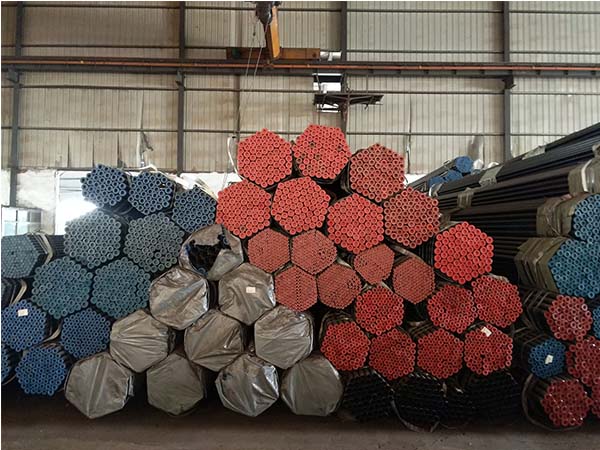
Common Standards for High-Temperature Seamless Pipes
|
Standard
|
Material / Grade
|
Typical Application
|
High-Temperature Suitability
|
|
ASTM A106 / ASME SA106
|
Carbon Steel, Grade A/B/C
|
Refineries, power plants, process piping, steam and hot-fluid service
|
Excellent for high-temperature carbon steel pipe
|
|
ASTM A192 / ASME SA192
|
Carbon Steel Boiler Tube
|
High-pressure boilers and heat exchangers
|
Suitable for high-pressure boiler service
|
|
ASTM A210 / ASME SA210
|
Medium-Carbon Steel
|
Boilers, boiler tubes and superheaters
|
Suitable for boiler and superheater service
|
|
ASTM A335 / ASME SA335
|
Ferritic Alloy Steel, P11/P22/P5, etc.
|
Power plants, high-temperature steam and process piping
|
Excellent for demanding high-temperature service
|
|
EN 10216-2
|
Non-alloy and Alloy Steel
|
Pressure equipment and high-temperature applications
|
Grade-dependent
|
|
API 5L
|
Carbon Steel Line Pipe
|
Oil and gas transmission pipelines
|
Application and grade dependent; not primarily a high-temperature specification
|
Technical Principles: Why Choose "Seamless"?
In high-temperature environments, pipes must withstand not only the pressure of the internal fluid but also the stress generated by thermal expansion and contraction.
Eliminating Weaknesses: Compared to welded steel pipes, seamless steel pipes are formed by piercing a single piece of round steel, with no weld seams. This fundamentally avoids stress corrosion cracking or cracking caused by welding defects that may occur at weld seams under high temperature and pressure.
Creep Resistance: Metals undergo slow plastic deformation under long-term high-temperature stress, a process known as "creep." High-temperature seamless pipes significantly improve grain boundary stability through optimized chemical composition (such as manganese and silicon content), thereby enhancing creep resistance.
Heat Conduction Efficiency: The uniform pipe wall structure ensures uniform heat transfer, reducing the risk of pipe bursts due to localized overheating.
Key Processes and Quality Inspection
Normalizing: This is an essential heat treatment process for high-temperature pipes. The steel pipe is heated above its critical temperature and then cooled in air. This refines the grain size, resulting in a uniform internal structure and eliminating internal stresses generated during pipe manufacturing, thus giving the pipe optimal overall mechanical properties.
Non-destructive Testing (NDT)
Ultrasonic Testing (UT): Penetrates the pipe wall to identify hidden cracks or pores.
Hydrostatic Pressure Testing: Each finished pipe must undergo a pressure test at a pressure higher than the operating pressure to ensure zero leakage.
Precautions
When the operating temperature of the steel pipe exceeds this critical value for an extended period, carbides in the carbon steel may precipitate and form graphite spheroids. This process significantly weakens the steel's strength, making it brittle like ceramic. If your operating temperature is consistently above 450°C, please consider using ASTM A335 grade chromium-molybdenum alloy steel pipes (such as P11, P22).
FAQ About Seamless Carbon Steel Pipes for High-Temperature Environments
1. What is the best seamless carbon steel pipe for high-temperature service?
ASTM A106 Grade B is one of the most commonly used seamless carbon steel pipe grades for high-temperature service. The final selection should be based on design temperature, pressure, fluid, wall thickness, applicable code, and project requirements.
2. Is ASTM A106 suitable for high-temperature applications?
Yes. ASTM A106 is specifically designed for seamless carbon steel pipe for high-temperature service. It is widely used in refineries, power plants, petrochemical facilities, and process piping.
3. What is the difference between ASTM A106 and ASTM A53?
ASTM A106 is specifically intended for seamless carbon steel pipe for high-temperature service, while ASTM A53 covers steel pipe for mechanical and pressure applications and is available in seamless and welded forms. Therefore, A106 is generally the more appropriate specification when high-temperature pressure service is a primary requirement.
4. Can ASTM A106 be used for steam?
Yes. ASTM A106 seamless carbon steel pipe is commonly used in steam and other hot-fluid piping systems when the design temperature, pressure, and allowable stresses are within the specification and applicable design-code limits.
Summary
In general, ASTM A106 is a common choice for seamless carbon steel pipes in high-temperature service, while ASTM A335 is better suited to more demanding high-temperature applications requiring alloy steel. Other standards, such as ASTM A192, A210, EN 10216-2, and API 5L, should be selected according to the specific application, temperature, pressure, and design requirements.
 Central Steel


 Language
 English
 Español
 بالعربية
 sales@central-steels.com
 0086-731-8865-5017