Choosing the right welded steel pipes is essential for ensuring structural safety, service performance, and long-term cost control in construction and pipeline projects. As
welded steel pipe is produced using different welding processes and standards, proper selection should be based on actual application requirements rather than a single technical parameter.
Clarify Application and Service Conditions
The application environment is the primary factor when selecting welded steel pipes. Pipes used in building structures and foundations are mainly designed to bear static and dynamic loads, while pipelines for oil, gas, or fluid transmission must withstand internal pressure, temperature changes, and long-term operation.
For example, welded steel pipes used in
construction projects focus on dimensional stability and structural strength, whereas pipes applied in
oil and gas transmission systems must comply with strict standards related to weld quality, toughness, and non-destructive testing. Understanding the service condition helps determine both the pipe type and the applicable technical standard.
Select the Appropriate Welding Process
Different welding processes result in different performance characteristics for welded steel pipes.
ERW welded steel pipe is commonly selected for small to medium diameters and low- to medium-pressure applications due to its uniform wall thickness and good dimensional accuracy. It is widely used in structural members, water pipelines, and general engineering works.
For projects requiring large diameters and higher pressure resistance,
LSAW welded steel pipe is often specified, especially in main oil and gas transmission lines. In large-scale or long-distance projects where diameter flexibility and cost efficiency are important,
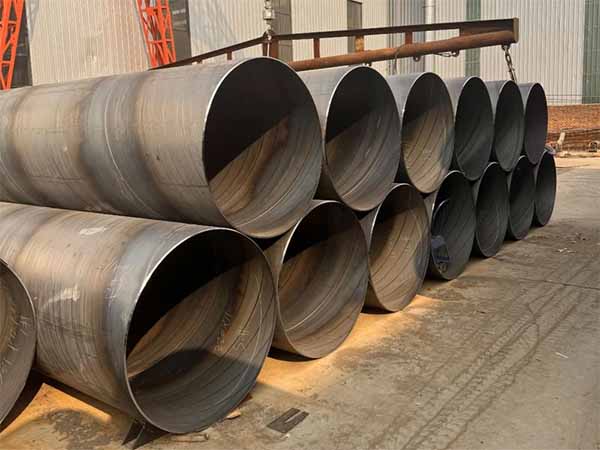
spiral welded steel pipe provides a practical solution and is frequently used in piling and infrastructure pipelines.
Confirm Standards, Size, and Mechanical Requirements
Applicable standards define the minimum requirements for chemical composition, mechanical properties, inspection, and testing. For oil and gas pipelines,
API 5L welded steel pipe is commonly specified, while ASTM and EN standards are widely used in construction, piling, and infrastructure applications. Selecting welded steel pipes without aligning with project standards can lead to compliance risks and performance issues.
At the same time, diameter, wall thickness, and pressure rating must be selected based on design calculations and safety factors. In many construction and transmission projects, welded steel pipes are preferred over seamless pipes due to their availability in large diameters, consistent quality, and economic advantages.
Evaluate Environment and Manufacturer Capability
Environmental factors such as corrosion exposure, underground installation, and temperature variation should be considered when selecting welded steel pipes. Proper material grades and protective coatings significantly extend service life, especially in offshore or aggressive environments.
Equally important is choosing a qualified welded steel pipe manufacturer with stable production capacity, quality control systems, and full inspection records. A reliable manufacturer can provide technical support during material selection and ensure consistent product performance throughout the project lifecycle.
Conclusion
Selecting welded steel pipes is a comprehensive process that requires balancing application demands, welding process, standards, and supplier capability. By aligning technical requirements with the appropriate welded steel pipe type, projects can achieve reliable performance, regulatory compliance, and optimized cost efficiency.
 Central Steel


 Language
 English
 Español
 بالعربية
 sales@central-steels.com
 0086-731-8865-5017