What is a hot-rolled steel bar?
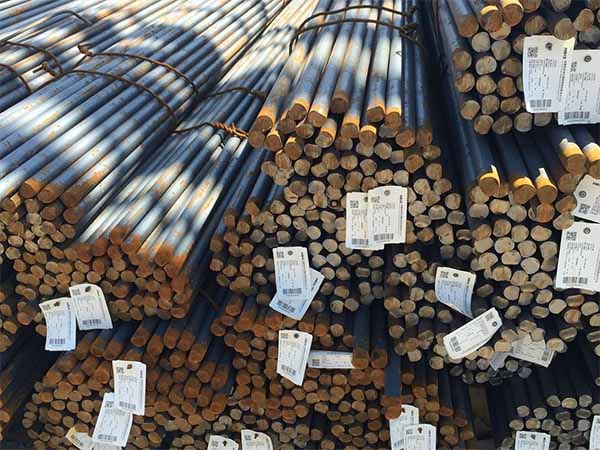
Hot-rolled steel bars are bars produced by rolling under high-temperature conditions. Common cross-sections include round bars, square bars, flat bars, and hexagonal bars. Compared to cold-rolled/cold-drawn bars, hot-rolled bars often have an oxide scale on their surface. They have wider dimensional tolerances, but exhibit uniform internal structure, stable mechanical properties, and are suitable for environments with large diameters and large dimensions.
Common Specifications and Material Grades
Cross-sections and dimensions: Common diameters for round bars are 6mm, 8mm, 16mm, 20mm, 25mm, and 40mm; square bars, flat bars, and hexagonal bars are customized according to customer requirements. Standard lengths are usually 6m or cut to length per meter/piece.
Common grades: Q235 (common carbon structural steel according to Chinese national standards), 1045/S45C (medium carbon steel, used for shaft blanks),
A36 (corresponding structural steel according to American standards). When selecting a grade, tensile strength, yield strength, elongation, and subsequent processing requirements should be considered.
Manufacturing Process Key Points
Heating the Billet: Heating the steel billet to above the recrystallization temperature (typically >900°C).
Rough and Finish Rolling: Rolling to the target cross-section through multiple passes.
Length Cutting: Hot cutting or sawing to obtain the specified length.
Straightening and Treatment: Straightening, pickling, or surface treatment as needed to meet subsequent processing requirements.
Inspection and Release: Chemical composition and mechanical properties are randomly sampled before shipment, and an MTR (Mill Test Report) is issued.
Performance Characteristics and Engineering Advantages
High Cost-Effectiveness: Mature hot rolling process, lower unit price, suitable for large-volume procurement.
Good Plasticity and Machinability: Easy to turn, mill, forge, and weld (some high-carbon alloys require preheating or post-heat treatment).
Flexible Supply: Sufficient inventory of standard semi-finished products, short delivery time, suitable for project-based procurement.
Typical Application Scenarios
1. Good Foundation Anchors for Building Structures: Hot-rolled steel bars are commonly used in building structure reinforcement, bridge components, embedded parts, and formwork supports. 2. Mechanical Shaft Blanks: The machinery industry extensively uses S45/1045 hot-rolled round steel as blanks for manufacturing machine tool spindles, drive shafts, couplings, etc.
3. Fastener Precursors: Many bolts, nuts, pins,
U-shaped piles, etc., are produced by secondary forging after cutting hot-rolled steel bars.
4. Agricultural Machinery and Automotive Parts: Such as brake brackets, connecting rods, gear blanks, pins, agricultural machinery connecting rods, etc.
5. Mold and Tooling Fixture Base Materials: Some factories use hot-rolled flat steel or square steel to process mold frames, fixture seats, or general tooling.
Machining and Post-Processing:
Cutting: Large diameter parts are preferably band sawed or flame-cut. After cutting, they should be turned or ground to meet precision requirements.
Welding: Carbon structural steel can usually be directly welded; high-carbon or alloy steel requires preheating/post-heat treatment to prevent cracking.
Heat Treatment: Shafts or high-strength parts often require normalizing, quenching, and tempering to achieve design performance.
Surface Treatment: Pickling, phosphating, spraying, or hot-dip galvanizing, selected according to corrosion resistance requirements.
Frequently Asked Questions (FAQ)
Q: How should I choose between hot-rolled and cold-rolled steel bars?
A: If cost and large-size supply are the primary concerns, and surface precision requirements are not high, prioritize hot-rolled. If surface finish and dimensional accuracy are more important, choose cold-rolled/cold-drawn.
Q: What quality certificates should I look for when purchasing hot-rolled steel bars?
A: Require MTR (Mechanical, Chemical, and Mechanical Properties), factory inspection reports, and, if necessary, third-party testing reports.
Q: Can hot-rolled steel bars be used directly in welded structures?
A: Carbon structural steel can generally be welded directly; high-carbon or high-manganese materials may require preheating or post-heat treatment to avoid cracking.
 Central Steel


 Language
 English
 Español
 بالعربية
 sales@central-steels.com
 0086-731-8865-5017