ERW steel pipe is manufactured in accordance with a wide range of international specifications and standards to ensure consistent quality, mechanical performance, and suitability for different service conditions. These standards define requirements for chemical composition, mechanical properties, dimensional tolerances, testing methods, and inspection procedures.
This article provides an overview of the most commonly used ERW pipe specifications and standards, helping engineers and buyers understand how to select the appropriate ERW steel pipe for their projects.
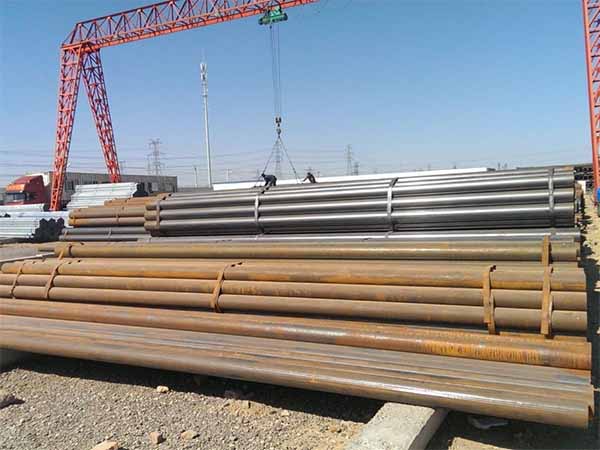
Why Specifications and Standards Matter for ERW Pipes
Specifications and standards play a critical role in ERW pipe selection and application. They ensure that the pipe meets minimum requirements for strength, ductility, weld quality, and dimensional accuracy.
For ERW pipes, standards also define acceptable welding processes, heat treatment requirements, and non-destructive testing methods. Compliance with these standards helps reduce project risk and ensures long-term performance.
ASTM Standards for ERW Steel Pipe
ASTM standards are widely used for ERW pipes in structural, pressure, and general engineering applications.
ASTM A53 ERW Steel Pipe
ASTM A53 is one of the most common standards for ERW steel pipes. It covers both seamless and welded steel pipes intended for mechanical and pressure applications.
Key characteristics include:
- Defined chemical composition limits
- Minimum yield and tensile strength requirements
- Hydrostatic or non-destructive testing
ERW pipes produced under ASTM A53 are commonly used for water pipelines, low-pressure services, and structural applications.
API Standards for ERW Line Pipe
API 5L ERW Line Pipe
API 5L covers line pipes used for the transportation of oil, gas, and water in pipeline systems. ERW pipes manufactured to API 5L are typically used in low to medium pressure pipeline applications.
The standard specifies:
- Product Specification Levels (PSL1 and PSL2)
- Chemical and mechanical requirements
- Inspection and testing procedures
Proper application of API 5L ERW pipes depends on operating pressure, temperature, and service environment.
EN Standards for ERW Steel Pipe
EN 10217 Welded Steel Pipes for Pressure Purposes
EN 10217 covers welded steel pipes, including ERW pipes, intended for pressure applications. It defines requirements for material grades, mechanical properties, and testing methods.
EN standards are commonly applied in European markets and projects requiring CE compliance.
Other Common ERW Pipe Standards
In addition to ASTM, API, and EN standards, ERW pipes may also be produced according to other international or regional specifications depending on project requirements.
These standards typically address specific use cases such as structural applications, mechanical engineering, or special service conditions.
Dimensional Tolerances and Size Requirements
Standards for ERW pipes specify allowable tolerances for outside diameter, wall thickness, ovality, and straightness. These tolerances ensure proper fit-up, installation, and performance in service.
Inspection and Testing Requirements
ERW pipe standards include inspection and testing requirements to verify product quality. Common testing methods include:
- Hydrostatic pressure testing
- Eddy current or ultrasonic testing
- Mechanical testing
- Visual and dimensional inspection
These inspections help ensure weld integrity and compliance with applicable specifications.
Selecting the Right ERW Pipe Standard for Your Project
Choosing the correct ERW pipe standard depends on application type, operating conditions, and regulatory requirements. Factors such as pressure level, temperature, and fluid type must be considered during selection.
Conclusion
ERW pipe specifications and standards provide a technical foundation for quality, safety, and performance. By understanding the differences between ASTM, API, and EN standards, engineers and buyers can select ERW steel pipes that meet project requirements and regulatory expectations.
Read more: Applications of ERW Steel Pipe or ERW Pipe Manufacturing Process: From Steel Coil to Finished Pipe
 Central Steel


 Language
 English
 Español
 بالعربية
 sales@central-steels.com
 0086-731-8865-5017