AWWA C205 is an authoritative standard developed by the American Water Works Association (AWWA) for "Cement Mortar Lining and External Corrosion Protection of Steel Water Pipes." Due to its superior durability and cost-effectiveness, CML steel pipes have become the preferred solution for water infrastructure worldwide.
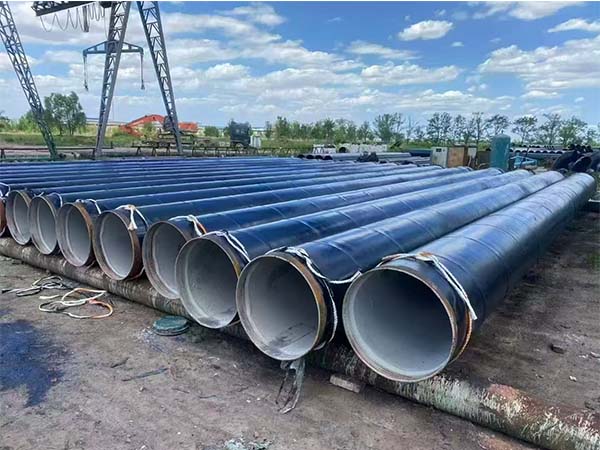
The AWWA C205 standard details the technical requirements for mechanically spraying a cement mortar protective layer onto the inner wall of steel water pipes with a diameter of 4 inches (100 mm) and above.
This lining process is more than just a simple "coating"; it provides the steel pipe with the following two protective mechanisms:
Physical Barrier: The dense cement layer inside the steel pipe completely isolates the steel from the water, preventing oxygen and moisture from contacting the metal surface.
Chemical Passivation: During the hydration process of cement, calcium hydroxide is produced, creating a highly alkaline environment (pH > 12) on the inner wall of the steel pipe. In this environment, a stable passivation film forms on the steel surface, thus inhibiting corrosion of the steel pipe.
Four Key Technical Factors Determining AWWA C205 Pipeline Quality
To ensure a cement lining can serve for over 50 years, the following four key engineering variables must be strictly controlled:
1. Centrifugal Application
High-quality CML must be applied using a centrifugal rotation or centrifugal spraying process. The centrifugal force generated by high-speed rotation squeezes out excess water from the mortar, resulting in an extremely dense, hard, and smooth lining. This process significantly improves the adhesion between the mortar and the pipe wall.
2. Water-Cement Ratio & Strength
AWWA C205 has strict requirements for mortar proportions. An ideal water-cement ratio ensures that the mortar has good fluidity while possessing extremely high compressive strength after curing (typically requiring a 28-day compressive strength of not less than 2500 psi or 17.2 MPa).
3. Uniformity of Lining Thickness
The lining thickness must be scientifically matched to the pipe diameter. Insufficient thickness weakens protection, while excessive thickness increases pipe weight and reduces effective flow area (ID).
4. Curing Process
Strict moisture control is required during the curing process of cement mortar. Sealing the pipe ends or spray curing prevents the mortar from drying too quickly and causing shrinkage cracks, ensuring the integrity of the lining.
Why Choose AWWA C205 CML Steel Pipes?
1. Superior Transport Efficiency
The cement lining surface is smooth and flat, with a Hazen-Williams coefficient (C value) typically maintained between 140 and 150. Because the inner wall does not develop rust or nodules like bare pipes, the pipe maintains extremely low friction throughout its lifespan, significantly reducing long-term pumping energy consumption.
2. Unique "Self-Healing" Ability (Autogenous Healing)
Cement mortar possesses remarkable physical properties: when micro-cracks appear in the lining, the cement continues to hydrate under the influence of water, producing calcium hydroxide crystals. These crystals automatically fill and seal the cracks, maintaining the integrity of the protective layer.
3. Zero Pollution
Designed specifically for drinking water projects, AWWA C205 linings are free of volatile organic compounds, effectively preventing "red water" and ensuring that the transported water meets hygiene standards.
4. Extremely Long Service Life and Economic Efficiency
Although the initial processing cost is slightly higher, considering its long service life of 50-100 years and extremely low maintenance requirements, the overall cost of CML steel pipes is far lower than other short-term corrosion protection solutions.
Frequently Asked Questions (FAQ) about AWWA C205 Pipes
Q: Will the cement lining crack during transportation?
A: Minor shrinkage cracks or physical cracks caused by temperature differences may occur. According to standards, cracks less than 1.5mm in width are generally considered normal, as they will close through self-healing after water flow. Larger cracks require manual repair.
Q: How are AWWA C205 pipes connected?
A: The most common connection methods are welding (bevel joint) or socket joint. For large-diameter pipes, manual access is required after welding to repair the weld lining; for small-diameter pipes, special lining short sections or seals are typically used.
Q: Can this type of pipe transport acidic liquids?
A: Not recommended. Cement mortar lining is primarily designed for drinking water, raw water, and general circulating water (neutral or slightly alkaline pH). Strongly acidic fluids will neutralize the alkaline environment of the cement and corrode the lining; in such cases, alternative lining options such as epoxy resin or polyethylene should be considered.
Summary
AWWA C205 cement mortar-lined steel pipes are the "gold standard" in water resource transportation. Through a perfect combination of physical shielding and chemical passivation, it provides steel pipes with extremely strong corrosion resistance and long-term stable conveying efficiency. Strict adherence to AWWA C205 standards in production and construction is crucial to ensuring the safe operation of large-scale water supply and drainage systems.
Read more : Cement lined carbon steel pipe
 Central Steel


 Language
 English
 Español
 بالعربية
 sales@central-steels.com
 0086-731-8865-5017