 Central Steel
Central Steel
Central Steel
Central Steel
Central Steel
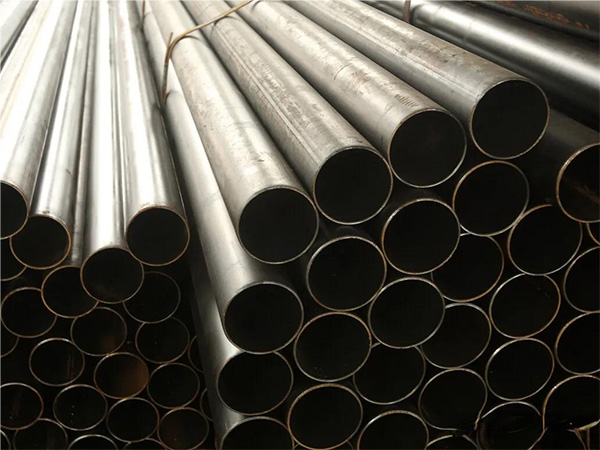
Why are seamless steel pipes superior to welded steel pipes, even though both are commonly used industrial steel pipes? The answer lies in structural integrity. Seamless steel pipes, lacking welds, exhibit uniform structural strength, higher pressure limits, and resistance to mechanical stress.
From deep-sea drilling to high-voltage power generation, this article will detail the types of industrial seamless steel pipes and their crucial roles in five core industries.
1. Oil and Gas
The oil and gas industry perhaps has the highest requirements for pipeline infrastructure. Whether it's extracting oil resources or transporting energy across continents, this industry heavily relies on seamless steel pipes.
1) High-Pressure Sealing: Oil wells typically operate at pressures exceeding 10,000 PSI. Under such immense pressure, weak welds can become potential failure points. Seamless steel pipes, through their structural integrity, eliminate this risk. Especially during seabed oil drilling, seamless steel pipes can better withstand internal pressure and the external extrusion forces of the deep sea, preventing pipe bursts.
2) Corrosion and acid resistance: Crude oil and natural gas typically contain hydrogen sulfide (H₂S) and carbon dioxide (CO₂). Seamless steel pipes can undergo homogenization and alloying (e.g., adding chromium or nickel) to prevent hydrogen-induced cracking (HIC) and sulfide stress cracking (SSC).
2. Boilers and Power Generation
Industrial boilers and heat exchangers require operation under extremely high temperatures and thermal expansion. Seamless pipes, with their seamless body and strong resistance to pressure and creep, are commonly used in the boiler and power generation industries.
1) Creep resistance: At temperatures exceeding 500°C (932°F), steel undergoes "creep"—a slow and gradual deformation under sustained stress. Seamless boiler tubes, manufactured using special carbon steel and alloy steel (e.g., ASTM A213 or A335), offer superior creep resistance compared to welded tubes.
2) Uniform Heat Transfer: Due to the completely uniform wall thickness and lack of welds, heat is evenly distributed across the tube surface. This prevents localized hot spots, thus avoiding premature pipe rupture.
3) Overheat Steam Protection: Modern supercritical and ultra-supercritical power plants require steam pipelines capable of withstanding pressures exceeding 22 MPa. Seamless tubes are the only safe option against catastrophic steam explosions.
3. Machining and Mechanical Engineering
Seamless tubes are not only used for fluid transport but also as raw materials for mechanical components. Cold-drawn seamless tubes possess high precision and accuracy, making them widely used in machining and mechanical engineering.
1) Precision and Concentricity: After cold drawing, seamless steel tubes exhibit excellent dimensional accuracy and concentricity, allowing for the production of perfectly cylindrical parts.
2) Excellent strength-to-weight ratio: For structural applications such as crane booms, automotive driveshafts, and heavy machinery frames, seamless hollow profiles provide the required torsional stiffness and load-bearing strength while minimizing overall weight.
3) No structural defect variables: When mechanical components are subjected to intense cyclic loads (repetitive stress), micro-defects in welds can rapidly develop into fatigue cracks. Seamless tubes possess isotropic mechanical properties, meaning they behave identically under stress in any direction.
4. Hydraulic and pneumatic systems
From construction excavators to aerospace landing gear, hydraulic systems power the heavy machinery of modern industry. These systems rely on high-pressure fluid dynamics and must withstand significant pressure; even a small leak can lead to system failure.
1) High-pressure shock resistance: Hydraulic systems must not only maintain static pressure but also withstand rapid pressure spikes and fluid shocks generated when valves open and close. The properties of seamless tubes prevent them from rupturing under sudden impacts.
2) Surface Finish: Precision seamless hydraulic tubing (typically manufactured to DIN 2391 or EN 10305-1 standards) has an extremely smooth and clean inner wall. Welded tubing can produce weld slag or flash, which can flow with the hydraulic oil and damage expensive pumps, seals, and proportional valves.
5. Nuclear Power Generation
In nuclear engineering, absolutely no errors are permissible. The piping systems within a nuclear power plant form a critical barrier against the leakage of radioactive materials.
1) Perfect Integrity of Cooling Circuits: The main cooling circuits transfer heat from the reactor core to the steam generators. These waters are under high pressure and are radioactive. Seamless stainless steel tubing (e.g., 304L or 316L grades) ensures that loss-of-coolant accidents (LOCA) are not caused by weld defects.
2) Resistance to Radiation Embrittlement: Continuous neutron bombardment alters the molecular structure of metals over time, making them brittle. Seamless tubes possess a uniform grain structure, which contributes to their superior resistance to radiation damage and maintains excellent ductility over decades of operation.
3) Stringent Non-Destructive Testing (NDT) Requirements: Nuclear-grade seamless tubes must undergo rigorous ultrasonic, eddy current, and hydrostatic testing. Because there are no weld seams to cause acoustic interference during testing, verifying the structural integrity of seamless tubes is extremely accurate and reliable.
Summary
While welded tubes are cost-effective for low-pressure decorative or structural applications, industrial seamless tubes remain the irreplaceable choice for applications requiring extremely high levels of personal safety, extreme pressure, high temperatures, and long-term reliability.
Read more : What is seamless steel pipe?


 Language
 English
 Español
 بالعربية
 sales@central-steels.com
 0086-731-8865-5017