 Central Steel
Central Steel
Central Steel
Central Steel
Central Steel
For decades, seamless steel pipe was the default choice for critical, high-pressure applications, while Electric Resistance Welded (ERW) pipe was limited to low-pressure utilities. However, with modern manufacturing advancements—such as High-Frequency Induction (HFI) welding and full-body inline heat treatment (heat stretch reducing)—the performance gap has narrowed significantly.
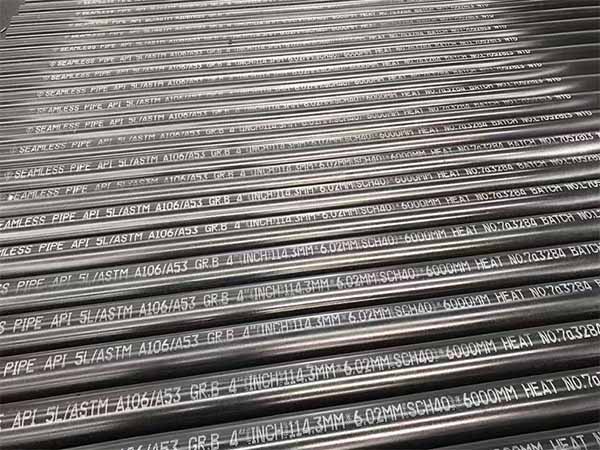
The Technical Boundary of "Substitution"
While ERW pipes can substitute for seamless pipes in many structural and transportation applications, they cannot completely replace them in extreme environments. The substitution depends strictly on design pressure, temperature, and standard compliance.
1. Where ERW Can Successfully Replace Seamless (Cost Savings up to 20-30%)
Line Pipes (API 5L): For gas, water, and oil transportation under medium pressure, API 5L Grade B to X70 ERW pipes are now widely used as substitutes for seamless pipes.
Structural Piling & Casing (ASTM A252 / ASTM A500): In construction foundation piling and structural framing, ERW provides excellent dimensional control at a lower cost.
OCTG Tubing and Casing: In shallow to medium-depth oil wells, API 5CT ERW casing is commonly utilized instead of costly seamless casing.
2. Where Seamless Remains Irreplaceable
High-Pressure Boiler Tubes (ASTM A192 / ASME SA210): Operating at temperatures above 450°C and pressures higher than 20 MPa, the weld seam of an ERW pipe represents a potential risk point for creep rupture.
Severe Sour Service (H2S Environments): In oil fields containing high Hydrogen Sulfide, the Heat Affected Zone (HAZ) of welded pipes is susceptible to Hydrogen-Induced Cracking (HIC). Seamless pipes offer superior resistance here.
Summary:
If your operating pressure is below 10 MPa (1450 PSI) and the media is non-corrosive, switching to high-quality ERW steel pipe can save your project approximately 20% to 30% in material costs without compromising safety.
Read more : What is seamless steel pipe?


 Language
 English
 Español
 بالعربية
 sales@central-steels.com
 0086-731-8865-5017