In the construction industry,
steel piling systems are essential for ensuring structural stability, excavation safety, and long-term foundation performance. Steel pipe piles and steel sheet piles are two widely used steel solutions, but they serve very different purposes on construction sites. Understanding their differences in construction applications helps you select the most suitable system for specific project requirements.
Definition and Functional Role in Construction
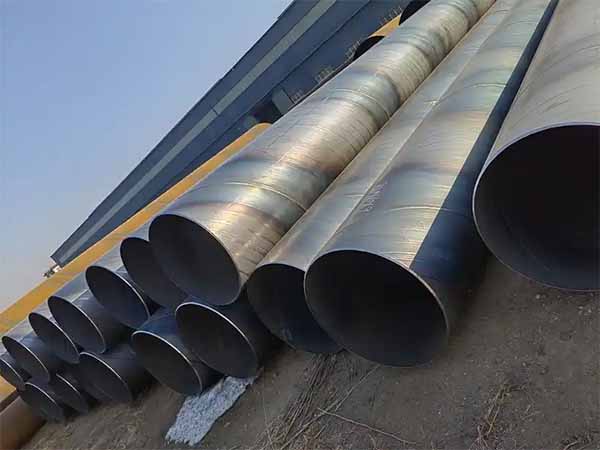
Steel pipe piles are cylindrical steel sections designed mainly for deep foundation support. Their primary role in construction is to transfer vertical loads from buildings, bridges, or industrial structures to deeper and stronger soil layers or bedrock. Due to their high axial load capacity and bending resistance, steel pipe piles are commonly used as permanent structural members.
Steel sheet piles, in contrast, are flat steel sections with interlocking edges that form continuous retaining walls. In construction projects, their main function is soil retention and groundwater control, rather than structural load-bearing. Steel sheet piles are often used as temporary or semi-permanent solutions during excavation and foundation works.
Differences in Construction Applications
In building construction, steel pipe piles are typically selected for projects that involve heavy loads and strict foundation performance requirements. Common applications include high-rise building foundations, bridge piers, offshore structures, port facilities, and large industrial plants. Their ability to withstand high compressive forces and lateral loads makes them suitable for complex structural conditions.
Steel sheet piles are more commonly applied in construction stages where excavation support and site safety are the primary concerns. They are widely used for basement excavation support, cofferdams, retaining walls, riverbank protection, and flood control structures. Their interlocking design allows them to effectively resist lateral earth pressure and prevent soil collapse during construction.
Installation Methods and Construction Efficiency
From a construction standpoint, steel pipe piles generally require heavier equipment and more complex installation techniques, such as impact driving, vibration driving, or drilled piling combined with concrete filling. This makes them more suitable for large-scale and long-term projects where foundation integrity is critical.
Steel sheet piles are faster to install and easier to remove, which is a major advantage in temporary construction works. Vibration driving is commonly used, allowing for efficient installation with minimal site disruption, especially in urban construction environments.
Cost Considerations in Construction Projects
In most construction projects, steel pipe piles involve higher material and installation costs due to greater steel consumption and more demanding construction processes. However, their high load-bearing performance often justifies the investment for permanent foundation systems.
Steel sheet piles are generally more cost-effective for excavation support and temporary works. Their reusability further reduces overall project costs, making them an economical choice for construction projects with short-term retaining requirements.
Selection Guide for Construction Use
When choosing between steel pipe piles and steel sheet piles in construction, project teams should evaluate load-bearing requirements, soil and groundwater conditions, construction duration, and budget constraints. In many cases, both systems are used together: steel pipe piles provide deep foundation support, while steel sheet piles ensure safe excavation and site stability during construction.
Conclusion
Although both steel pipe piles and steel sheet piles are widely used in construction engineering, their applications are fundamentally different. Steel pipe piles are designed for structural load-bearing and long-term foundation support, while steel sheet piles focus on soil retention and excavation safety. Selecting the appropriate piling system based on construction application requirements is essential for achieving structural reliability and construction efficiency.
 Central Steel


 Language
 English
 Español
 بالعربية
 sales@central-steels.com
 0086-731-8865-5017