 Central Steel
Central Steel
Central Steel
Central Steel
Central Steel
ERW pipe and seamless pipe are both widely used steel pipe products. ERW pipe is generally preferred for cost-effective, dimensionally consistent applications, while seamless pipe is often selected for demanding high-pressure or high-temperature service where the absence of a weld seam is an important requirement. The right choice depends on the pipe standard, material grade, pressure and temperature conditions, diameter, wall thickness, application, and project budget.
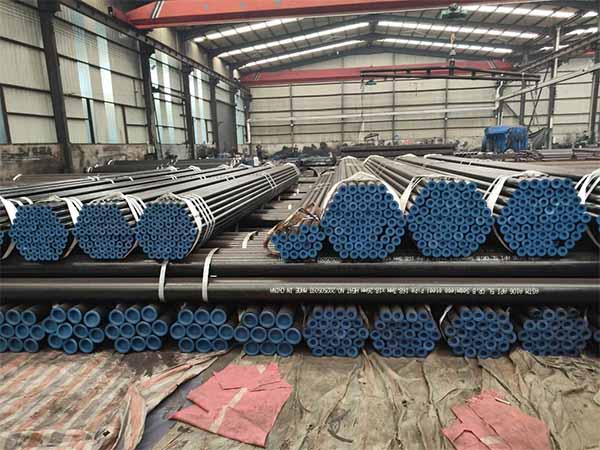
5. Comparison Summary Table
|
Feature |
ERW Pipe (HFW) |
Seamless Pipe (SMLS) |
Winner |
|
Pressure Rating |
Low to High (Limitations exist) |
Extreme High Pressure |
Seamless |
|
Cost |
Low (Budget Friendly) |
High |
ERW |
|
Wall Tolerance |
Tight, Consistent |
Varies (Eccentricity issues) |
ERW |
|
Availability |
Fast Lead Time |
Longer Lead Time |
ERW |
|
Diameter Range |
Broad (1/2" - 24"+) |
Limited (Best < 20") |
ERW |
|
Aesthetics |
Visible Seam (unless treated) |
Smooth, Uniform |
Seamless |
FAQ: ERW vs. Seamless Pipe
1. Is ERW pipe better than seamless pipe?
No. ERW pipe and seamless pipe are designed for different requirements. ERW pipe is often better for cost, dimensional consistency, production efficiency, and many general pipeline applications. Seamless pipe is often preferred for demanding high-pressure or high-temperature services and applications where seamless construction is specified.
2. Is seamless pipe stronger than ERW pipe?
Not necessarily in every case. Seamless pipe has no weld seam, which can be an important advantage in certain applications. However, the actual strength and pressure capacity depend on the material grade, wall thickness, diameter, manufacturing standard, weld quality for ERW pipe, and design conditions.
3. Why is seamless pipe more expensive than ERW pipe?
Seamless pipe generally requires a more complex manufacturing process involving billet heating, piercing, rolling, sizing, and sometimes heat treatment or cold drawing. ERW pipe can be produced efficiently from steel coil, which generally results in lower production costs.
4. Can ERW pipe be used for high-pressure applications?
Yes, in applications where the applicable standard and design requirements permit it. Modern ERW/HFW pipes can achieve high weld quality and are used in pipeline and industrial services. The pipe should be selected according to the required pressure, temperature, material grade, standard, and testing requirements.
Summary
Seamless steel and ERW are not inherently superior or inferior; rather, a balance must be struck based on cost, pressure rating, and precision requirements. Understanding the differences in their manufacturing processes and performance will help you select the appropriate steel pipe type for your project more quickly and accurately.


 Language
 English
 Español
 بالعربية
 sales@central-steels.com
 0086-731-8865-5017