ASTM A500 Grade B is a standard specification published by ASTM International for cold-formed welded and seamless carbon steel structural tubing, applicable to round, square, and rectangular sections. ASTM A500 Grade B rectangular hollow structural profiles (HSS) have a minimum yield strength of 46 ksi (315 MPa) and excellent weldability.
ASTM A500 Grade B rectangular tubing is a standard specification for cold-formed carbon steel structural tubing developed by ASTM International. It is produced in both seamless and high-frequency welded (ERW) forms and is suitable for structural applications such as buildings, bridges, heavy structural frames, signage supports, and infrastructure towers.
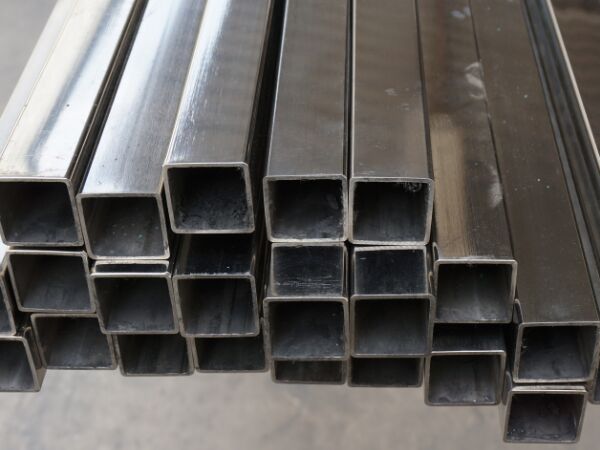
Compared to traditional hot-rolled open structural profiles (such as ASTM A36 channel steel, angle steel, or wide-flange I-beams), ASTM A500 Class B rectangular hollow profiles (RHS) offer significant engineering advantages:
High torsional stiffness: The closed hollow section provides excellent torsional and multiaxial load resistance.
Strength-to-weight ratio: High yield strength allows structural designers to reduce material thickness and steel structure weight without compromising load-bearing capacity.
Wide range of building applications: The smooth surface and sharp exterior corners make it ideal for exposed steel structures (AESS).
ASTM A500 Chemical Composition Requirements
The chemical composition of ASTM A500 Grade B carbon steel is carefully formulated to ensure excellent cold formability, field weldability, and structural durability. Thermal analysis must strictly comply with the limits specified in the following table:
|
Chemical Element
|
Welded Tubing (Heat Analysis, Max %)
|
Seamless Tubing (Heat Analysis, Max %)
|
Metallurgical Role & Impact
|
|
Carbon (C)
|
0.26%
|
0.26%
|
Provides foundational strength and hardness while keeping carbon equivalent low for optimal weldability.
|
|
Manganese (Mn)
|
1.35%
|
1.35%
|
Enhances tensile strength, notch toughness, and hardenability.
|
|
Phosphorus (P)
|
0.035%
|
0.035%
|
Kept strictly minimal to prevent cold shortness and grain boundary embrittlement.
|
|
Sulfur (S)
|
0.035%
|
0.035%
|
Controlled to prevent hot shortness and ensure longitudinal weld integrity.
|
|
Copper (Cu) (Optional)
|
0.20% min
|
0.20% min
|
Added upon buyer request to enhance atmospheric corrosion resistance in outdoor structural applications.
|
ASTM A500 Mechanical and Structural Properties
ASTM A500 specifies different mechanical property requirements based on the geometry of the tubing. Compared to round tubing, the cold forming process for rectangular and square tubing improves the material's yield strength.
|
Mechanical Property
|
ASTM A500 Grade B (Shaped: Rectangular)
|
Metric Value
|
Grade A Comparison (Shaped)
|
Grade C Comparison (Shaped)
|
|
Yield Strength (min)
|
46,000 psi (46 ksi)
|
315 MPa
|
39 ksi (270 MPa)
|
50 ksi (345 MPa)
|
|
Tensile Strength (min)
|
58,000 psi (58 ksi)
|
400 MPa
|
45 ksi (310 MPa)
|
62 ksi (425 MPa)
|
|
Elongation in 2 in. (50 mm)
|
23% min
|
23% min
|
25% min
|
21% min
|
Key structural features: ASTM A500 Grade B steel achieves a balance between strength (yield strength 46 ksi) and cold ductility (elongation 23%), making it the most commonly used steel grade in the North American Artificial Structures Standard (AISC).
Manufacturing Process and Quality Control
ASTM A500 Grade B rectangular tubes are manufactured using high-quality hot-rolled carbon steel coils through continuous roll forming and high-frequency induction welding (HFW/ERW) processes:
Uncoiling and Precision Slitting: The hot-rolled carbon steel coils are slit into precisely calculated widths corresponding to the perimeter of the rectangle.
Cold Roll Forming: Continuous steel strips are passed sequentially through forming rollers at room temperature, gradually forming cylindrical tubes.
High-Frequency Resistance Welding (ERW): High-frequency current is used to heat the edges of the tubes, allowing for forging and welding without the need for welding wire. The weld exterior is planed.
Sizing and Rectangular Forming: The welded circular tubes are sizing using a specialized sizing machine, pressing the circular cross-section into a rectangular cross-section with precise outer corner radii.
Online Non-Destructive Testing (NDT): 100% eddy current or ultrasonic testing (UT) is performed on the longitudinal welds to ensure 100% weld integrity.
External Dimensions (Flatness Tolerance)
Flatness ≤ 2.5 inches (63.5 mm): ± 0.020 inches (0.51 mm);
Flatness 2.5 inches to 3.5 inches: ± 0.025 inches (0.64 mm);
Flatness 3.5 inches to 5.5 inches: ± 0.030 inches (0.76 mm);
Flatness > 5.5 inches: ± 0.01 times the flatness;
Wall Thickness Tolerance: ± 10% (specified value). Nominal wall thickness measurement location is not limited (except for welds).
Straightness Tolerance: The maximum permissible deviation for straightness is 1/8 inch per 5 feet (2.1 mm/m).
Corner Perpendicularity: The perpendicularity between adjacent planes shall be 90° ± 1.5°.
External Corner Radius: The external corner radius shall not exceed 3.0 times the specified wall thickness.
Key Applications in Building and Engineering
Building Structures and Columns: Can be used as load-bearing columns, curtain wall frames, perimeter trusses, and floor supports.
Bridge and Infrastructure Engineering: Highway overpass sign gantry frames, bridge railings, pedestrian bridge frames, and noise barrier supports.
Machinery and Heavy Equipment Framing: Crane booms, agricultural harvester chassis frames, mining trailers, and industrial racking systems.
Building Steel Structures: Exposed structural canopy supports, skylight frames, and stadium seating infrastructure.
Frequently Asked Questions (FAQ)
Q1: What is the main difference between ASTM A500 Grade B and ASTM A36?
A: ASTM A36 is a general structural steel plate and bar specification with a minimum yield strength of 36 ksi (250 MPa). In contrast, ASTM A500 Grade B is specifically designed for cold-formed hollow structural tubing (HSS) and offers a higher yield strength of 46 ksi (315 MPa) for rectangular shapes.
Q2: Can ASTM A500 Grade B rectangular tubing be galvanized?
A: Yes, ASTM A500 Grade B steel can be hot-dip galvanized without issue. Proper vent and drain holes must be incorporated into the fabrication design to ensure safe zinc flow during the galvanizing process.
Q3: Are Mill Test Certificates (MTC) supplied with shipments?
A: Yes, all shipments from Central Steel are accompanied by official Mill Test Certificates according to EN 10204 3.1, detailing heat numbers, chemical composition, mechanical test results, NDT inspection, and dimensional checks.
In summary
The ASTM A500 Gr B rectangular tube is an economical, versatile structural material that, thanks to its high strength and good workability, is suitable for a variety of industrial and construction applications.
 Central Steel


 Language
 English
 Español
 بالعربية
 sales@central-steels.com
 0086-731-8865-5017