ASTM A135 is a standard specification for
resistance-welded steel pipe. This standard applies to resistance-welded steel pipes used for conveying gases, steam, water, and other liquids. ASTM A135 electric arc welded steel pipe is a type of carbon steel pipe manufactured using the electric arc resistance welding (ERW) process. It is widely used in industrial piping systems, water supply projects, low to medium pressure applications, and general mechanical service applications.
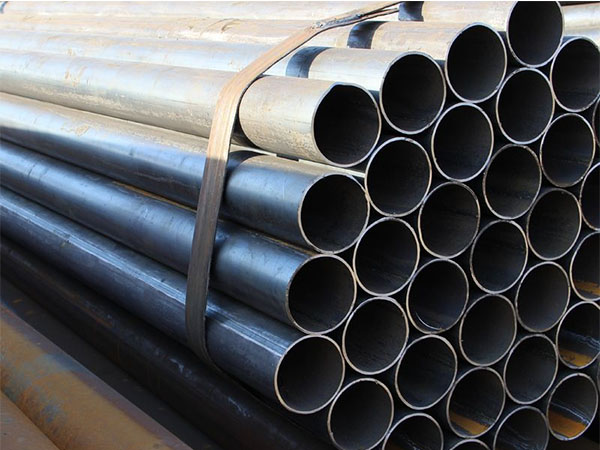
1. What is ASTM A135 ERW Steel Pipe?
ASTM A135 is the standard specification for Electric-Resistance-Welded (ERW) steel pipes. It covers black and hot-dipped galvanized welded steel pipes intended for conveying fluids or for general mechanical service.
Key Structural Specifications:
Manufacturing Process: Electric Resistance Welding (ERW) – utilizes electrical resistance and forge pressure to join steel edges without adding filler metal.
Size Range: Covers nominal pipe sizes from NPS 2 through NPS 30 [with variations in outside diameter (OD) and wall thickness].
Steel Grades: Mainly includes two distinct grades tailored for different strength requirements:
ASTM A135 Grade A
ASTM A135 Grade B
2. Chemical composition of ASTM A135 ERW Steel Pipe
The chemical makeup of ASTM A135 carbon steel is strictly regulated to ensure weldability and formability while preventing brittleness. Below is the maximum composition percentage for each element:
|
Element
|
Composition, max, %
|
|
|
Grade A
|
Grade B
|
|
C
|
0.25
|
0.30
|
|
Mn
|
0.95
|
1.20
|
|
P
|
0.035
|
0.035
|
|
S
|
0.035
|
0.035
|
3. Mechanical properties of ASTM A135 ERW Steel Pipe
The mechanical performance dictates how much stress, pressure, and elongation the pipe can handle before deformation or failure occurs.
|
ASTM A135
|
Grade A
|
Grade B
|
|
Tensile Strength,
min, ksi [MPa]
|
48
[330]
|
60
[415]
|
|
Yield Strength,
min, ksi [MPa]
|
30
[205]
|
35
[240]
|
|
Elongation,
min, %
|
35
|
30
|
4.Advanced Manufacturing & Crucial Heat Treatment
Unlike traditional fusion-welded pipes, ERW steel pipes are produced by cold-forming a sheet of steel into a cylindrical shape and passing an electric current through the edges to heat them to welding temperature.
Advantages of ASTM A135 ERW Pipes:
High production speed and manufacturing efficiency.
Smooth inner and outer surfaces, minimizing friction loss during fluid transit.
High dimensional accuracy with uniform wall thickness.
Critical Post-Weld Heat Treatment (PWHT):
To prevent seam failure, the weld seam of ASTM A135 Grade B ERW steel pipe must undergo a strict post-weld heat treatment. It must be processed at a minimum temperature of 1000°F (540°C), or processed in such a manner that no untempered martensite remains. This step relieves residual stresses and significantly enhances the structural integrity of the weld line.
5.ASTM A135 Grade A vs Grade B
One of the most common purchasing questions is:
What is the difference between ASTM A135 Grade A and Grade B?
Although both belong to the same specification, their strength levels and intended applications are different.
|
Property
|
Grade A
|
Grade B
|
|
Tensile Strength
|
Lower
|
Higher
|
|
Yield Strength
|
Lower
|
Higher
|
|
Pressure Capability
|
Standard
|
Better
|
|
Mechanical Performance
|
Moderate
|
Improved
|
|
Typical Use
|
General service
|
Higher demand piping
|
6.When Should You Choose Grade B?
When your project involves higher mechanical loads, stricter structural stress, or increased working pressure, ASTM A135 Grade B is the preferred choice. Because of its superior pressure capability, Grade B ERW pipes are much more commonly specified in industrial construction projects.
7. Common Applications of ASTM A135 Carbon Steel Pipe
Due to its high structural efficiency and economical manufacturing costs, ASTM A135 pipes are widely used in various infrastructure and mechanical sectors:
Water Conveyance Systems: Municipal water lines, drainage, and plumbing infrastructure.
Fire Sprinkler Systems: Used frequently as low-pressure piping for fire protection networks.
HVAC Systems: Chilled water and steam distribution piping in commercial facilities.
Gas and Vapor Lines: Low-to-medium pressure natural gas distribution.
Structural and Mechanical Services: Used in lightweight architectural supports, scaffolding, and general industrial fabrication.
Summarize
Choosing between ASTM A135 Grade A and Grade B depends entirely on your system's pressure ratings and structural requirements. Selecting high-quality, fully tested ERW pipes ensures the safety and longevity of your piping system.
 Central Steel


 Language
 English
 Español
 بالعربية
 sales@central-steels.com
 0086-731-8865-5017