In large-scale foundation engineering, port terminals, cross-sea bridges, and projects with deep soft soil foundations,
large-diameter steel pipe piles are gradually becoming the mainstream pile type due to their superior load-bearing capacity and construction adaptability. Compared to traditional concrete piles or small-diameter piles, large-diameter steel pipe piles exhibit significant advantages in structural performance, construction efficiency, and engineering economy.
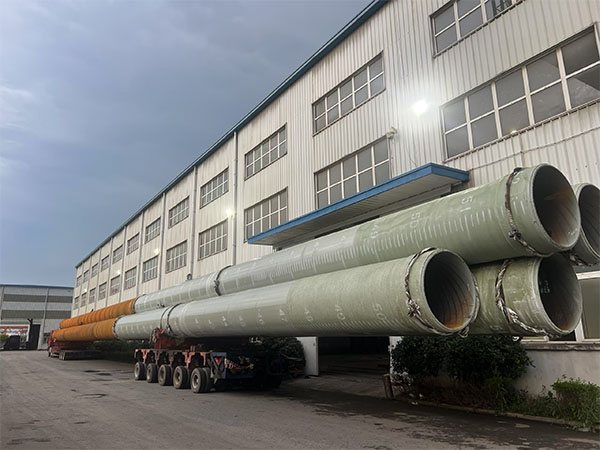
1. High Load-Bearing Capacity of Large-Diameter Steel Pipe Piles
The most significant advantage of large-diameter steel pipe piles lies in their high single-pile load-bearing capacity. As the pile diameter increases, the pile tip bearing capacity and pile side friction increase simultaneously. Under the same load-bearing requirements, the number of piles can be effectively reduced, simplifying the foundation layout. In soft soil foundations or deep overburden conditions, large-diameter steel pipe piles can reliably transfer loads to deeper bearing layers, resulting in higher structural safety.
Large-diameter pipe piles are commonly used in:
Bridge foundations across rivers and seas;
Port terminals and heavy-duty platforms;
High-rise buildings and large industrial facilities;
Marine and near-shore structural engineering, etc.
2. High Structural Strength and Excellent Overall Stability
Steel itself possesses high strength and ductility. Large-diameter steel pipe piles, while bearing vertical loads, exhibit stronger resistance to horizontal loads and bending moments.
Compared to concrete piles, large-diameter steel pipe piles offer significant advantages in the following aspects:
Good bending resistance, suitable for structures subjected to lateral forces;
Excellent seismic performance, with pronounced ductile failure characteristics;
Less prone to brittle failure under complex working conditions.
Therefore, in seismic zones, near-shore areas, or projects significantly affected by wind and waves, large-diameter steel pipe piles offer greater structural safety advantages.
3. Strong Construction Adaptability and Compatibility with Complex Geological Conditions
Large-diameter steel pipe piles can be constructed using various methods, including driving, vibratory pile driving, and rotary drilling-assisted pile driving. They are highly adaptable to different geological formations and can perform well in environments such as soft soil, silty soil, sandy layers, and gravel layers. Careful selection based on environmental conditions is essential when installing steel pipe piles.
4. Short Construction Cycle
Compared to cast-in-place pipe piles, large-diameter steel pipe piles eliminate the need for on-site drilling or prolonged curing, allowing for direct pile driving and significantly shortening the construction cycle. This advantage is crucial for projects in ports and offshore engineering projects where tidal or navigation conditions restrict access.
5. Wide Size Range and Flexible Design
Large-diameter steel pipe piles can be flexibly adjusted to meet project requirements. Common diameters range from Φ800 mm to Φ3000 mm or even larger, and wall thickness and length can also be customized according to design requirements.
This high degree of scalability allows designers to optimize foundation design while meeting load-bearing requirements, achieving a balance between structural integrity and economic efficiency.
Standard Specifications for Steel Pipe Piles
ASTM 252 is the most commonly used standard for steel pipe piles, primarily divided into three grades: Gr 1, Gr 2, and Gr 3.
Regarding mechanical properties, ASTM A252 specifies minimum tensile strengths of 345 MPa (Grade 1), 415 MPa (Grade 2), and 455 MPa (Grade 3) for three grades, corresponding to minimum yield strengths of 205 MPa, 240 MPa, and 310 MPa, respectively. With each grade increase, the load-bearing capacity of the steel pipe pile significantly improves, making it suitable for higher loads and more demanding engineering conditions.
Regarding elongation requirements, ASTM A252 fully considers the influence of wall thickness on ductile properties. When the nominal wall thickness of the steel pipe pile is not less than 7.9 mm (5/16 in.), the standard specifies a baseline minimum elongation; when the wall thickness is less than this value, the elongation must be corrected for decreasing wall thickness. The standard also provides calculation formulas and reference tables to determine the minimum elongation under different wall thickness conditions, ensuring that the steel pipe pile possesses sufficient ductility and safety margin under conditions such as pile driving, stress, and earthquakes.
In summary
Large-diameter steel pipe piles possess irreplaceable advantages in modern large-scale foundation engineering due to their high bearing capacity, excellent structural performance, good construction adaptability, and outstanding overall economic efficiency. For projects with heavy loads, complex geological conditions, or strict schedule requirements, large-diameter steel pipe piles are a mature, reliable, and efficient foundation solution.
Read more : Difference between pipe pile and sheet pile?
 Central Steel


 Language
 English
 Español
 بالعربية
 sales@central-steels.com
 0086-731-8865-5017