Seamless pipes are mainly used for high-pressure fluid transportation, oil and gas applications, boilers and heat exchangers, mechanical equipment, structural components, and other applications where strength, reliability, and resistance to pressure or temperature are important. Because seamless steel pipes are manufactured without a longitudinal weld seam, they are widely selected for demanding services such as oil and gas pipelines, hydraulic systems, pressure equipment, power plants, and oil drilling.
The most suitable seamless pipe depends on the service medium, operating pressure and temperature, pipe size, material grade, applicable standard, and required mechanical properties. Common materials include carbon steel, alloy steel, and stainless steel, with standards such as ASTM A106, ASTM A335, ASTM A312, API 5L, and other specifications used according to the application.
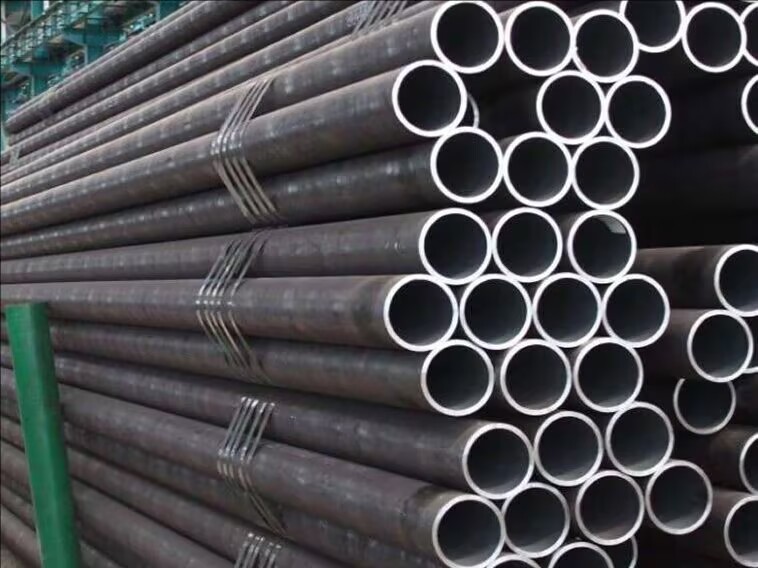
The use of seamless pipes can effectively avoid penetration problems, ensure the use of steel pipes and the safety of engineering projects, the following are the main application areas of seamless pipes:
Fluid transport
Seamless steel pipes are often used to transport a variety of liquids and gases, especially for long-distance transportation of oil, natural gas, fuel oil and chemical media. Due to its excellent compressive performance and sealing, it can effectively prevent media leakage and external pollution.
High temperature and pressure system
With its excellent strength and high temperature resistance, seamless pipes become the ideal conveying pipes in boilers, heat exchangers and ultra-high temperature and high pressure conveying systems to ensure the safe operation of equipment.
Structure and support applications
Seamless steel pipes are not only used for fluid transportation, but also are often used as mechanical structures, Bridges, scaffolding and other load-bearing components. Due to its high strength and rigidity, it can reduce its own weight while ensuring the stability of the structure.
Oil drilling
Seamless steel pipe plays an important role in oil drilling operations, such as for drill pipe, casing and so on. Its seamless construction allows the pipe to withstand shocks and pressures during drilling for longer durability and safety.
Mechanical parts
Due to the high dimensional accuracy and smooth surface of seamless pipe, it can be used to manufacture mechanical parts such as automobile transmission shaft, hydraulic cylinder, rolling bearing ring, which helps to improve the performance and service life of the overall equipment.
Ship construction
Seamless steel pipes in ship construction can not only be used for fluid transport and heat transfer, but also play a key role in the manufacture of hull structures and equipment, ensuring that ships have high safety and reliability in harsh Marine environments.
How to choose a seamless pipe for a specific application?
1. Working pressure: Determine the internal and external pressure that the pipe must withstand.
2. Operating temperature: High-temperature applications may require alloy steel or other heat-resistant materials.
3. Service medium: Oil, gas, water, steam, chemicals, and corrosive fluids can require different materials.
4. Pipe size and wall thickness: Outside diameter and wall thickness affect flow capacity, mechanical strength, weight, and pressure design.
5. Material grade: Select the appropriate carbon steel, alloy steel, stainless steel, or special alloy grade.
6. Applicable standard: The pipe should comply with the standard specified for the project, such as ASTM, ASME, API, EN, or another applicable specification.
7. Testing and inspection: Depending on the application, requirements may include hydrostatic testing, nondestructive testing, dimensional inspection, chemical analysis, and mechanical testing.
8. Connection method: Threaded, socket-welded, butt-welded, flanged, or other connections can affect the final pipe selection.
Seamless pipe vs. welded pipe for applications
Seamless and welded pipes are both widely used in industrial projects. The better choice depends on the application rather than the manufacturing method alone.
|
Factor
|
Seamless pipe
|
Welded pipe
|
|
Manufacturing
|
Made from a solid steel billet without a longitudinal weld seam
|
Made by forming and welding steel strip, coil, or plate
|
|
Longitudinal weld
|
No longitudinal weld seam
|
Has a welded seam, depending on the pipe manufacturing process
|
|
Pressure service
|
Well suited to many high-pressure applications when specified by the applicable standard
|
Also suitable for pressure service when the pipe and weld meet the required specification
|
|
High-temperature service
|
Commonly used for boilers, heat exchangers, and high-temperature piping
|
Also available for high-temperature applications when permitted by the applicable specification
|
|
Typical advantage
|
Reliable performance, good mechanical properties, and suitability for demanding applications
|
Efficient production, broad size availability, and generally lower cost
|
|
Common applications
|
High-pressure piping, boilers, mechanical equipment, hydraulic systems, and OCTG
|
Water pipelines, large-diameter pipelines, structural applications, and general industrial piping
|
|
Diameter range
|
More limited availability in very large diameters
|
Widely available in large and extra-large diameters
|
|
Cost
|
Generally higher due to the manufacturing process
|
Generally more economical, especially for large diameters
|
|
Dimensional requirements
|
Available in a wide range of sizes, schedules, and wall thicknesses
|
Offers extensive size and wall-thickness options, particularly for large diameters
|
|
Selection considerations
|
Pressure, temperature, material grade, dimensions, applicable standard, and project requirements
|
Pressure, temperature, material grade, weld quality, dimensions, applicable standard, and project requirements
|
Frequently asked questions about seamless pipe uses
What are seamless pipes mainly used for?
Seamless pipes are mainly used for high-pressure and demanding applications such as oil and gas, boilers, heat exchangers, hydraulic systems, mechanical equipment, chemical processing, and oil drilling. They are selected when the project requires specific pressure, temperature, strength, or manufacturing requirements.
Why are seamless pipes used for high-pressure applications?
Seamless pipes have no longitudinal welded joint and can provide reliable mechanical and pressure performance when manufactured according to the required specification. However, actual pressure capacity depends on the pipe grade, diameter, wall thickness, temperature, design code, and allowable stress.
Are seamless pipes better than welded pipes?
Not necessarily. Seamless pipes can be advantageous for certain high-pressure, high-temperature, mechanical, and critical applications, while welded pipes are often more economical and practical for large-diameter pipelines, structural applications, and many general industrial services. The correct choice depends on the project requirements.
Conclusion
The main uses of seamless pipes include high-pressure fluid transportation, oil and gas drilling, boilers and heat exchangers, hydraulic systems, mechanical components, automotive equipment, structural applications, shipbuilding, and chemical processing.
Read more : What is a seamless steel pipe?
 Central Steel


 Language
 English
 Español
 بالعربية
 sales@central-steels.com
 0086-731-8865-5017